
Tencent, Alibaba and TikTok and Deep Fakes
Chinese authorities on Thursday said they had summoned 11 tech companies including Tencent, Alibaba and TikTok owner ByteDance for talks on "deep fakes" and internet security, as regulators try to reel in the country's runaway digital sector.
The Cyberspace Administration of China (CAC) said talks concerned "voice software that has yet to undergo safety assessment procedures", as well as the application of "deep fake" technology.
It also said companies should report to the government plans to add new functions that "have the ability to mobilise society".
China has in recent months taken a tough line on the country's fast-growing tech firms, with 12 companies hit with fines last week for allegedly flouting monopoly rules.
Authorities last year halted a record $34 billion initial public offering by Alibaba fintech subsidiary Ant Group.
They called in its billionaire founder Jack Ma and then opened an investigation into Alibaba business practices deemed anti-competitive.
The latest summoning of big tech also involves companies such as smartphone maker Xiaomi, TikTok rival Kuaishou, and music streaming service NetEase Cloud Music, the CAC said.
The aim is to ensure they comply with regulations, carry out safety assessments, and take "effective rectification measures" if potential hazards are found.
In 2019, China issued rules banning online video and audio providers from using artificial intelligence (AI) and virtual reality technologies to produce "fake news".
"Fake news" has been generalised to mean anything from a mistake to a parody or a deliberate misinterpretation of facts.
Regulations stress the dangers of "deep fakes", meaning technology that manipulates videos to appear genuine but depict events or speech that never happened.
The CAC notice comes shortly after China blocked the US invite-only audio app Clubhouse.
The app briefly flickered in the mainland before vanishing but has since sparked a number of copycats.
President Xi Jinping on Monday warned about risks surrounding "platform" companies -- a term that could refer to mobile and internet firms -- and called for greater oversight of the sector.
AI is the Neat Handwriting of the Illiterate
A model in the hands of someone who has read the filing and walked the plant is a clerk. The same model, speaking for someone who has done neither, is a disguise. On AI slop, phantom citations and factslop, why finish stopped being evidence of work, and the containment layer KXCO built so a machine cannot speak as the institution until a source is attached.
Worthship: Do Not Conform to the Age
Worthship is the older English word for worship, and it means to ascribe worth. Bishop Robert Barron preached Romans 12 on 30 August. This essay follows the text into the prison letters, and puts two questions to a graph: do the four readings of that Sunday agree, and was Paul free or in chains when he wrote about despair?
The Truth in All Its Ugliness Must Survive
A majority vote does not determine the truth. Consensus is a mood, gossip is a sport, and a model will write the pretty version for free. Why the ugly number has to survive, why a record beats a dashboard, and what KXCO was built to keep standing when the room changes its mind.
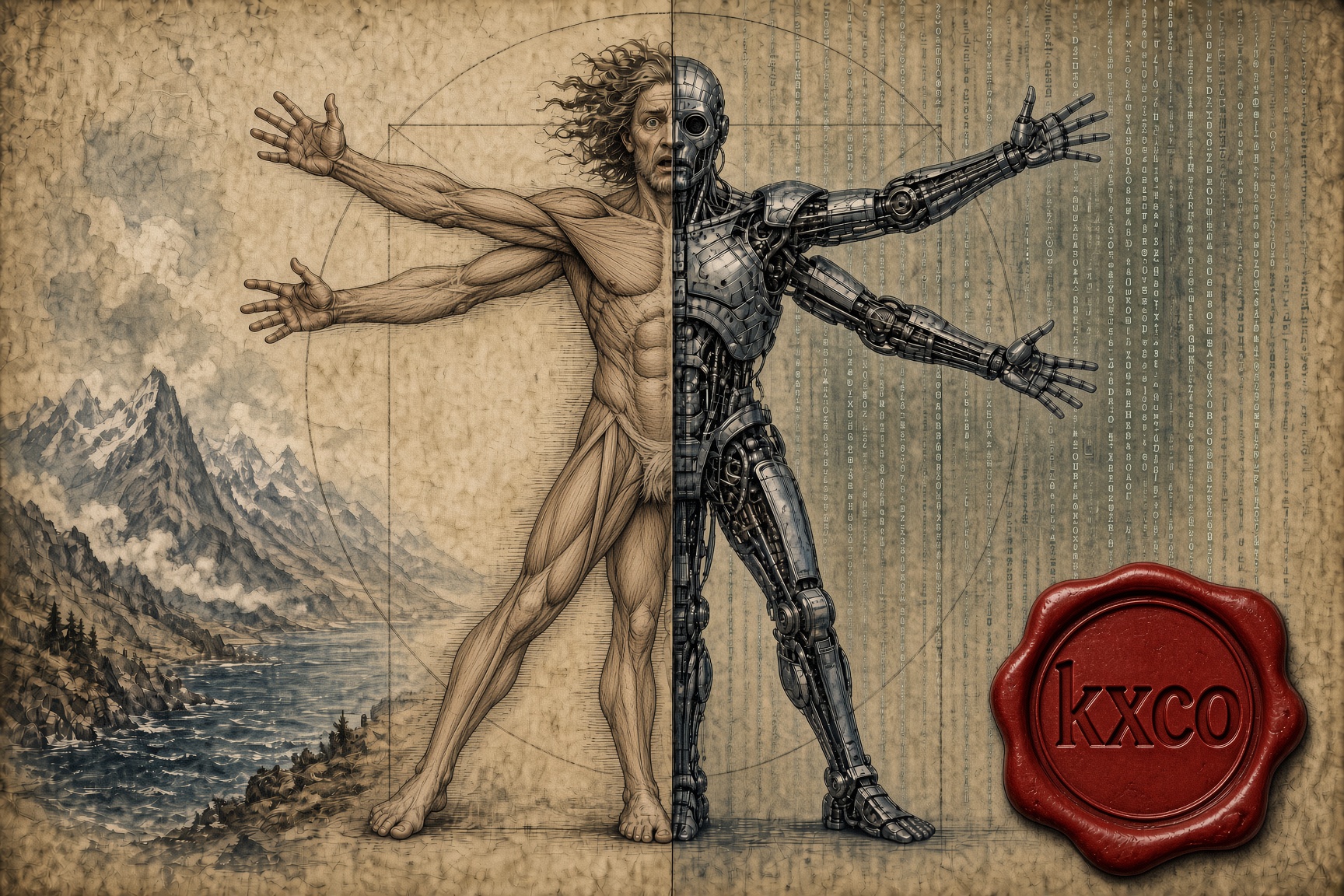
Don't Be the Best, Be the Only: Winning in an AI World
AI is repricing competence downward. What it cannot reproduce is a life. The case for remaining non-fungible, why friction still produces the best ideas, and what it means to build AI systems that keep the human intellect in them.
Every story, signed and delivered.
Subscribe to the kxco channel and get the headline, the AI-written key takeaways, and the chain-anchor link the moment we publish. Audio versions and per-ticker subscriptions arrive in the next iteration.