
S&P 500 will Correct, But the Bull Market Remains
A stock market correction may be on the horizon following the remarkable rally of the S&P 500, according to insights from Knightsbridge, one of Wall Street's most bullish equity strategists.
After the S&P 500 surged by an impressive 21% over a span of 14 weeks, Knightsbridge has cautioned clients to brace for a potential downturn in the coming weeks. Their analysis suggests that the index could climb to around 5,250, or possibly higher, before a drawdown ensues.
Examining historical market data, Knightsbridge highlighted seven instances since 1927 when the S&P 500 experienced a rise in 13 out of 14 weeks, similar to the recent pattern. In four of those instances, the market peaked within the following two weeks, signaling a potential turning point.
Moreover, Knightsbridge drew parallels to a trading pattern observed during the bear-market low in October 2022. Back then, the market saw a 20% surge over 16 weeks, followed by a 9% correction, and then another 21% rally over 19 weeks before a subsequent 11% decline. Given the recent 21% increase, Knightsbridge views a drawdown as a natural course of action.
Anticipating a 7% decline, which would translate to the S&P 500 dropping to approximately 4,600, Knightsbridge cited concerns over the timing of Federal Reserve interest-rate cuts as a potential catalyst for investor apprehension. Delayed action from the central bank, coupled with signs of economic weakening, could spur market jitters.
Despite the short-term caution, Knightsbridge maintained a bullish outlook for the stock market in 2024. They foresee the S&P 500 potentially reaching a range of 5,200 to 5,400, expressing confidence in the overall trajectory of the market amidst favorable conditions. Additionally, they anticipate Federal Reserve policies to remain accommodative, potentially supporting the Biden re-election campaign.
In conclusion, while a market correction looms on the horizon, Knightsbridge remains optimistic about the broader prospects of the stock market, emphasizing the resilience and potential for further growth in the coming year. Investors are advised to stay vigilant and monitor market developments closely as they navigate through this period of uncertainty.
Analyzing the historical performance of the S&P 500 in February of election years provides valuable insights into market behavior during pivotal periods of political transition. Here's a summary of the S&P 500's performance in February during election years:
2020: In February 2020, the S&P 500 experienced significant volatility amid growing concerns about the impact of the COVID-19 pandemic on global economies. The index initially saw gains but ended the month with a notable decline as the pandemic intensified, leading to widespread market uncertainty.
2016: February 2016 was characterized by mixed performance for the S&P 500. The index began the month with losses but recovered later in the month, driven by positive economic data and corporate earnings. Overall, February ended on a relatively stable note for the S&P 500 in the midst of the U.S. presidential election cycle.
2012: During February 2012, the S&P 500 posted modest gains, buoyed by improving economic indicators and optimism surrounding the presidential election. The index saw consistent upward momentum throughout the month, reflecting confidence in the economic recovery and corporate profitability.
2008: February 2008 was a challenging period for the S&P 500 as the index faced mounting concerns about the global financial crisis. The subprime mortgage crisis and fears of a recession weighed heavily on investor sentiment, resulting in significant losses for the index during the month.
2004: In February 2004, the S&P 500 experienced a relatively stable performance, with modest gains driven by positive economic data and corporate earnings. The index maintained its upward trajectory amid optimism surrounding the presidential election, reflecting confidence in the overall economic outlook.
Overall, the historical performance of the S&P 500 in February of election years has been mixed, influenced by various factors such as economic conditions, corporate earnings, and geopolitical events. While some years saw gains driven by optimism and positive market sentiment, others experienced volatility and losses amid uncertainty and economic challenges. Investors should carefully monitor market trends and developments during election years to make informed investment decisions amidst changing market dynamics.
AI is the Neat Handwriting of the Illiterate
A model in the hands of someone who has read the filing and walked the plant is a clerk. The same model, speaking for someone who has done neither, is a disguise. On AI slop, phantom citations and factslop, why finish stopped being evidence of work, and the containment layer KXCO built so a machine cannot speak as the institution until a source is attached.
Worthship: Do Not Conform to the Age
Worthship is the older English word for worship, and it means to ascribe worth. Bishop Robert Barron preached Romans 12 on 30 August. This essay follows the text into the prison letters, and puts two questions to a graph: do the four readings of that Sunday agree, and was Paul free or in chains when he wrote about despair?
The Truth in All Its Ugliness Must Survive
A majority vote does not determine the truth. Consensus is a mood, gossip is a sport, and a model will write the pretty version for free. Why the ugly number has to survive, why a record beats a dashboard, and what KXCO was built to keep standing when the room changes its mind.
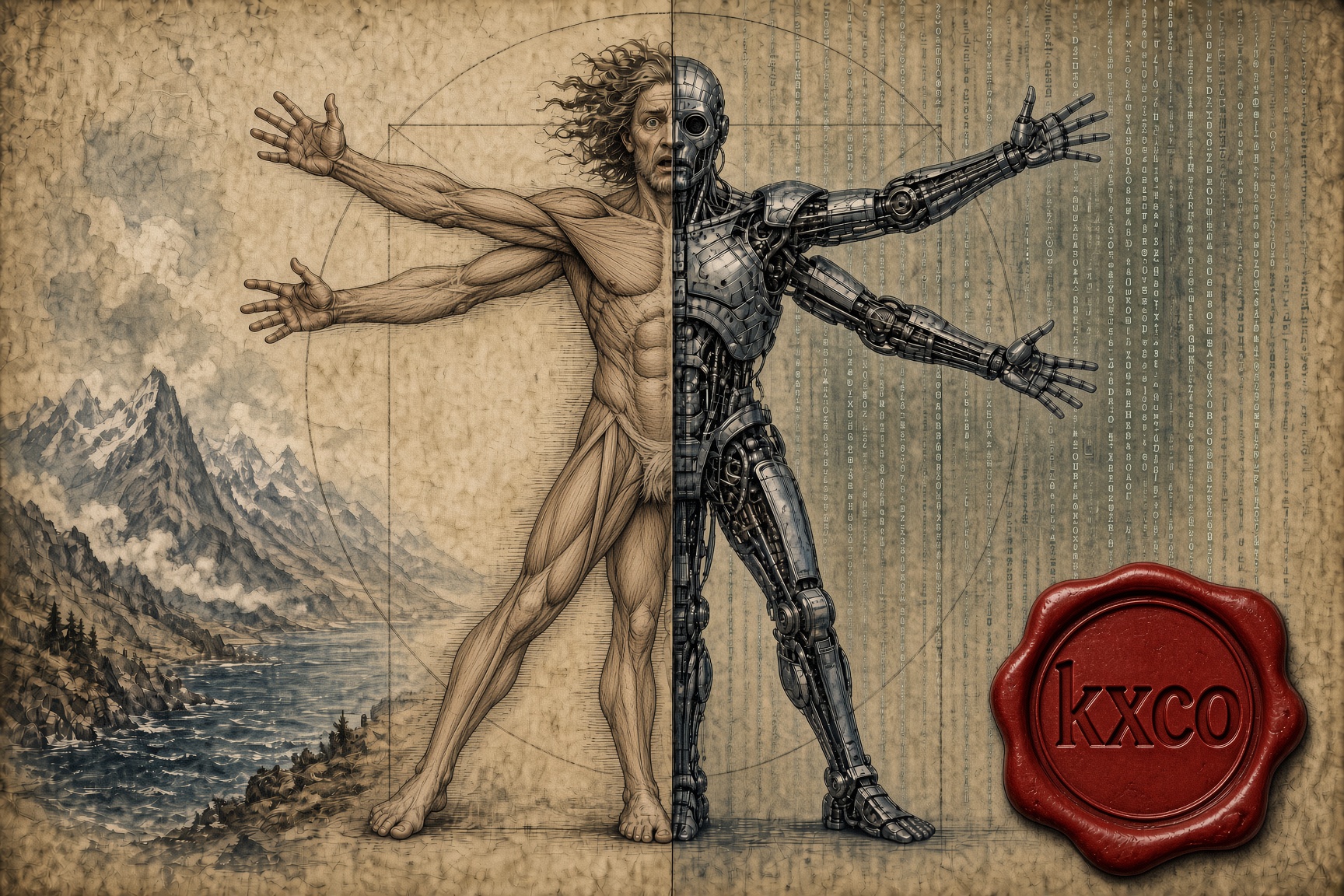
Don't Be the Best, Be the Only: Winning in an AI World
AI is repricing competence downward. What it cannot reproduce is a life. The case for remaining non-fungible, why friction still produces the best ideas, and what it means to build AI systems that keep the human intellect in them.
Every story, signed and delivered.
Subscribe to the kxco channel and get the headline, the AI-written key takeaways, and the chain-anchor link the moment we publish. Audio versions and per-ticker subscriptions arrive in the next iteration.