
Sovereign Individual Guide to Free Thinking
To become a free thinker, you need to be able to think for yourself and to question everything. You should not be afraid to challenge authority or to explore new ideas.
Here are some steps you can take to become a free thinker:
Doubt your beliefs. The first step to becoming a free thinker is to doubt the beliefs that were handed to you by society. Whatever your beliefs are — religious, political, philosophical and so on — be sure to question them and start your quest for truth from scratch.
Be open-minded. Be willing to consider new ideas, even if they challenge your existing beliefs. Be receptive to new information and be willing to change your mind if presented with evidence that contradicts your beliefs.
Be critical. Don't accept everything you hear or read at face value. Think critically about the information you are presented with and ask yourself if it makes sense. Look for evidence to support or refute the information.
Be independent. Don't let others tell you what to think or believe. Make your own decisions based on your own reasoning and judgment.
Be brave. It can be difficult to be a free thinker in a world that is full of conformity and dogma. But it is important to stand up for your beliefs and to be willing to challenge the status quo.
Here are some additional tips for becoming a free thinker:
Educate yourself. The more you know, the better equipped you will be to think critically about the world around you. Read books and articles on a variety of topics, and don't be afraid to challenge the conventional wisdom.
Talk to people with different beliefs. One of the best ways to learn and grow is to talk to people who have different beliefs than you do. This can help you to see the world from a different perspective and to challenge your own assumptions.
Be willing to change your mind. Don't be afraid to change your mind if presented with new evidence. It is a sign of intelligence and maturity to be able to admit when you are wrong.
Be tolerant of others. Even if you disagree with someone's beliefs, you should still respect their right to hold those beliefs. Tolerance is an essential part of a free and open society.
Becoming a free thinker is a lifelong journey. It is not something that happens overnight. But if you are willing to put in the effort, it is a journey that is well worth taking.
AI is the Neat Handwriting of the Illiterate
A model in the hands of someone who has read the filing and walked the plant is a clerk. The same model, speaking for someone who has done neither, is a disguise. On AI slop, phantom citations and factslop, why finish stopped being evidence of work, and the containment layer KXCO built so a machine cannot speak as the institution until a source is attached.
Worthship: Do Not Conform to the Age
Worthship is the older English word for worship, and it means to ascribe worth. Bishop Robert Barron preached Romans 12 on 30 August. This essay follows the text into the prison letters, and puts two questions to a graph: do the four readings of that Sunday agree, and was Paul free or in chains when he wrote about despair?
The Truth in All Its Ugliness Must Survive
A majority vote does not determine the truth. Consensus is a mood, gossip is a sport, and a model will write the pretty version for free. Why the ugly number has to survive, why a record beats a dashboard, and what KXCO was built to keep standing when the room changes its mind.
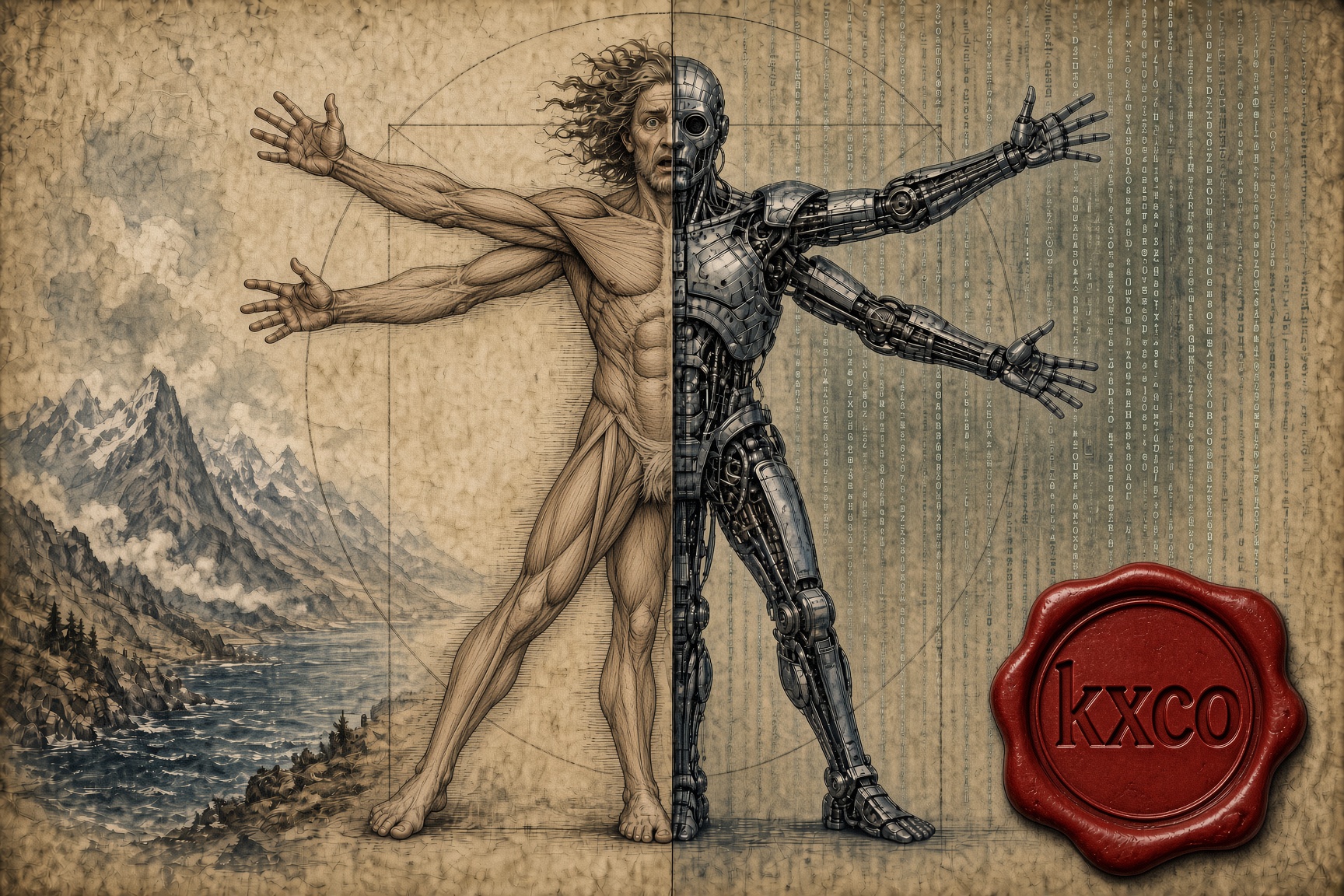
Don't Be the Best, Be the Only: Winning in an AI World
AI is repricing competence downward. What it cannot reproduce is a life. The case for remaining non-fungible, why friction still produces the best ideas, and what it means to build AI systems that keep the human intellect in them.
Every story, signed and delivered.
Subscribe to the kxco channel and get the headline, the AI-written key takeaways, and the chain-anchor link the moment we publish. Audio versions and per-ticker subscriptions arrive in the next iteration.