
Singapore Economy Shrinking
Singapore's economy suffered its worst ever annual contraction in 2020 as the coronavirus pandemic hammered the city-state's vital trade and tourism sectors, official data showed Monday.
But the 5.8 percent decline was not as bad as feared -- official forecasts had predicted a fall of up to 6.5 percent -- as economic activity picked up with the easing of curbs.
The financial hub plunged into its first recession since the 2008 global financial crisis in the second quarter when the government closed most workplaces as part of drastic measures to contain infections.
One of the world's most open economies, Singapore is seen as a bellwether for the health of global trade, and its economy's dramatic deterioration rang alarm bells.
But curbs were eased in the second half of the year and key sectors of the economy, such as manufacturing, have begun to recover.
In the fourth quarter, the economy shrank 3.8 percent year-on-year, less than expected, according to preliminary growth data released by the trade ministry.
Song Seng Wun, a regional economist with CIMB Private Banking, told AFP the contraction was not as bad as feared due to strong exports of some goods.
Song said he expects a "rebound of around six percent" this year.
"We are seeing businesses continuing to benefit from the further easing of restrictions and stronger global demand for (microchips) and medicines," he said.
Singapore's small economy is typically hit first by external shocks before ripples spread across the region. However, it usually also recovers quickly from any downturn.
The city-state won praise for keeping the pandemic in check in the early stages only for serious outbreaks to emerge later in crowded dormitories housing low-paid migrant workers.
But its outbreak has slowed markedly in recent weeks, and only a handful of cases are being recorded a day.
Authorities last week began a coronavirus vaccination campaign, making it among the first Asian nations to roll out inoculations.
AI is the Neat Handwriting of the Illiterate
A model in the hands of someone who has read the filing and walked the plant is a clerk. The same model, speaking for someone who has done neither, is a disguise. On AI slop, phantom citations and factslop, why finish stopped being evidence of work, and the containment layer KXCO built so a machine cannot speak as the institution until a source is attached.
Worthship: Do Not Conform to the Age
Worthship is the older English word for worship, and it means to ascribe worth. Bishop Robert Barron preached Romans 12 on 30 August. This essay follows the text into the prison letters, and puts two questions to a graph: do the four readings of that Sunday agree, and was Paul free or in chains when he wrote about despair?
The Truth in All Its Ugliness Must Survive
A majority vote does not determine the truth. Consensus is a mood, gossip is a sport, and a model will write the pretty version for free. Why the ugly number has to survive, why a record beats a dashboard, and what KXCO was built to keep standing when the room changes its mind.
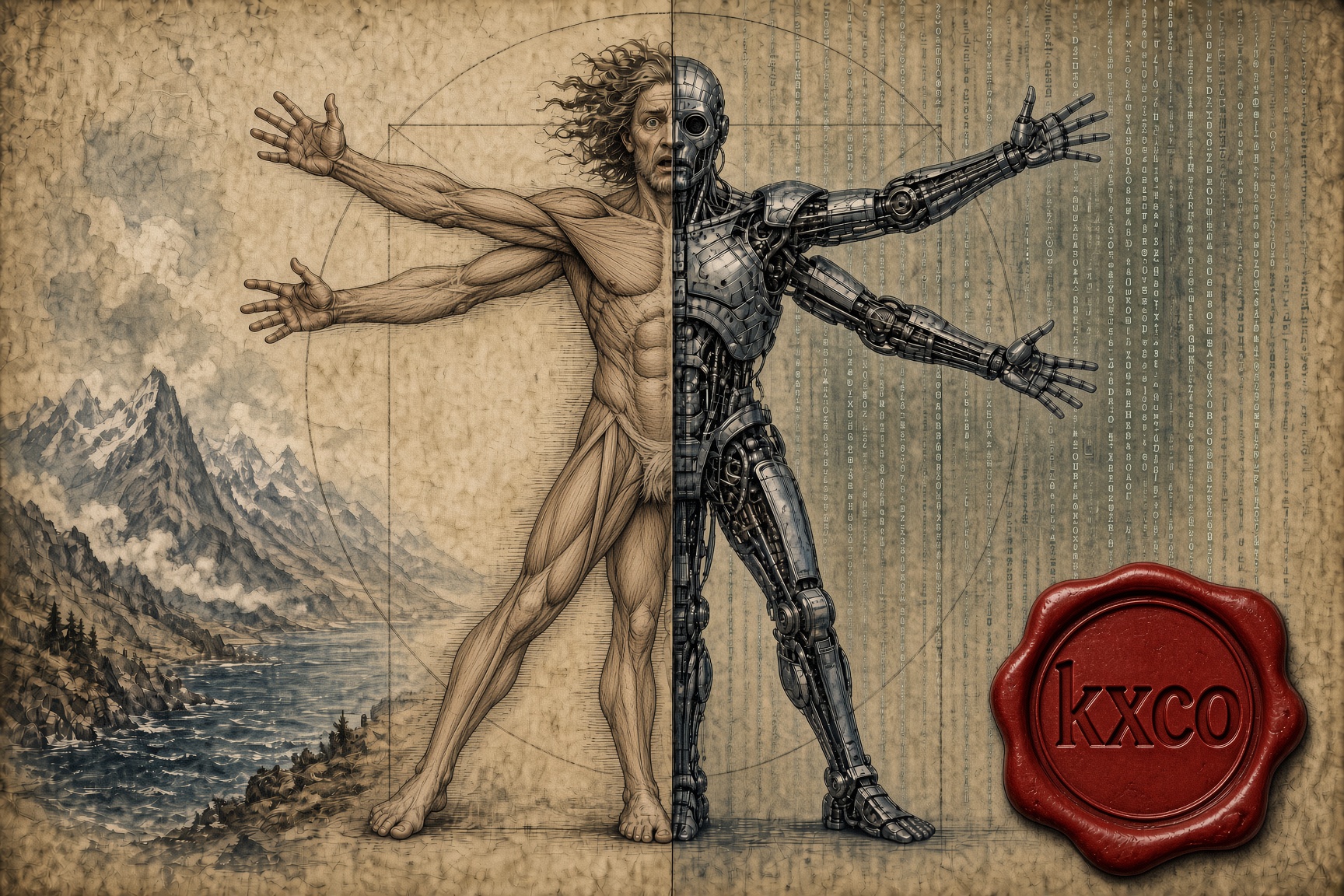
Don't Be the Best, Be the Only: Winning in an AI World
AI is repricing competence downward. What it cannot reproduce is a life. The case for remaining non-fungible, why friction still produces the best ideas, and what it means to build AI systems that keep the human intellect in them.
Every story, signed and delivered.
Subscribe to the kxco channel and get the headline, the AI-written key takeaways, and the chain-anchor link the moment we publish. Audio versions and per-ticker subscriptions arrive in the next iteration.