
Real World Asset Tokenization: KXCO
Larry Fink says every asset can be tokenized and that digital verification is the thing still missing. Here is what a closed environment of known and approved parties, a complete ontology and post-quantum signatures actually change.
Part of theKXCO Center
Larry Fink has spent two annual letters telling the market that tokenization is coming, and one line in the middle of them telling the market why it has not arrived yet. Almost everyone quotes the first part. Almost nobody builds for the second.
In his 2025 chairman's letter he wrote that every stock, every bond and every fund, indeed every asset, can be tokenized, and that if it happens it will revolutionise investing. Then he added the sentence that actually matters:
"If we're serious about building an efficient and accessible financial system, championing tokenization alone won't suffice. We must solve digital verification, too."
In the 2026 letter he came back to it. He compared tokenization to the internet in 1996, noted that half the world's population already carries a digital wallet on a phone, and said tokenization could accelerate a broader investing future by "updating the plumbing of the financial system". He also called for clear rules on investor protection and on digital identity before tokenized markets can be trusted at scale. BlackRock $BLK now reports close to $150bn of assets connected to digital markets, so this is not a man speculating from the sidelines.
Read those letters together and the message is not that the industry needs better tokens. It is that the industry built the wrong half of the problem first.
What the market actually built
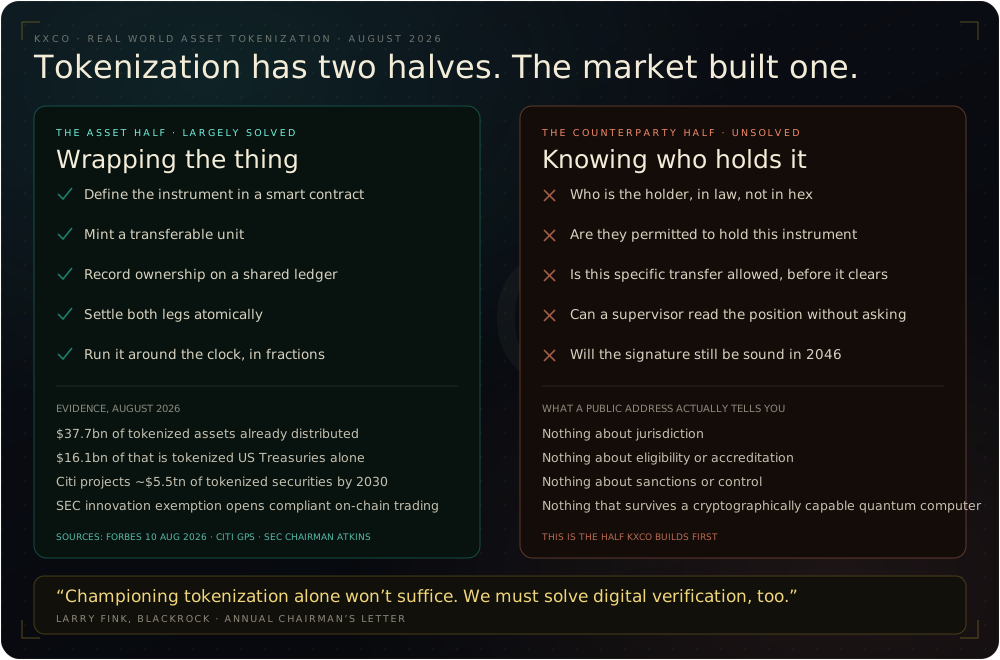
The asset half of tokenization is close to a solved engineering problem, and the numbers show it. As of August 2026 there is roughly $37.7bn of tokenized real world assets in distribution, of which about $16.1bn is tokenized US Treasuries, $7.1bn is tokenized credit, $4.8bn is commodities and just over $200m is real estate. Citi $C projects tokenized securities reaching around $5.5 trillion by 2030. JPMorgan $JPM has moved more than $3 trillion through its blockchain unit since inception. In Washington, SEC Chairman Paul Atkins has described an "innovation exemption" that would give market participants a framework to trade tokenized securities on chain in a compliant fashion, calling it "an important step toward facilitating the integration of tokenized securities into our existing financial system".
So the plumbing works. You can define an instrument in a contract, mint a transferable unit, record ownership on a shared ledger, settle both legs atomically, and run the whole thing around the clock in fractions. None of that is hard any more.
What is still hard is the other side of every one of those transactions. Who is the holder, in law rather than in hexadecimal. Are they permitted to hold this particular instrument, in this particular jurisdiction, today. Is this specific transfer allowed, checked before it clears rather than investigated after it settles. Can a supervisor read the position without writing to somebody and waiting. And will the signature that proved the original issuance still be sound in twenty years, when the asset is still outstanding.
A public blockchain address answers none of those questions. It carries no jurisdiction, no eligibility, no accreditation status, no sanctions status, and no indication of who actually controls the key. It is a bearer instrument with a receipt, which is precisely the thing regulated finance spent a century learning not to build.
An asset token with an anonymous holder is not an asset
This is the part worth being blunt about. In regulated finance the token was never the interesting object. The interesting object is the relationship between a specific asset and a specific, identified, eligible holder, with a record of how that relationship came to exist and who authorised it.
Tokenize a bond and hand it to an address, and you have not created a tokenized bond. You have created a claim that nobody can enforce, allocate, restrict, report or supervise, sitting on top of a real bond that still lives inside a transfer agent's system. The blockchain part is real. The ownership part is a spreadsheet somewhere else. Every serious tokenization project eventually discovers this, and the discovery usually arrives as a compliance memo rather than a technical one.
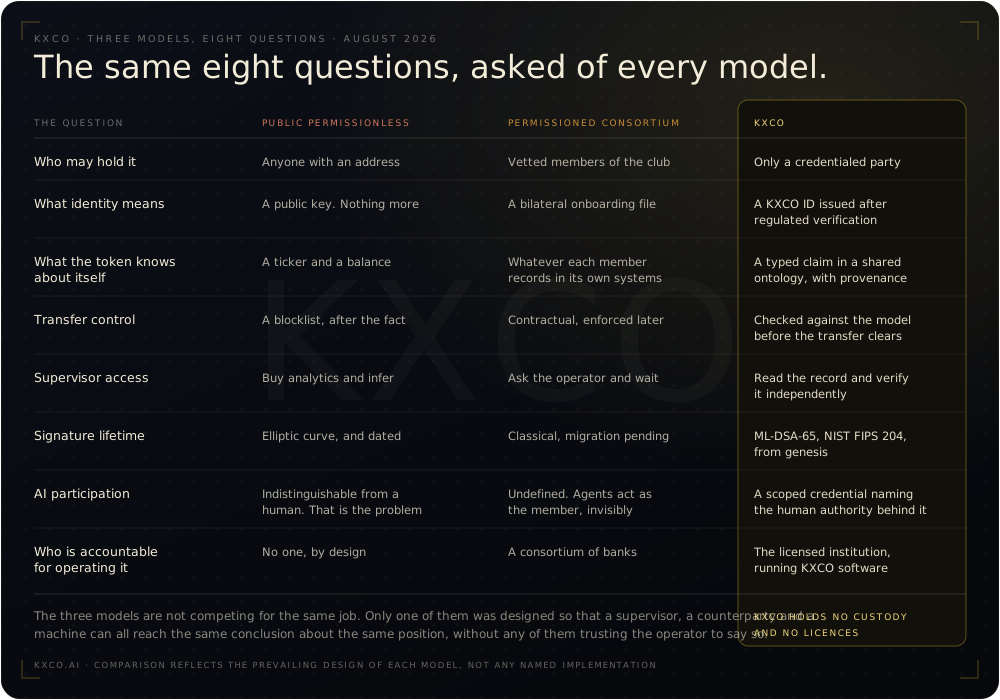
That is the gap KXCO built for. Not a better token standard. The environment the token has to live inside.
KXCO starts at the other end: the closed environment
KXCO is a software company. It holds no client assets, operates no exchange, and carries no financial licences. It builds the platform that licensed institutions run. That constraint shaped the architecture, because a company that cannot be the operator has to make the operator's obligations enforceable in software.
The design decision underneath everything is that the environment is closed. It is a system of known and approved parties only, and there is exactly one way in.
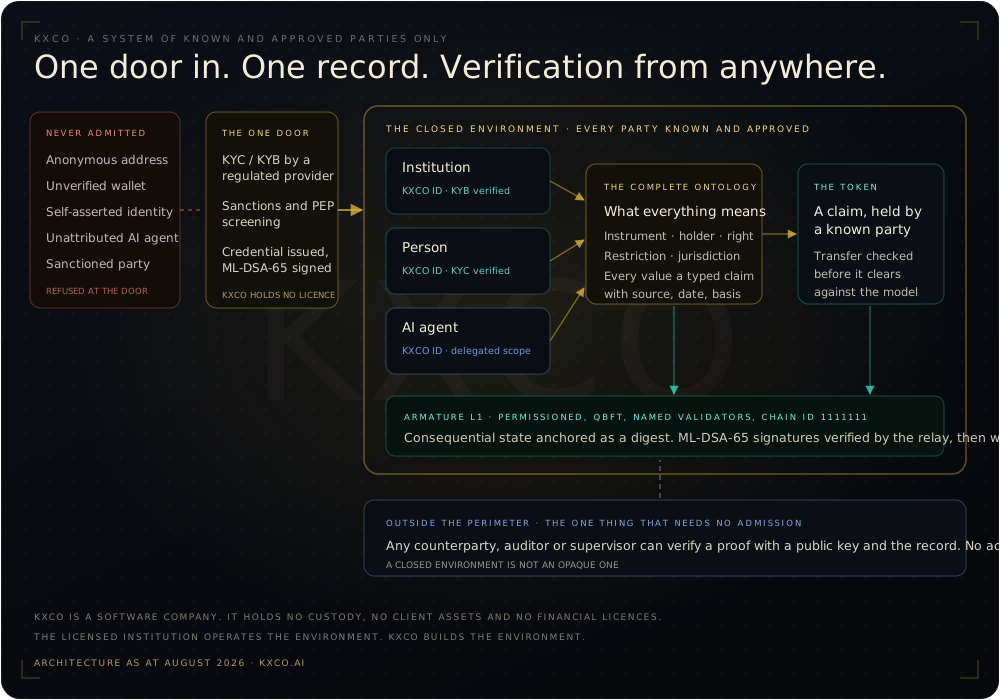
Outside the perimeter sit the things that are never admitted: anonymous addresses, unverified wallets, self-asserted identities, unattributed AI agents, sanctioned parties. They are not blocklisted after the fact. They never get a position in the first place, because there is no path from an address to a holding that does not pass through admission.
Admission runs through one door. A person is verified through KYC, an entity through KYB, screened for sanctions and politically exposed status, and the verification is performed by a regulated provider rather than by KXCO, because KXCO holds no licence and should not pretend otherwise. Only after that verification does the institution issue a credential.
The credential is the important artefact. It is signed under the institution's own key using ML-DSA-65, the NIST FIPS 204 post-quantum signature standard, and it carries the role, the authority and a reference to the verification that produced it. Users see one identifier, the KXCO ID. Everything downstream keys off that credential rather than off a raw address. No credential, no position, by construction rather than by policy.
Inside the perimeter, every party is one of three kinds: an institution, a person, or an AI agent acting under a named human authority. All three are credentialed. All three are attributable. That is what "known and approved parties only" means in practice, and it is the property that makes everything else in this article possible.
One thing deliberately happens from outside the perimeter. Verification. Any counterparty, auditor or supervisor can check a proof using a published public key and the record, with no account and no permission, and without having to trust KXCO's word for anything. A closed environment is not an opaque one. That distinction is the whole design.
KYC and AML are the door, not the paperwork
In most tokenization stacks, compliance is a layer bolted on at the edges. Screening happens at the fiat on-ramp. Eligibility is checked in a subscription document that a human reads. Transfer restrictions live in a legal agreement that the chain knows nothing about. The token itself is happily indifferent.
KXCO inverts that. The checks are the mechanism by which anything exists at all.
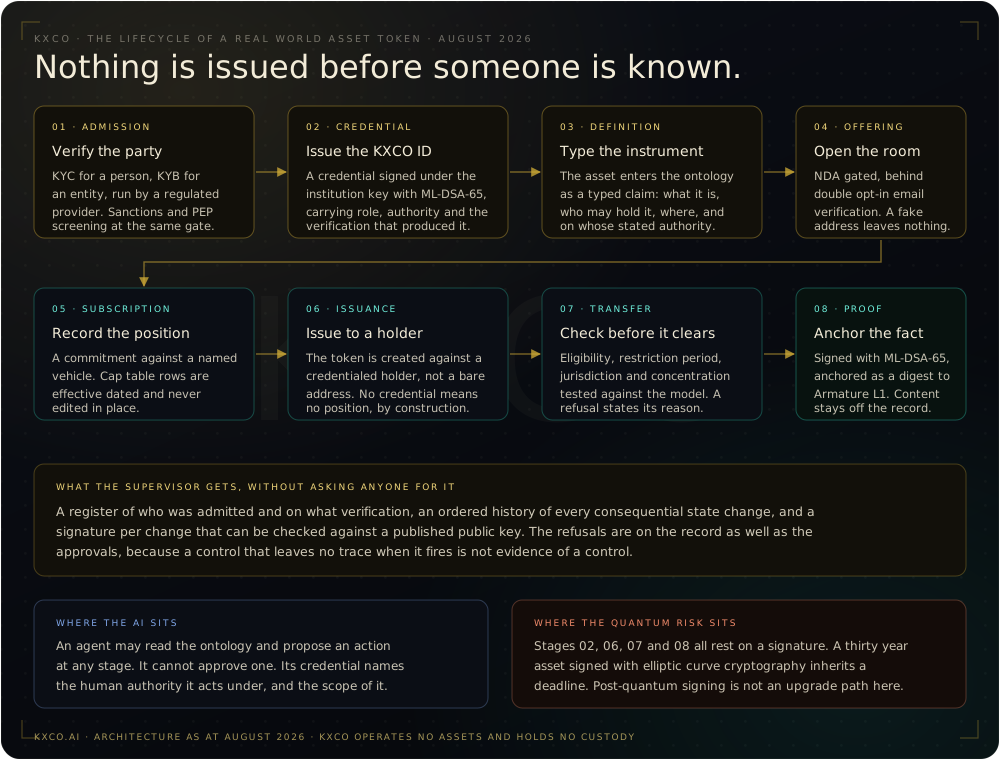
Access to a private offering runs through an NDA-gated data room behind double opt-in email verification, so a fabricated address leaves no trace and gains nothing. Rooms have named owners and named co-administrators, and issuing a deal into somebody else's room confers no rights over it. Subscriptions are recorded as commitments against a named vehicle, on a capital table whose rows are effective dated and never edited in place, so the register can be read as at any past date rather than only as it stands today.
Money movement is held to the same standard. Bank statement lines are matched to investor obligations only on an exact amount plus positive identification of the payer. Matching by elimination was deliberately removed after testing showed the failure mode: an unrelated receipt of the same size credits an investor who has not paid, who then accrues a preferred return on money never sent, while every total still reconciles. That is the kind of defect that only surfaces when compliance is treated as an engineering property rather than a document.
Authority is split the same way. A fund administrator prepares, and the manager approves. An administrator may raise a capital call, prepare a distribution and reconcile the bank, and may not change ownership, alter vehicle terms, post a distribution, or widen its own access. Discretion stays with the party that is accountable for it.
The complete ontology: a token that knows what it is
The second thing that makes this different is harder to demonstrate in a screenshot, and it is the more durable advantage.
Every value inside a KXCO environment is a typed claim, not a bare number. A figure carries what it means, the source it came from, the date on which it was true, a confidence, and the basis of the claim. That is the same method KXCO runs publicly on its market ontology at kxco.ai/ontology-live, which currently holds several hundred entities and over eight hundred typed claims about the AI and compute sector, each one traceable to a source.
Applied to a tokenized instrument, it means the token is not a ticker and a balance. It is an object in a shared model that knows what kind of instrument it is, which classes of holder may hold it, in which jurisdictions, under what restriction periods, and on whose stated authority those terms rest. The ledger records the ownership. The ontology records the meaning. Every participant, human or machine, resolves that meaning identically, because there is one model rather than one interpretation per counterparty.
This is worth being precise about, because it is easy to oversell. The ontology does not discover anything. It does not hand down conclusions. It is an instrument, not an oracle. What it does is render structure legible so that a person, or a supervisor, or an agent, can see something they could not see in prose. The discovery is always the human's. The system's contribution is making it reachable.
The practical payoff is that a transfer can be tested against the model before it clears, and a refusal can state its reason. Eligibility, restriction period, jurisdiction, concentration. Those are not policy documents in this design. They are conditions a machine evaluates, in the same terms the lawyers wrote them.
Being regulated is a feature, not a concession
There is a persistent assumption in digital assets that regulation is friction to be minimised. For real world assets that assumption is backwards. The asset is regulated whether or not the token acknowledges it. A tokenized mortgage participation does not stop being a mortgage participation because it moved onto a ledger.
So the useful question is not how little supervision a design can tolerate. It is what a supervisor actually needs, and whether the architecture can produce it without anyone being asked.
In a KXCO environment that is a register of who was admitted and on what verification, an ordered history of every consequential state change, and a signature per change that can be checked independently against a published key. The refusals are on the record alongside the approvals, because a control that leaves no trace when it fires is not evidence of a control.
The institutional plumbing has to line up too, and that part is unglamorous. Overseers of payment systems ask licensed institutions for a CPMI-IOSCO principles self-disclosure, and integration teams ask whether the message layer maps onto ISO 20022 rather than requiring a translation shim for every connection. Those two artefacts decide whether a platform is treated as a market infrastructure that risk teams can map to an existing framework, or as novel software that has to be argued about from first principles. They matter more to a procurement outcome than throughput does.
The BIS has been pointing at the same destination from the other direction. In June 2026 its General Manager, Pablo Hernández de Cos, put it as integrating digital innovation such as tokenisation into the existing financial architecture so that authorities can shape the future of money in the public interest while preserving trust. Preserving trust is doing the work in that sentence. Trust in this context is not sentiment. It is the ability to check.
The quantum problem is a signature problem
Here is where most tokenization roadmaps have a hole they have not priced.
A tokenized asset is, reduced to its essentials, a signature plus a record. Everything else is interface. So the security of the whole arrangement is the security of the signature, over the entire life of the asset.
Now put dates on it. NIST published the post-quantum standards, FIPS 203, 204 and 205, in August 2024. In May 2025 BlackRock amended the prospectus of its iShares Bitcoin Trust to add a quantum computing risk factor, stating that developments in mathematics and technology, including advances in quantum computing, could render the relevant cryptography ineffective. In June 2026 the White House signed Executive Order 14412, "Securing the Nation Against Advanced Cryptographic Attacks", naming harvest now and decrypt later as the threat model and setting hard federal deadlines: post-quantum key establishment by 31 December 2030, and post-quantum authentication, which means signatures, by 31 December 2031.
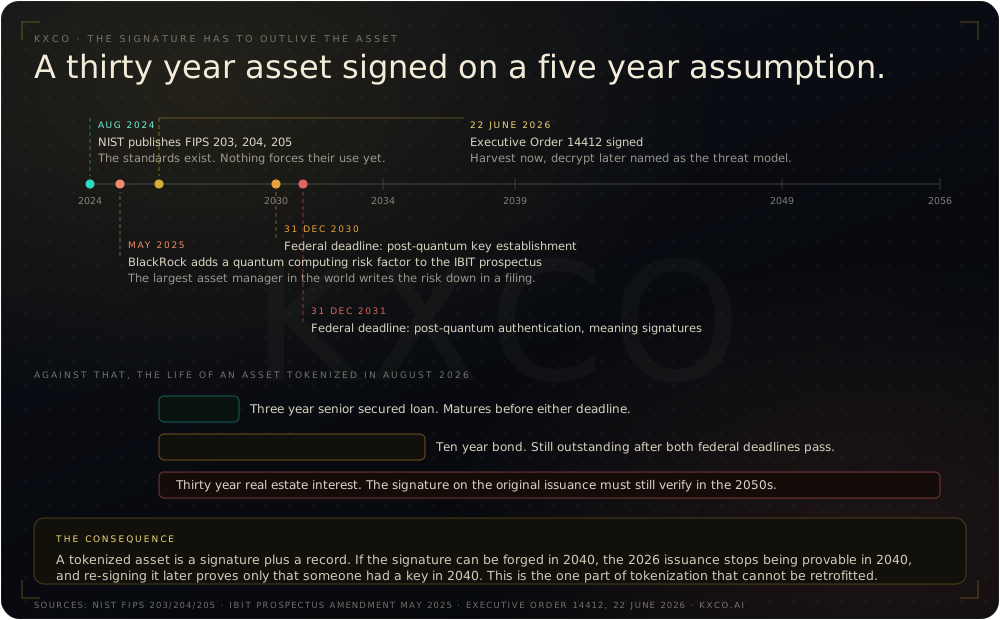
Set an asset against those dates. A three year loan tokenized in August 2026 matures before either deadline and never has to care. A ten year bond is still outstanding after both have passed. A thirty year real estate interest needs its original issuance signature to verify in the 2050s.
This is the one part of tokenization that cannot be retrofitted. If a signature from 2026 can be forged in 2040, then in 2040 the 2026 issuance stops being provable, and re-signing it later proves nothing except that somebody held a key in 2040. Verification has a start date and lives forward from it. Backdating it is not an upgrade, it is a lie with a timestamp.
KXCO's answer is to have never had a classical baseline. Armature L1, the settlement chain, is a permissioned QBFT network with named validators and post-quantum signing designed in from genesis rather than added later. ML-DSA-65 signatures are verified by the platform relay and the result anchored on chain through a registry contract. The primitives are published rather than asserted: KXCO's post-quantum library is on npm under an open licence with a build provenance attestation, tested against 2,103 NIST algorithm validation vectors with 1,793 passes and zero failures, and cross-checked against independent implementations including Bouncy Castle in a 156-check interoperability matrix with zero failures. Anyone can install it and check the arithmetic.
The other new counterparty is a machine
The last piece is the one the market has barely started on, and it arrives faster than the quantum deadlines.
The IMF has warned that AI agents capable of executing payments expose gaps in KYC and multifactor authentication frameworks that were designed around explicit human action. Those frameworks verify customers. They do not verify agents. The industry response is forming under the label "know your agent", with continuous identity verification rather than one check at onboarding.
For a closed environment this is not a new problem, it is the existing problem with a new kind of party. An AI agent operating inside a KXCO environment is a credentialed party like any other. Its credential is scoped, and it names the human authority it acts under. It may read the ontology and propose an action. It cannot approve one. The permission check that gates a human's transfer gates the agent's transfer, in the same terms, against the same model, and the resulting state change is signed and anchored the same way.
The alternative, which is where most of the market currently sits, is that an agent transacts as its principal, invisibly. When something goes wrong there is no way to establish whether a person or a model made the decision, or under what authority. That is a supervision problem long before it is a technology problem.
Where quantum and AI meet
It is tempting to treat post-quantum cryptography and AI agents as two unrelated items on a roadmap. They are the same requirement approached from opposite ends, and the requirement is provable attribution.
An AI agent acting on an institution's behalf is only safe if every action it takes is attributable to a specific credential, a specific delegated authority and a specific moment, and if that attribution can be checked by somebody who was not there. That is a signature. Which means the value of agent attribution is bounded by the life of the signature scheme. Deploy autonomous agents into a settlement environment on cryptography with a stated end date, and the audit trail they generate has the same end date.
Run it the other way and it holds too. Post-quantum signing without a shared model of meaning gives you unforgeable records of things nobody can interpret consistently. Agents without post-quantum signing give you interpretable actions nobody can prove later. You need the ontology for meaning, the credential for authority, and the post-quantum signature for durability. Take any one away and the other two stop being worth much.
That is why the same environment carries all three, and why it is not a bundle of features. It is one property.
What is live today, stated plainly
Precision matters more than enthusiasm here, so here is the state of it.
Armature L1 runs as a permissioned QBFT chain, chain ID 1111111, with named validators and post-quantum signing from genesis. ML-DSA-65 verification is performed off chain by the platform relay and anchored on chain through a registry contract. Credential issuance, NDA-gated data rooms with verified email, effective-dated capital tables, capital calls with value-dated payments, waterfall distributions and bank reconciliation with positive payer identification are all in production on the deal network. Selective on-chain attestation is live, opt-in per organisation and per event type, with a public verification endpoint that requires no account. The post-quantum library family is published on npm with conformance evidence anyone can rerun.
The KYC-gated issuance path is designed around a regulated third party verification provider, which is the correct division of responsibility for a company with no licences. Some of what is described here as an architecture is further along in some products than in others, and where that is the case it is stated rather than glossed. KXCO does not custody assets, does not operate the environments it builds, and does not hold financial licences. The licensed institution operates. KXCO supplies the software.
The point
The market spent five years perfecting the wrapper and is now discovering that the wrapper was never the constraint. Fink named the constraint in 2025 and named it again in 2026. Tokenization is not blocked on tokens. It is blocked on knowing who is on the other side, on agreeing what the thing actually is, on being able to show a supervisor without being asked, and on signatures that outlive the assets they authenticate.
Build those four first and the token is the easy part. Build the token first and you have a very fast way of moving something nobody can enforce.
A full technical account of the architecture, including the credential model, the ontology, the transfer permission checks, the post-quantum primitives and worked integration examples, is published on the KXCO developer blog: Real World Asset Tokenization: Inside the KXCO Closed Environment.
Sources
Larry Fink, 2025 Annual Chairman's Letter to Investors, BlackRock
Larry Fink Annual Chairman's Letter, BlackRock, 2026
Nina Bambysheva, Why Tokenization Finally Looks Real, Forbes, 10 August 2026
Keynote Remarks at The Economic Club of Washington, Chairman Paul S. Atkins, SEC
The path to the next-generation monetary and financial system lies in safeguarding trust in money, BIS, 23 June 2026
Securing the Nation Against Advanced Cryptographic Attacks, Executive Order 14412, 22 June 2026
How Agentic AI Will Reshape Payments, IMF Note 2026/004
BlackRock updates its Bitcoin ETF with a broadened quantum computing warning, The Quantum Insider, 13 May 2025
KXCO Meridian and the live market ontology, KXCO
Shayne Heffernan is the founder of KXCO. This is analysis, not investment advice.
Weekly Market Outlook: Fed Minutes, Anthropic and OpenAI IPOs, Gold, Bitcoin, FX
The Fed raised rates in September and payrolls rose 29,000, per the Labor Department. This week the FOMC minutes, three Treasury auctions and a 10-year near 5.3 percent test that gap. Anthropic's IPO clock runs toward a 14 October investor day while OpenAI's chief executive says not 2026. Gold sits 26 percent below its record, bitcoin near $85,500, the dollar up three weeks running. Two knowledge graphs from KXCO's records map the IPO backers and the FDA board.
Quantum Is Accelerating
Quantum is accelerating. Not toward a machine that breaks RSA next quarter, which is still five orders of magnitude away on the first honest cross-platform yardstick the field has ever had, but toward foundries, clouds, logical qubits and government deadlines that are already fixed. Two clocks are running. Only one of them is slow, and it is not the one that decides what a bank, a court or a ministry has to do this year.
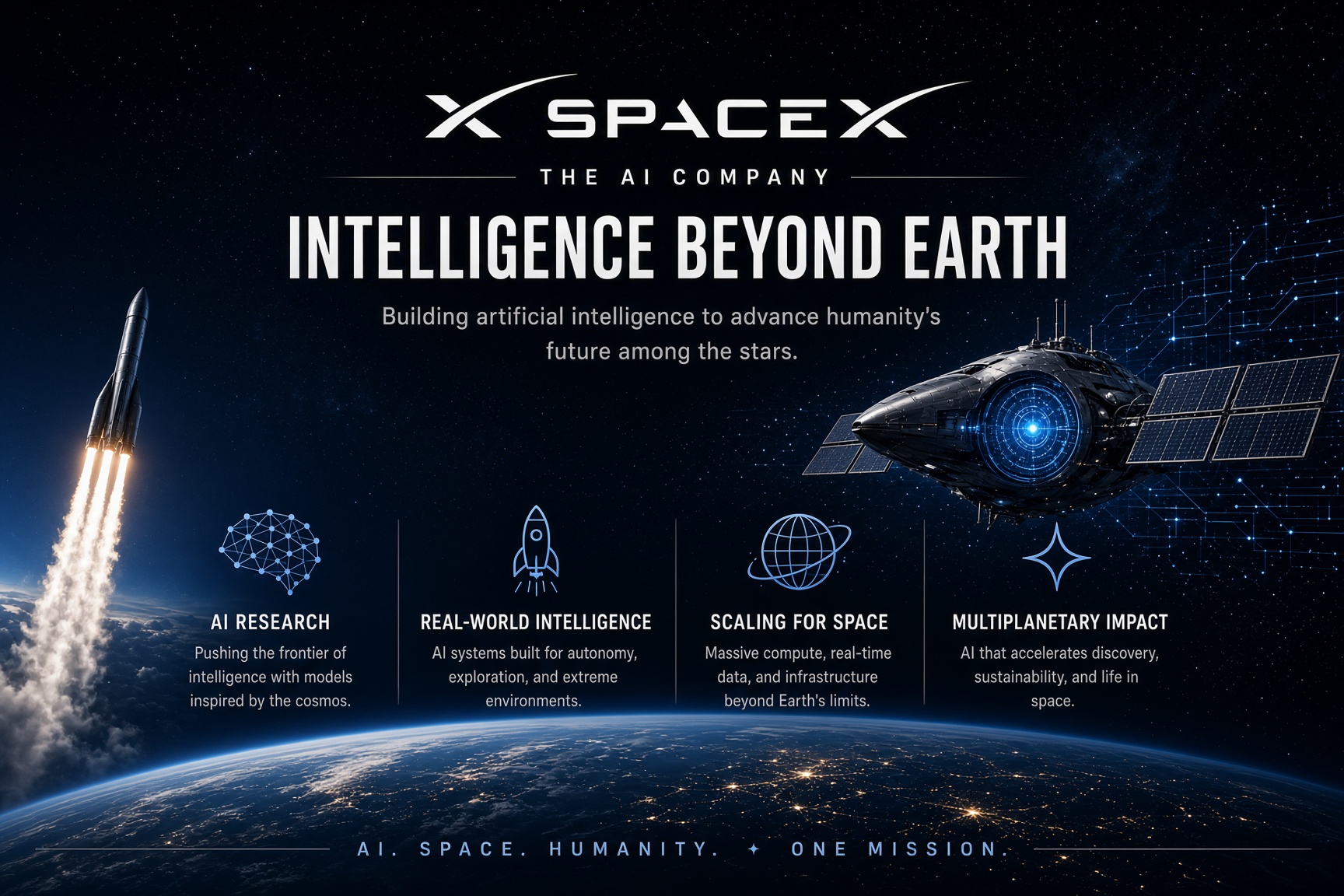
SpaceX the AI Company
Read SpaceX against the structure of the AI sector and it stops being a launch company. Anthropic rents an entire 220,000-GPU facility from it. Alphabet pays $920m a month. Remove SpaceX from the record and four major banks and three arms of the American state disconnect from AI entirely.
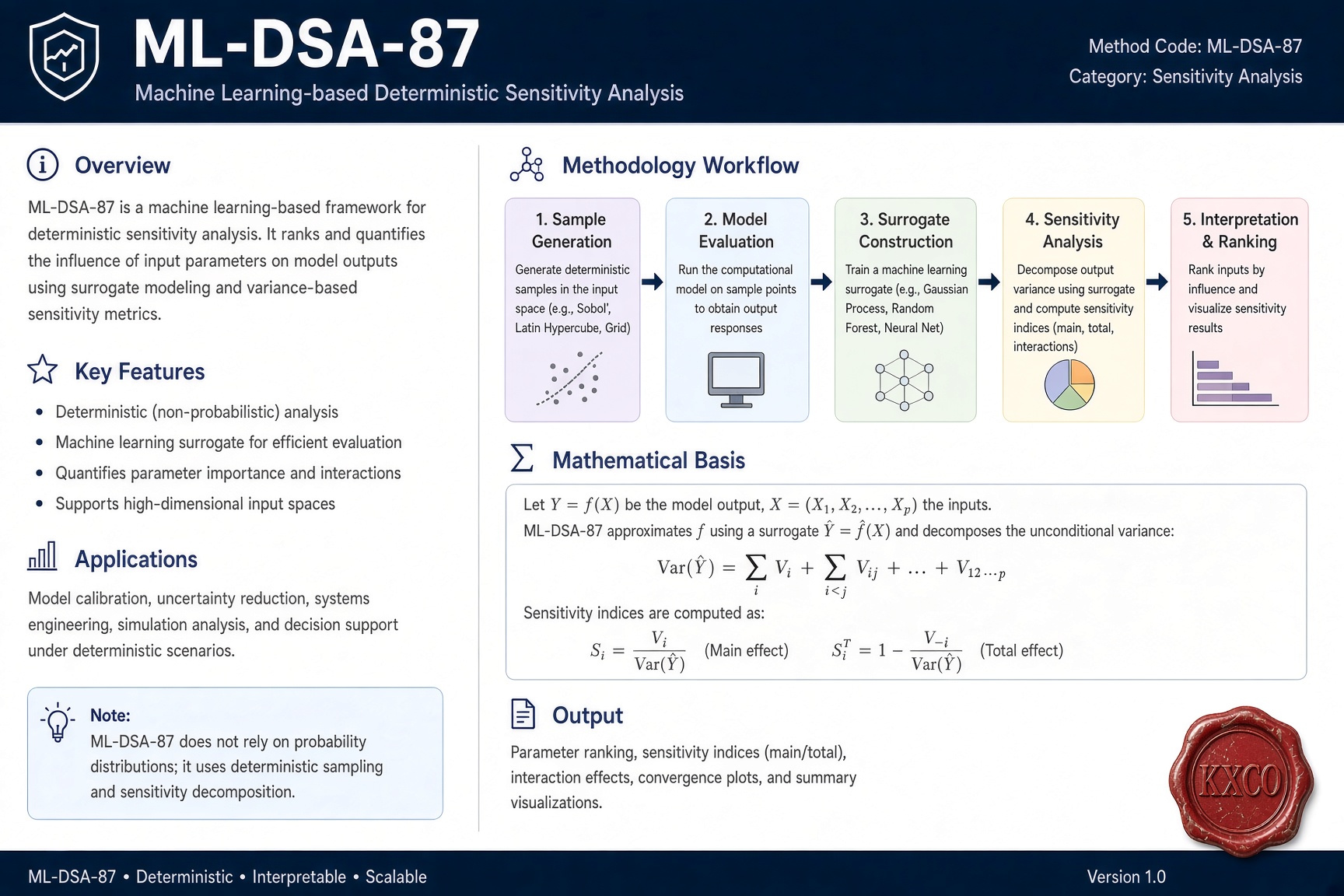
KXCO Now Verifies ML-DSA-87 in Consensus, the Signature Level Named by the NSA
On 6 October 2026 KXCO's chain began verifying ML-DSA-87 signatures as a rule of consensus, and the first ML-DSA-87 identity registered 28 seconds later. ML-DSA-87 is the category 5 level of NIST's FIPS 204, specified by the NSA for US national security systems and preferred by Australia's Information Security Manual. KXCO ships it for signing and for keys held in hardware, accepts it across its network and verifies it on chain, and anyone can check a verdict.
Every story, signed and delivered.
Subscribe to the kxco channel and get the headline, the AI-written key takeaways, and the chain-anchor link the moment we publish. Audio versions and per-ticker subscriptions arrive in the next iteration.