
Quo Vadis: A Defining Moment in Church History
By Shayne Heffernan, May 6, 2025
The account of St. Peter fleeing Rome during persecution, only to return and face martyrdom, is a cornerstone in the early history of the Catholic Church. With the conclave to elect Pope Francis’ successor underway after his passing on April 21, 2025, this episode from the Church’s beginnings resonates deeply. It’s a story of courage, divine purpose, and the foundation of the papacy, rooted in Peter’s journey. Let’s examine the historical context, the significance for the Church, and the message behind this pivotal event.
Historical Context of St. Peter’s Time in Rome
St. Peter, born Simon, a fisherman from Galilee, became the leader of Christ’s apostles after Jesus named him the “rock” upon which the Church would be built (Matthew 16:18). Tradition holds that Peter arrived in Rome around 42 AD, during Emperor Claudius’ reign, to guide the city’s growing Christian community. Rome was the empire’s heart, a city of over a million, with grand temples to Jupiter and Mars, busy markets, and a social order of patricians, plebeians, and slaves. Christians, a small but rising group, faced suspicion—their monotheism clashed with Rome’s state religion, often branding them as disloyal.
By the 60s AD, under Emperor Nero, hostility peaked. Nero, ruling from 54 to 68 AD, was known for excess—his Domus Aurea, a sprawling palace, covered 80 hectares in central Rome, funded by heavy taxes that stirred public unrest. In 64 AD, a massive fire razed three-quarters of the city. Nero blamed Christians, igniting the first major persecution. Eusebius of Caesarea, a 4th-century historian, writes that Nero had Christians crucified or burned alive as torches for his gardens. Tacitus, in his Annals (Book XV), notes Nero’s cruelty turned public opinion against him, as Christians were seen as scapegoats.
During this chaos, the 4th-century Acts of Peter, a non-canonical text, records that Peter chose to flee Rome. As he left along the Appian Way—a Roman road lined with tombs and cypress trees—he had a vision of Christ walking toward him, known as the Quo Vadis episode, which changed his path.
The Quo Vadis Message and Peter’s Return
In the vision, Peter asked Christ, “Quo vadis, Domine?” (Where are you going, Lord?). Jesus replied, “I am going to Rome to be crucified again.” The message was direct: Peter’s role was to return and face his fate, sharing in Christ’s suffering to strengthen the Church. Moved by this, Peter went back to Rome, accepting his duty. The Acts of Peter states he was martyred under Nero around 64–67 AD, crucified upside-down at his request, feeling unworthy to die as Jesus did. This took place on Vatican Hill, where St. Peter’s Basilica now stands, over a 1st-century necropolis with a tomb believed to be Peter’s, marked by early Christian graffiti, as confirmed by 20th-century excavations.
Nero’s Rome was a city of contrasts—rebuilding after the fire, with the Domus Aurea rising while citizens struggled. Christians met in secret, often in catacombs like San Sebastiano, to avoid arrest. Peter’s return in this environment showed his resolve, cementing his role as the first Pope.
Importance to the Catholic Church
Peter’s return to Rome shaped the Church’s core identity. His martyrdom made Rome the center of Christianity, a role it holds today with 1.37 billion Catholics worldwide. The papacy traces its authority to Peter, with each Pope as his successor, a line continuing with the 2025 conclave. Vatican Hill became sacred—Constantine I built the first St. Peter’s Basilica there in the 4th century, and the current basilica, finished in 1626, houses Peter’s tomb beneath the high altar, a pilgrimage site.
Peter’s sacrifice also set a precedent for the Church’s endurance under persecution. In the 1st century, Christians were a persecuted minority, but Peter’s death fueled growth—by 313 AD, Constantine’s Edict of Milan legalized the faith, paving the way for its spread across Europe. The Quo Vadis story became a symbol of bravery, showing leaders must face hardship for their people, a theme seen in later events like the Catholic-Ottoman conflicts, such as the Battle of Lepanto in 1571, where the Church rallied against threats.
The Lasting Message
The Quo Vadis message—Christ’s call to Peter to return and suffer for the faith—shows the Church’s mission of sacrifice and service. It’s a call to face fear, a principle that matters as the Church picks a new Pope in 2025. Peter’s vision on the Appian Way, a road lined with ancient tombs, wasn’t just his turning point; it laid the groundwork for Christianity, securing Rome’s role as the Church’s heart and Peter’s legacy as its rock.
Peter leaving Rome but returning shows the Church’s ability to grow through adversity, a message that holds true today.
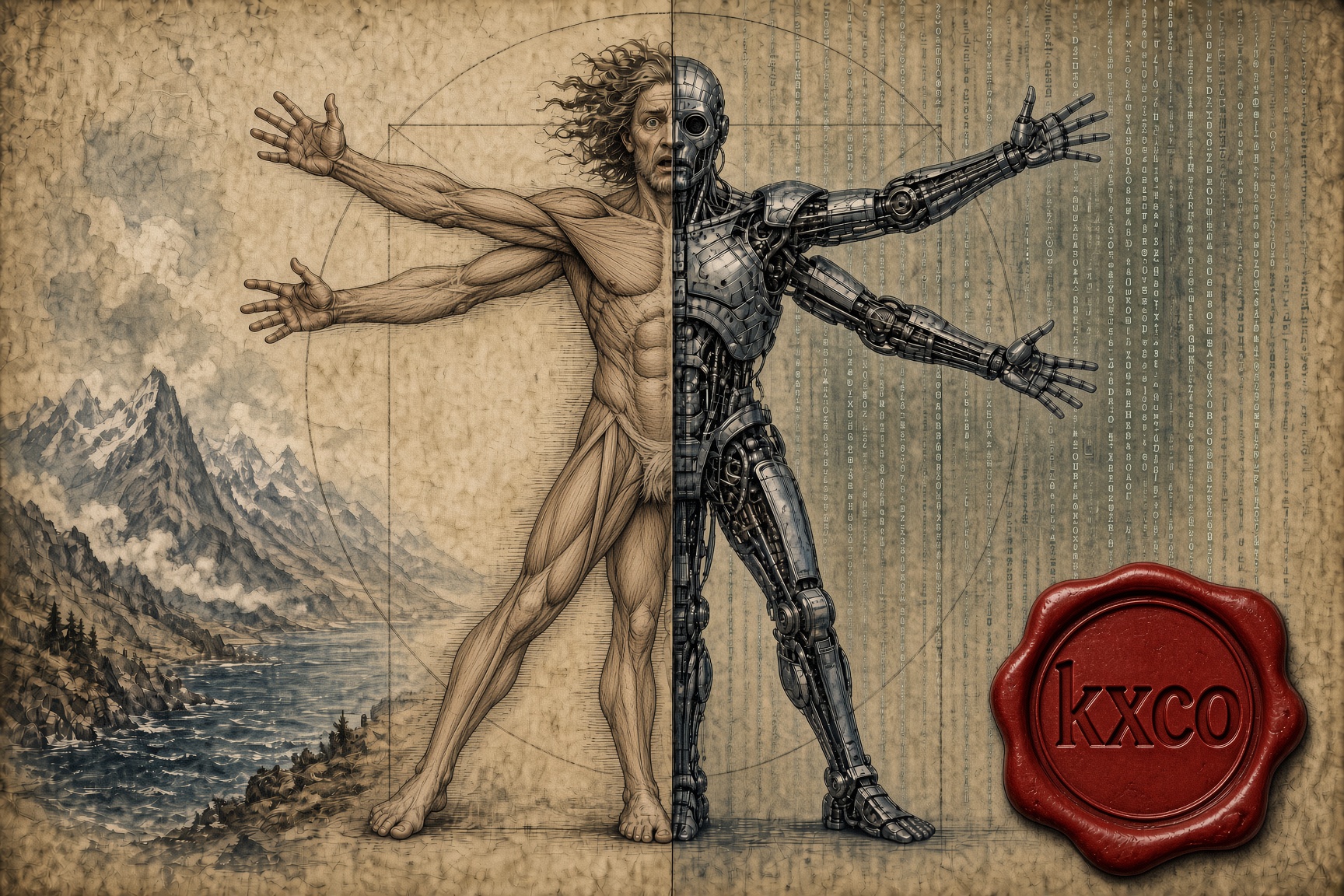
Don't Be the Best, Be the Only: Winning in an AI World
AI is repricing competence downward. What it cannot reproduce is a life. The case for remaining non-fungible, why friction still produces the best ideas, and what it means to build AI systems that keep the human intellect in them.
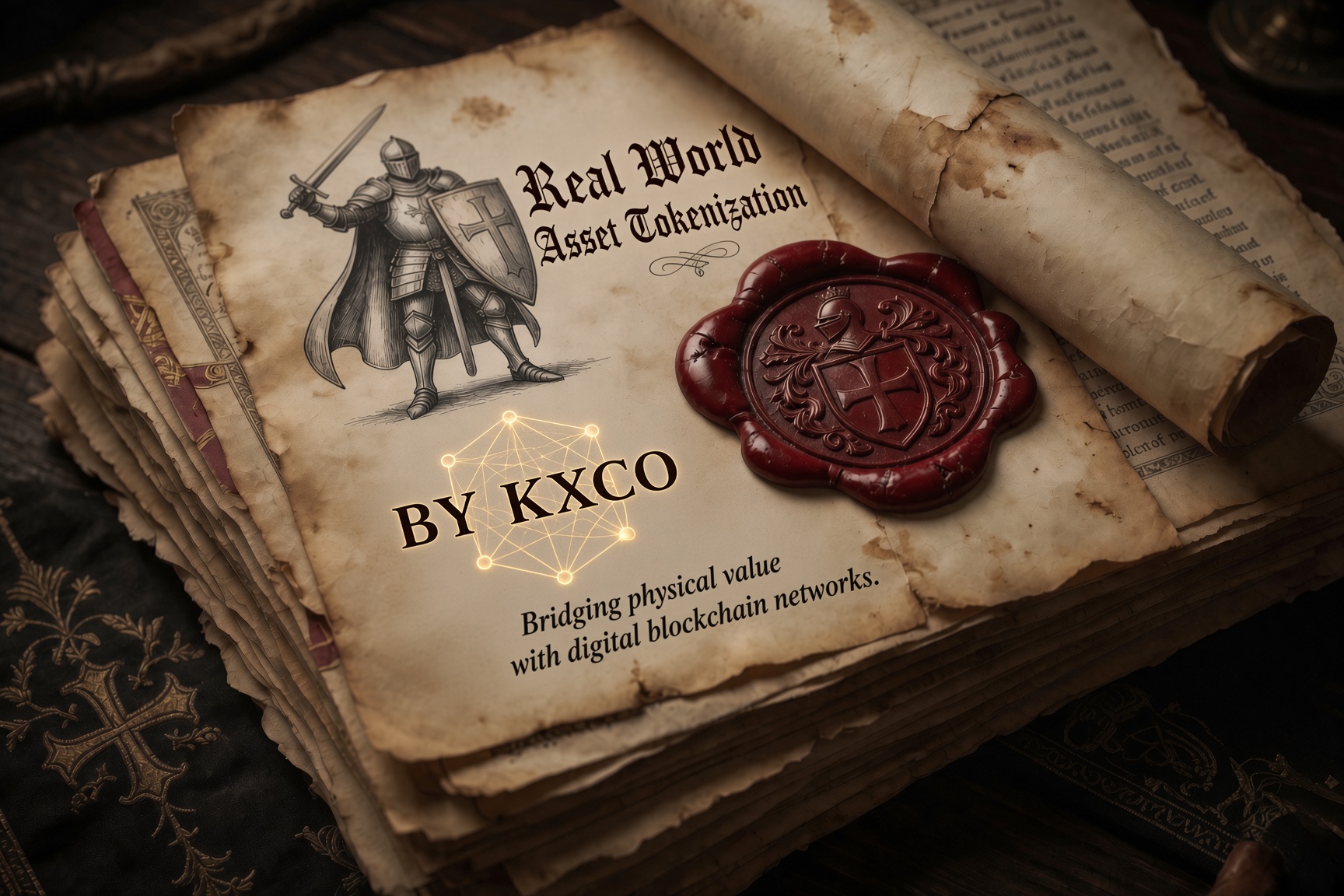
Real World Asset Tokenization: KXCO
Tokenization has two halves. The market perfected the wrapper and left the counterparty unsolved. KXCO built the other half first: one verified door in, a complete ontology so a token knows what it is, transfer checks before clearing, and signatures designed to outlive thirty year assets.

AI Demand in 2026: The Revenue Is Finally Catching Up to the Capex
The Q2 2026 numbers show AI capital spending finally converting into revenue. AWS up 37 percent, Google Cloud up 82 percent, Azure in the low-to-mid 40s and Nvidia data center near $75 billion, with combined hyperscaler capex tracking toward $740 billion and demand still outstripping capacity. Shayne Heffernan on what carries into 2027.
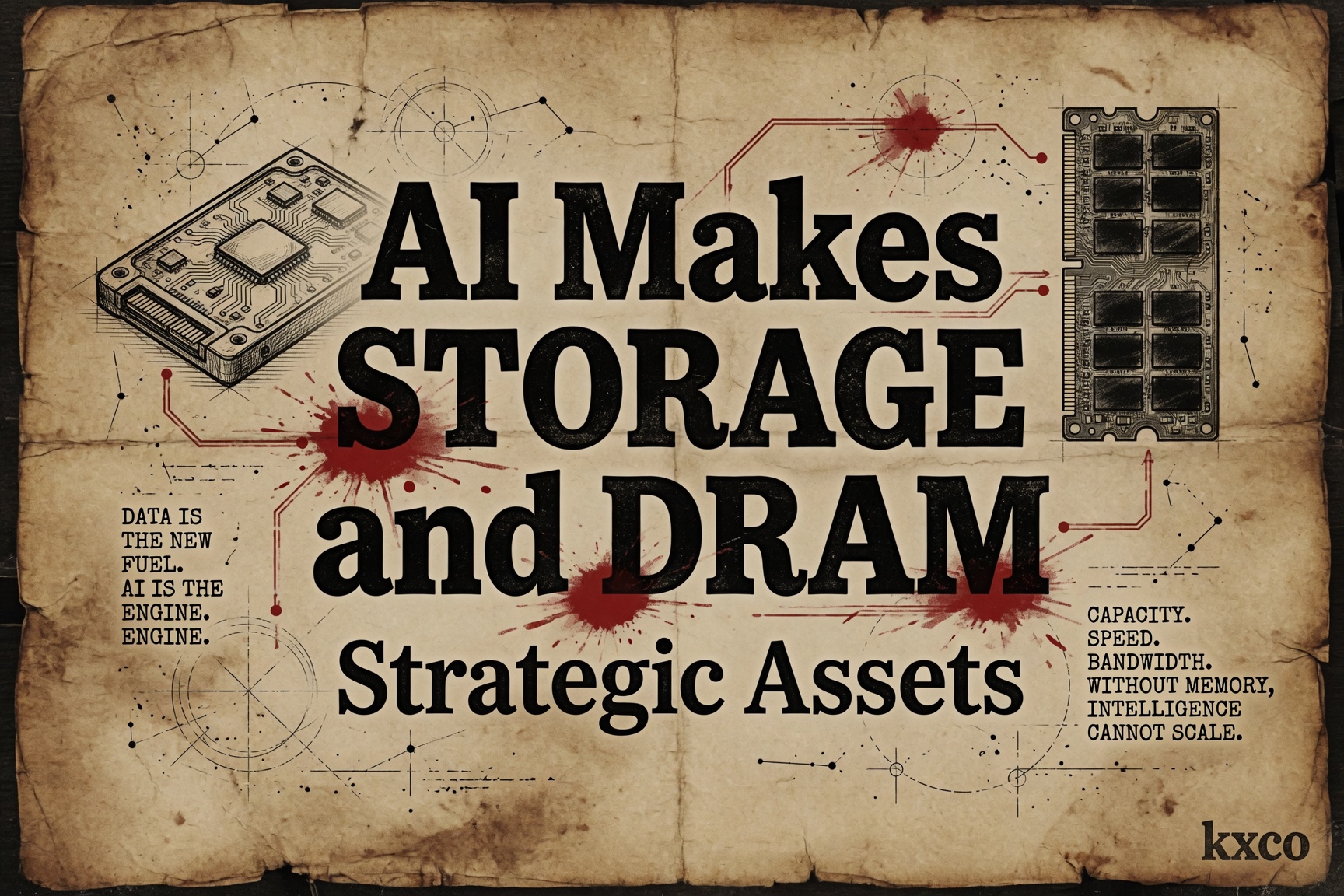
AI Makes Storage and DRAM Strategic Assets
Memory supply is growing about 20% a year while AI demand climbs 200%. Shayne Heffernan on the agentic workload behind the shortage, Micron's real fab timelines, the five listed names carrying the trade, and why quantum computing increases demand for classical memory rather than replacing it.
Every story, signed and delivered.
Subscribe to the kxco channel and get the headline, the AI-written key takeaways, and the chain-anchor link the moment we publish. Audio versions and per-ticker subscriptions arrive in the next iteration.