
Putin's Strategic Moves: Turning Ukraine into a Bottomless Pit for Western Aid
In the complex and ever-evolving landscape of global politics, it is essential to critically assess the motivations and strategies employed by various world leaders. One such leader is Vladimir Putin, the President of Russia, whose actions in Ukraine have raised concerns and drawn international attention. While some may argue that Putin's objectives in Ukraine are focused on achieving specific goals, others contend that his tactics have turned the nation into a bottomless pit for Western aid. In this analysis, we explore the perspective that Putin has indeed used Ukraine as a strategic pawn, deliberately creating a situation that demands continued Western assistance.
A Protracted Conflict:
One of the most significant factors contributing to Ukraine's ongoing need for Western aid is the protracted conflict in Eastern Ukraine. Since 2014, this conflict has led to extensive humanitarian challenges, the displacement of millions, and severe damage to Ukraine's infrastructure. Putin's decision to support separatist forces in Eastern Ukraine and annex Crimea triggered the conflict, which continues to this day. By fostering instability in Ukraine, Putin has made sure that international aid remains a necessity.
Economic Strain:
Russia's actions in Ukraine have caused significant economic disruption, with the annexation of Crimea and ongoing fighting in Eastern Ukraine taking a heavy toll. This economic strain, combined with corruption and political challenges, has made it difficult for Ukraine to stabilize its economy and fully recover. Western aid has played a crucial role in helping Ukraine address these economic issues, making it a resource-intensive endeavor for the West.
Geopolitical Leverage:
One cannot ignore the geopolitical leverage that Putin has gained through his actions in Ukraine. By keeping the conflict simmering, he maintains influence over Ukraine's domestic politics and its orientation toward the West. This leverage allows Putin to keep Western powers engaged, as they seek to support Ukraine's sovereignty and territorial integrity. As a result, Western assistance continues to flow, strengthening Putin's hand on the global stage.
Resource Drain:
Providing aid to Ukraine is not only a financial commitment but also a diplomatic and strategic one. It diverts valuable Western resources that could be allocated to other international challenges. As long as Ukraine remains in need, Western countries must allocate resources, both financial and political, to address the ongoing crisis. This diversion of resources benefits Putin's strategic objectives and may prolong the situation.
In conclusion, while the situation in Ukraine is undoubtedly complex and multifaceted, one cannot ignore the strategic elements in Putin's approach. By fostering a protracted conflict, causing economic disruption, and leveraging the situation for geopolitical gain, Putin has contributed to making Ukraine reliant on Western aid. The question remains: will Western powers continue to pour resources into this bottomless pit, or will they find a way to address the situation strategically and bring about a sustainable resolution to the conflict? Only time will tell.
AI is the Neat Handwriting of the Illiterate
A model in the hands of someone who has read the filing and walked the plant is a clerk. The same model, speaking for someone who has done neither, is a disguise. On AI slop, phantom citations and factslop, why finish stopped being evidence of work, and the containment layer KXCO built so a machine cannot speak as the institution until a source is attached.
Worthship: Do Not Conform to the Age
Worthship is the older English word for worship, and it means to ascribe worth. Bishop Robert Barron preached Romans 12 on 30 August. This essay follows the text into the prison letters, and puts two questions to a graph: do the four readings of that Sunday agree, and was Paul free or in chains when he wrote about despair?
The Truth in All Its Ugliness Must Survive
A majority vote does not determine the truth. Consensus is a mood, gossip is a sport, and a model will write the pretty version for free. Why the ugly number has to survive, why a record beats a dashboard, and what KXCO was built to keep standing when the room changes its mind.
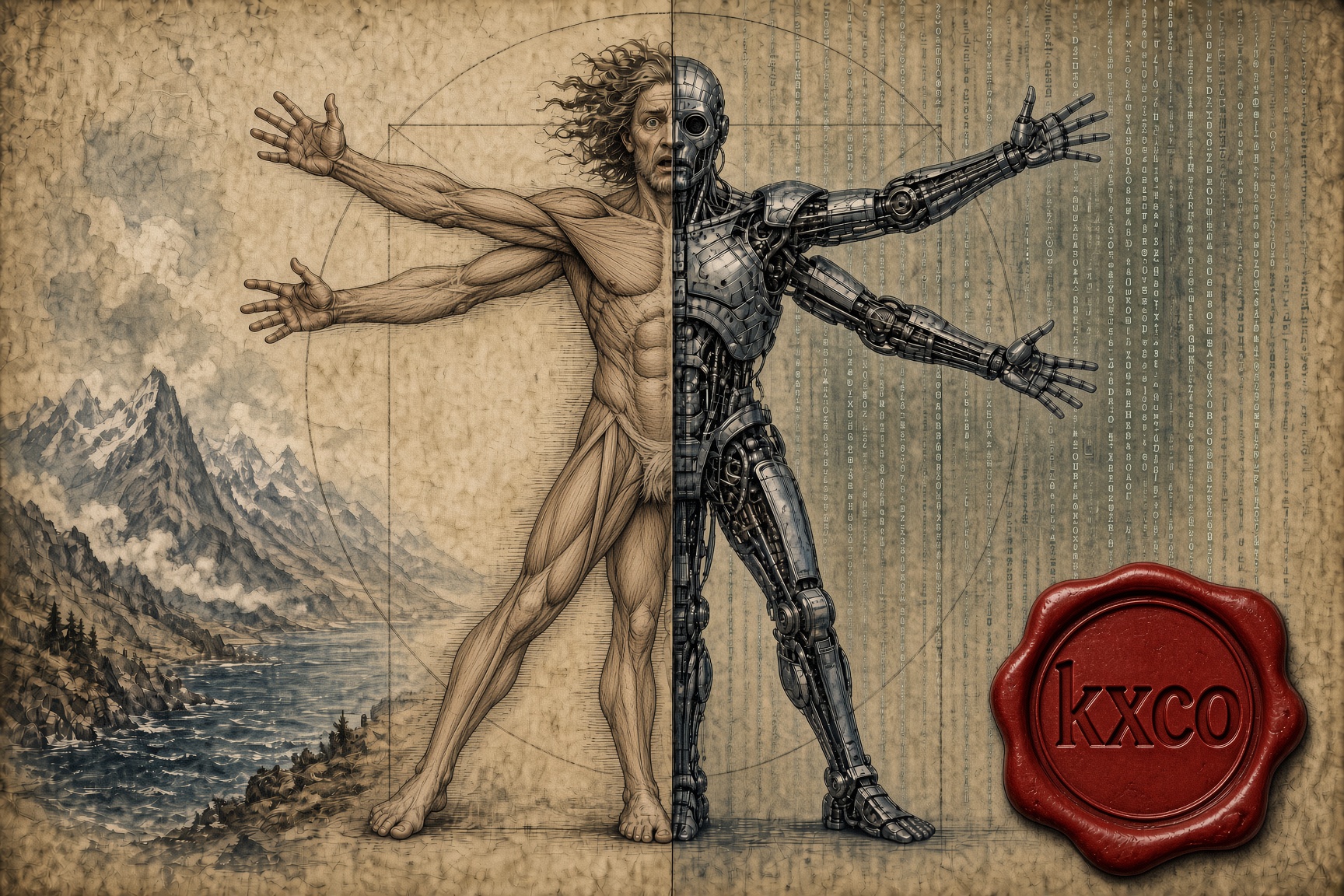
Don't Be the Best, Be the Only: Winning in an AI World
AI is repricing competence downward. What it cannot reproduce is a life. The case for remaining non-fungible, why friction still produces the best ideas, and what it means to build AI systems that keep the human intellect in them.
Every story, signed and delivered.
Subscribe to the kxco channel and get the headline, the AI-written key takeaways, and the chain-anchor link the moment we publish. Audio versions and per-ticker subscriptions arrive in the next iteration.