
Preparing for Stagflation $QQQ $BTC $SPY
Stock markets typically perform poorly during stagflation. Stagflation is a period of high inflation and low economic growth, which can lead to a number of negative factors for businesses and investors, including:
Reduced consumer demand: When inflation is high, consumers have less disposable income to spend on goods and services. This can lead to a decline in sales and profits for businesses.
Increased costs of doing business: Businesses also face higher costs during stagflation, such as higher wages, transportation costs, and the cost of raw materials. This can squeeze business margins and reduce profitability.
Uncertainty and risk aversion: Stagflation can create a lot of uncertainty and risk aversion among investors. This can lead to a decline in stock prices, as investors sell stocks and move their money to safer assets, such as bonds or cash.
As a result of these factors, stock markets have historically performed poorly during stagflation. For example, during the 1970s stagflation period, the S&P 500 index lost an average of 8.5% per year.
However, it is important to note that there is always variation in how individual stocks perform during stagflation. Some stocks, such as companies that sell essential goods and services, may perform relatively well during stagflation. Other stocks, such as companies that sell cyclical goods and services, may perform poorly.
Overall, investors should be cautious about investing in stocks during stagflation. However, by carefully selecting stocks and diversifying their portfolios, investors may be able to mitigate some of the risks of investing during this period.
Here are some tips for investing in stocks during stagflation:
Bitcoin is a scarce asset with a limited supply. This makes it attractive to investors who are looking for a hedge against inflation.
Bitcoin is decentralized and not subject to government control. This could make it appealing to investors who are concerned about political or economic instability.
Bitcoin is a global asset that can be easily transferred anywhere in the world. This could make it useful for people who are trying to protect their wealth from currency devaluation or capital controls.
Invest in companies with strong fundamentals: Focus on companies with strong financial performance, low debt levels, and a diversified business model. These companies are more likely to weather the storm of stagflation.
Invest in companies that sell essential goods and services: Companies that sell essential goods and services, such as food, utilities, and healthcare, are more likely to be resilient during stagflation.
Diversify your portfolio: Invest in a variety of asset classes, including stocks, bonds, and cash. This will help to reduce your overall risk.
Be patient: Stagflation can be a difficult period for investors. However, it is important to be patient and stay invested in the long term.
AI is the Neat Handwriting of the Illiterate
A model in the hands of someone who has read the filing and walked the plant is a clerk. The same model, speaking for someone who has done neither, is a disguise. On AI slop, phantom citations and factslop, why finish stopped being evidence of work, and the containment layer KXCO built so a machine cannot speak as the institution until a source is attached.
Worthship: Do Not Conform to the Age
Worthship is the older English word for worship, and it means to ascribe worth. Bishop Robert Barron preached Romans 12 on 30 August. This essay follows the text into the prison letters, and puts two questions to a graph: do the four readings of that Sunday agree, and was Paul free or in chains when he wrote about despair?
The Truth in All Its Ugliness Must Survive
A majority vote does not determine the truth. Consensus is a mood, gossip is a sport, and a model will write the pretty version for free. Why the ugly number has to survive, why a record beats a dashboard, and what KXCO was built to keep standing when the room changes its mind.
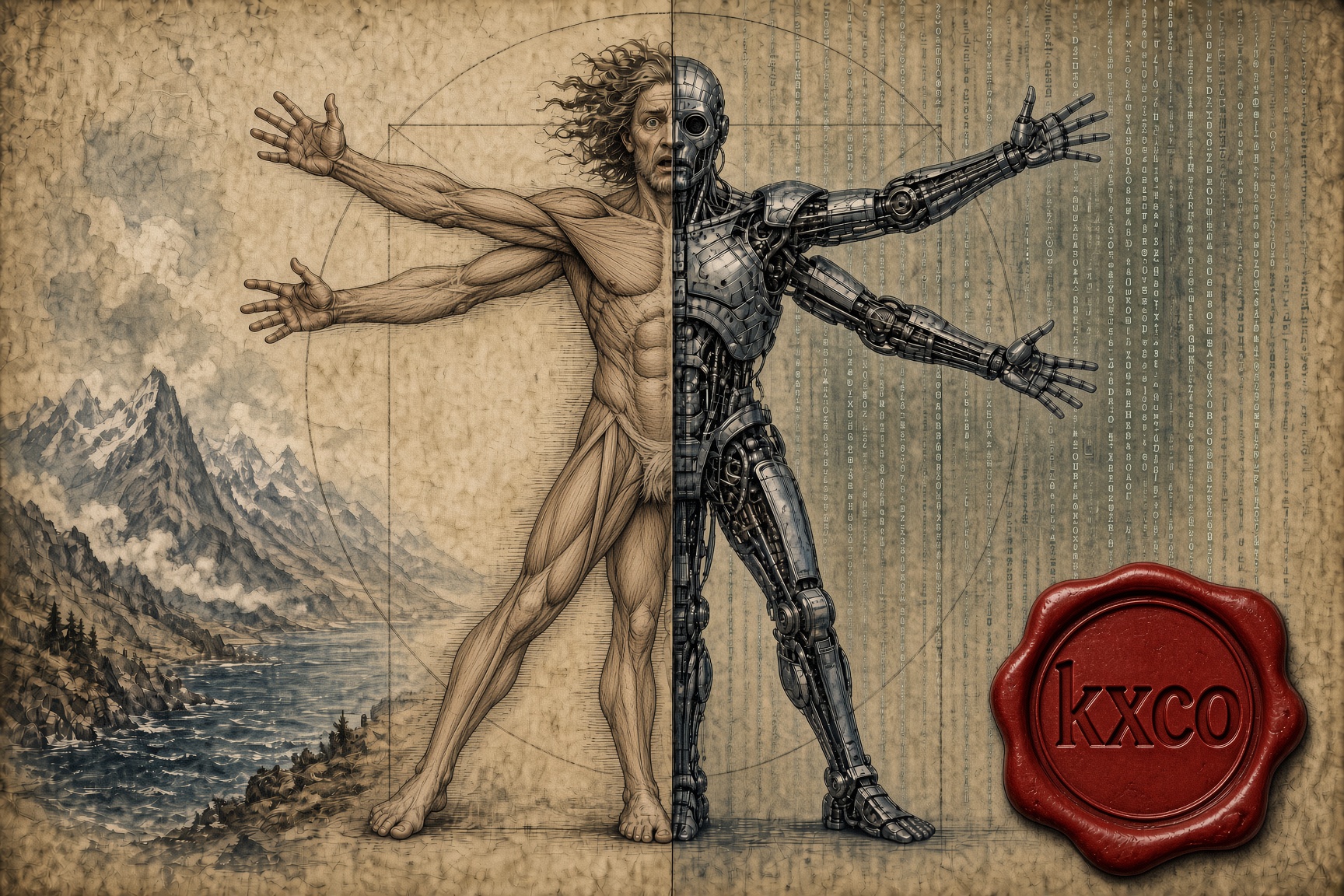
Don't Be the Best, Be the Only: Winning in an AI World
AI is repricing competence downward. What it cannot reproduce is a life. The case for remaining non-fungible, why friction still produces the best ideas, and what it means to build AI systems that keep the human intellect in them.
Every story, signed and delivered.
Subscribe to the kxco channel and get the headline, the AI-written key takeaways, and the chain-anchor link the moment we publish. Audio versions and per-ticker subscriptions arrive in the next iteration.