
Penrose Tiling: The Mesmerizing Mathematical Patterns of Sir Roger Penrose
In the realm of mathematics and geometry, few patterns captivate the imagination quite like Penrose tiling. Conceived by the renowned mathematician Sir Roger Penrose in the 1970s, these non-periodic tilings have intrigued scholars, artists, and enthusiasts alike due to their unique properties and aesthetic allure. Let's delve into the fascinating world of Penrose tiling, exploring its history, characteristics, and enduring impact.
Origins and Inspiration
Sir Roger Penrose, a distinguished British mathematician and physicist, introduced Penrose tiling as a novel approach to understanding aperiodic patterns—those lacking translational symmetry. Unlike traditional periodic tilings that repeat indefinitely, Penrose tilings exhibit quasi-symmetry, where local patterns resemble larger patterns but never precisely repeat. Inspired by earlier work on aperiodic systems and quasicrystals, Penrose's innovative approach revolutionized our understanding of mathematical patterns and their physical manifestations.
Characteristics and Construction
Penrose tilings consist of two distinct shapes, often referred to as "kites" and "darts," arranged in a non-repeating, aperiodic fashion. These shapes adhere to specific matching rules, ensuring that adjacent tiles align seamlessly without forming repetitive patterns. The intricate interplay between kites and darts creates mesmerizing patterns reminiscent of intricate Islamic mosaics or contemporary artistic designs. Despite their complex appearance, Penrose tilings derive from simple geometric principles, underscoring the elegance and ingenuity of Sir Roger Penrose's construction method.
Applications and Significance
Beyond their aesthetic appeal, Penrose tilings have profound implications across various disciplines. In mathematics, they challenge conventional notions of symmetry and tessellation, prompting scholars to explore new avenues in geometry, topology, and dynamical systems. In physics, Penrose tilings influenced research on quasicrystals—materials exhibiting long-range order without periodicity—a discovery recognized with the 2011 Nobel Prize in Chemistry. Moreover, artists and designers have embraced Penrose tilings, incorporating their captivating patterns into architectural designs, decorative arts, and visual arts, exemplifying the intersection of mathematics, science, and creativity.
Legacy and Future Directions
Sir Roger Penrose's groundbreaking work on Penrose tilings has left an indelible mark on mathematics, physics, and art, fostering interdisciplinary collaboration and innovation. As researchers continue to explore the properties and applications of aperiodic patterns, Penrose tilings remain a testament to human curiosity, ingenuity, and the boundless possibilities of mathematical exploration. Whether admired for their aesthetic beauty, studied for their mathematical properties, or applied in innovative contexts, Penrose tilings continue to inspire, challenge, and captivate individuals worldwide, underscoring their enduring relevance and significance in contemporary discourse.
Conclusion
Penrose tiling, conceived by the visionary mathematician Sir Roger Penrose, stands as a testament to the intricate interplay between geometry, symmetry, and creativity. Its non-repeating, aperiodic patterns have captivated scholars and enthusiasts alike, fostering innovation across mathematics, physics, art, and beyond. As we appreciate the elegance and complexity of Penrose tilings, we celebrate Sir Roger Penrose's enduring legacy and the enduring allure of mathematical exploration, creativity, and discovery.
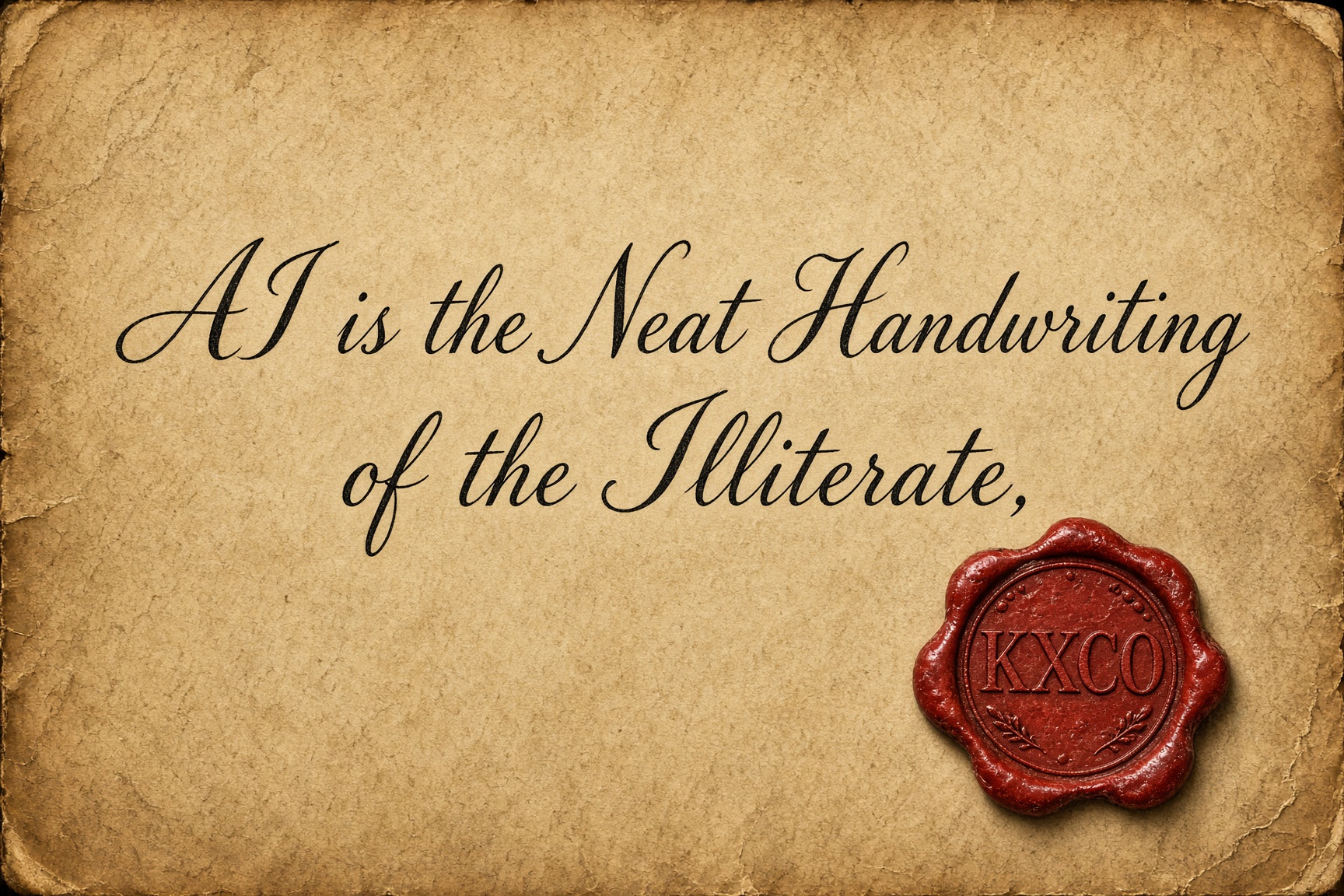
AI is the Neat Handwriting of the Illiterate
A model in the hands of someone who has read the filing and walked the plant is a clerk. The same model, speaking for someone who has done neither, is a disguise. On AI slop, phantom citations and factslop, why finish stopped being evidence of work, and the containment layer KXCO built so a machine cannot speak as the institution until a source is attached.
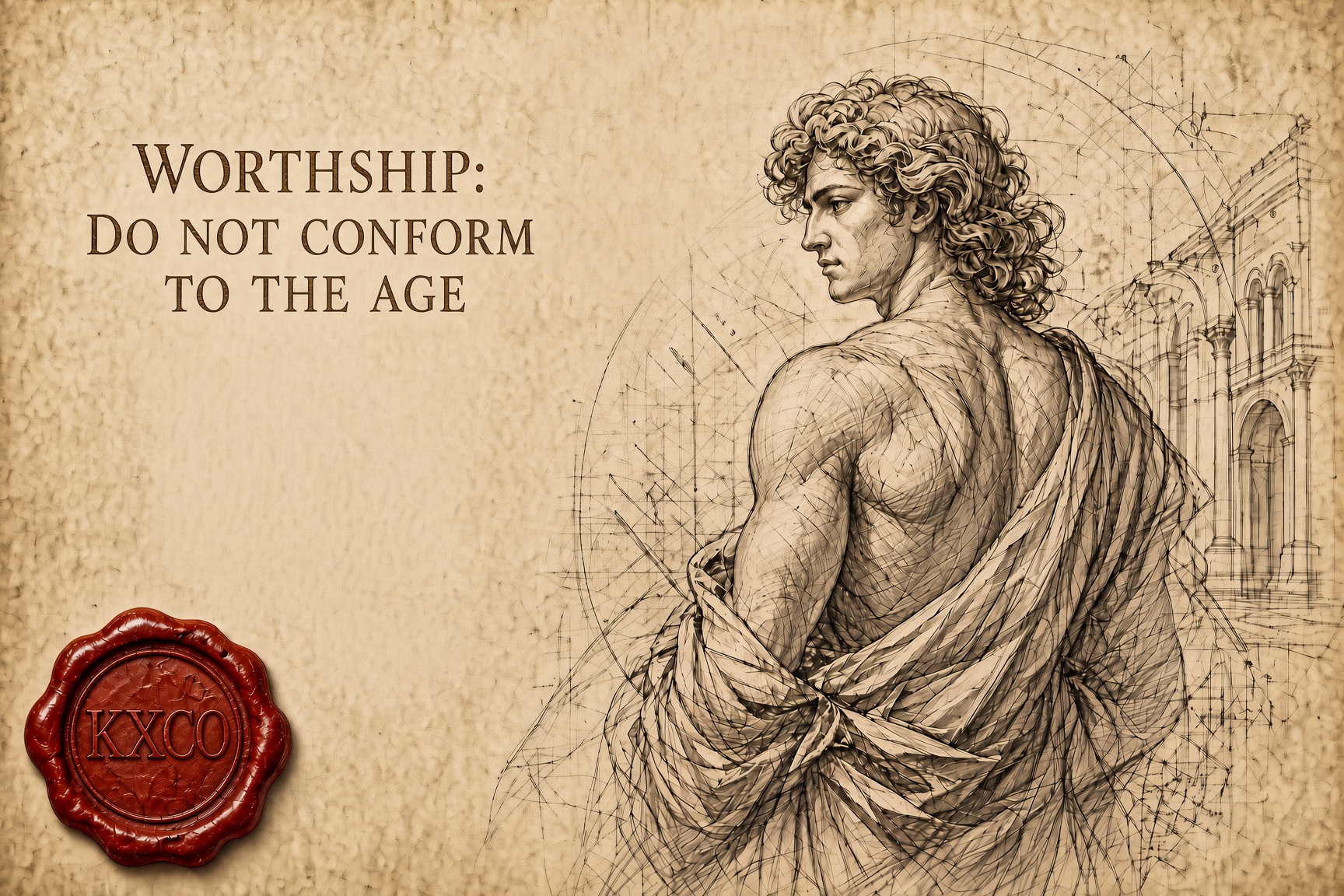
Worthship: Do Not Conform to the Age
Worthship is the older English word for worship, and it means to ascribe worth. Bishop Robert Barron preached Romans 12 on 30 August. This essay follows the text into the prison letters, and puts two questions to a graph: do the four readings of that Sunday agree, and was Paul free or in chains when he wrote about despair?
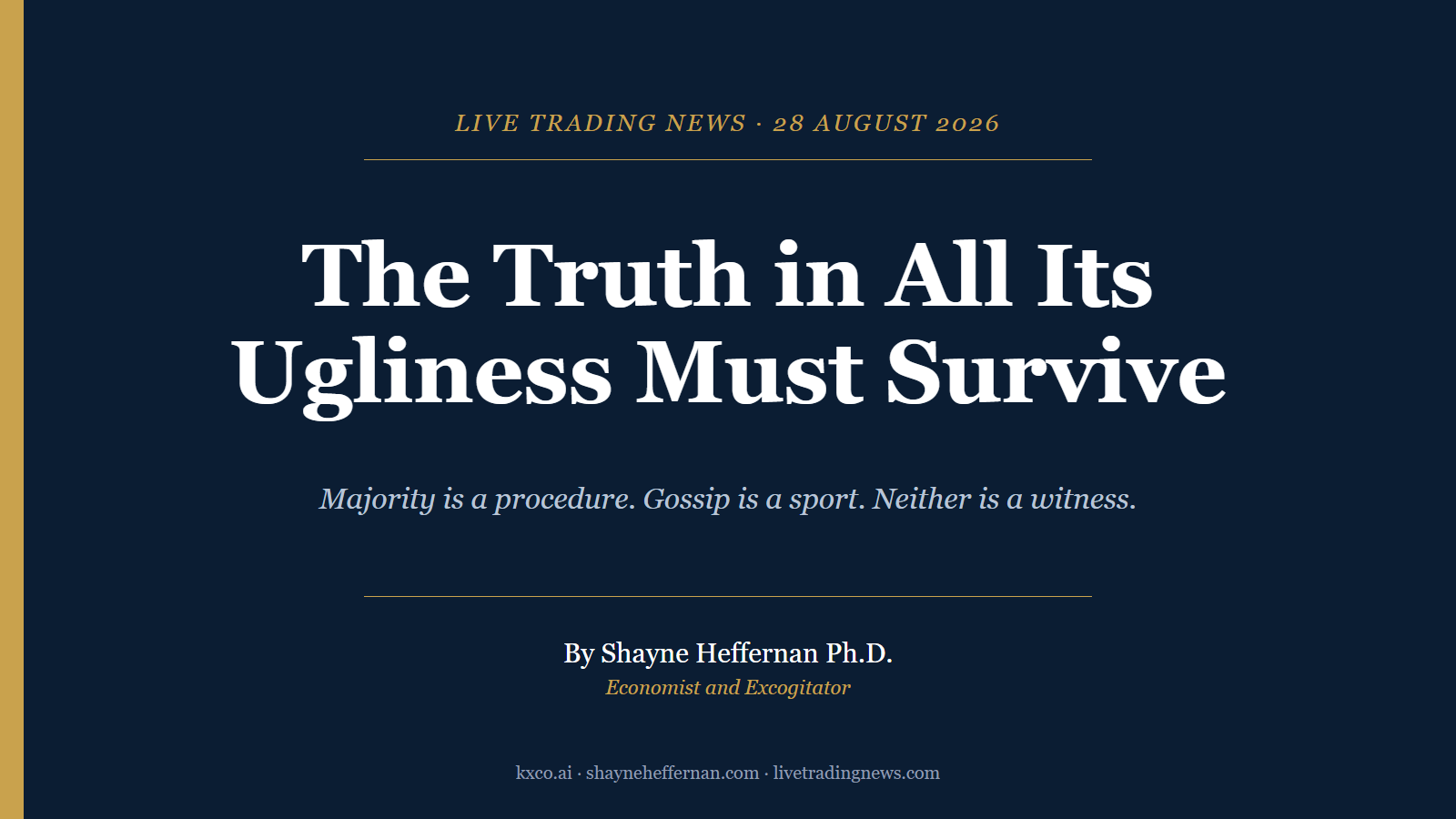
The Truth in All Its Ugliness Must Survive
A majority vote does not determine the truth. Consensus is a mood, gossip is a sport, and a model will write the pretty version for free. Why the ugly number has to survive, why a record beats a dashboard, and what KXCO was built to keep standing when the room changes its mind.
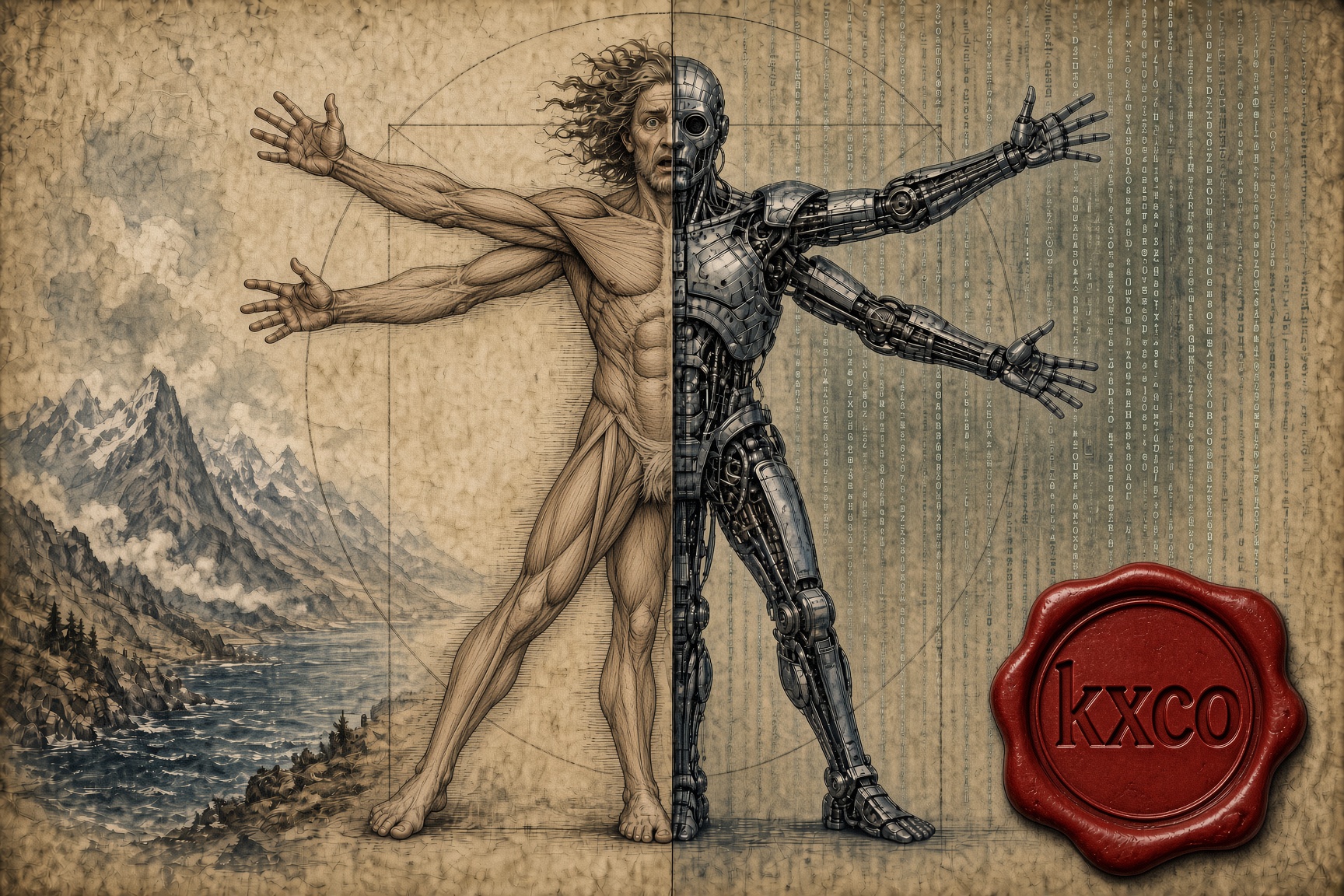
Don't Be the Best, Be the Only: Winning in an AI World
AI is repricing competence downward. What it cannot reproduce is a life. The case for remaining non-fungible, why friction still produces the best ideas, and what it means to build AI systems that keep the human intellect in them.
Every story, signed and delivered.
Subscribe to the kxco channel and get the headline, the AI-written key takeaways, and the chain-anchor link the moment we publish. Audio versions and per-ticker subscriptions arrive in the next iteration.