
Payments: Visa Vs Bitcoin
#DeFi #banks #payments #visa #bitcoin
"Bitcoin has overtaken PayPal's market cap, sights are set on VISA, Mastercard, and Big Banks" -- Paul Ebeling
The Big Qs: Have you ever wondered how electronic money transfers work? What is the difference between a contactless debit card payment compared to a cryptocurrency QR code transaction?
The Big As: Both do share something similar; it is that the end-user cares more about the successful payment completion than how it is done. And 1 is more robust and secure than the other.
As of Q-4 Y 2020, Visa had at least 3.6- cardsB in circulation, making it the world’s largest payment processor.
In the payment processing business it is all about speed and fees. Those tapping into the bulk of the world’s money flow are tapping into the river made of gold, just as market makers provide stock exchanges with liquidity in return for micro-fees.
Both Visa and Bitcoin run on vast computer networks to facilitate payments from 1 corner of the world to another. This is where most of the similarities end. Visa relies on connected banks via cards, debit or credit to calculate how much money 1 is allowed to spend.
Then, Visa makes its money from micro-fees for running payments through all the steps of the process.
Visa is not an independent money network. It is an electronic infrastructure that moves funds from one account to another, passing through multiple financial institutions. Although Visa’s transaction speed is super, it is completely opposite to how Bitcoin’s network functions.
Bitcoin also runs on a network of computers but these computers are not merely facilitators between various institutions. Each computer on Bitcoin’s network, called a node, not only facilitates transactions but also records every transaction ever made.
Moreover, Bitcoin’s blockchain network is independent of the banking sector because it generates its own money through the PoW (proof-of-work) consensus mechanism.
So, while a Visa card represents a gateway to the banks, a crypto wallet is like a gateway to the decentralized Bitcoin network.
Banks have central points of failure, but Bitcoin can only go down if all entire global internet services goes down due to its international distribution of nodes, each holding the ledger of all transactions. DLT (Distributed ledger technology) is the backbone of DeFi (decentralized finance), as all records are stored across various nodes to ensure security and data redundancy.
Another important distinction is that a crypto wallet does not hold Bitcoin similar to a normal bank account. Instead, it holds a private Key to unlock Bitcoin’s ledger from anywhere in the world to access the Bitcoin. If the private Key was lost, the wallet address itself could be recovered with a seed phrase, unlocking your access to the funds.
The implication of this is important because one could lose all the hardware with crypto applications and wallets on it, yet still be capable of unlocking the funds via the seed phrase.
When you own Bitcoin, you carry an entire bank in your seed phrase. Word of caution though, if misplaced or forgotten, 1 could lose a fortune.
Visa pales in comparison as it is just a crutch for the existing banking system. In contrast, Bitcoin is not only a banking system but its own payment processor system too.
Because Visa does not have to rely on blockchain nodes to verify payments, but rather financial institutions, its transaction speed is impressive. However, Bitcoin's counter is the Lightning Network.
Bitcoin’s Lightning Network median base fee is 1 Satoshi, the smallest denomination of BTC or $0.000566531. Combined with speed, this makes Bitcoin the next-gen instant payment system. And, if for some reason banks go down, a decentralized blockchain network can only be shut down if the entire internet goes down too.
In terms of merchant benefits, Bitcoin once again beats Visa payments. Chargebacks are a great case in point. Since transactions on a blockchain can only be initiated by a wallet owner, a chargeback is simply impossible. This alone can save a merchant thousands of dollars each yr.
When you link your bank account with the exchange, you open the door to the entire world of crypto, not only Bitcoin but over 30 other cryptocurrencies and stablecoins, as well as over 20 fiat currencies.
Editor's Summary
WE can say that Crypto payments offer important advantages over traditional Visa acquiring.
For merchants, accepting BTC means saving up to 80% on processing, avoiding chargebacks, and boosting their user base.
For shoppers, paying with BTC is a way to make sure that the transaction goes through regardless of where the user is located.
In this case it is best to try something once rather than hear about it a 100X!
Have a happy, prosperous Christmas week, Keep the Faith!
Economic Calendar and Trading Strategies for the Week Ahead: July 20–24, 2026
A pivotal week for markets: Iran's closure of the Strait of Hormuz sends crude above $86 and gasoline over $5, while Alphabet, Tesla and Intel earnings test the AI trade. Full economic calendar plus trading strategies across oil, gold, Bitcoin, FX and AI chip stocks.
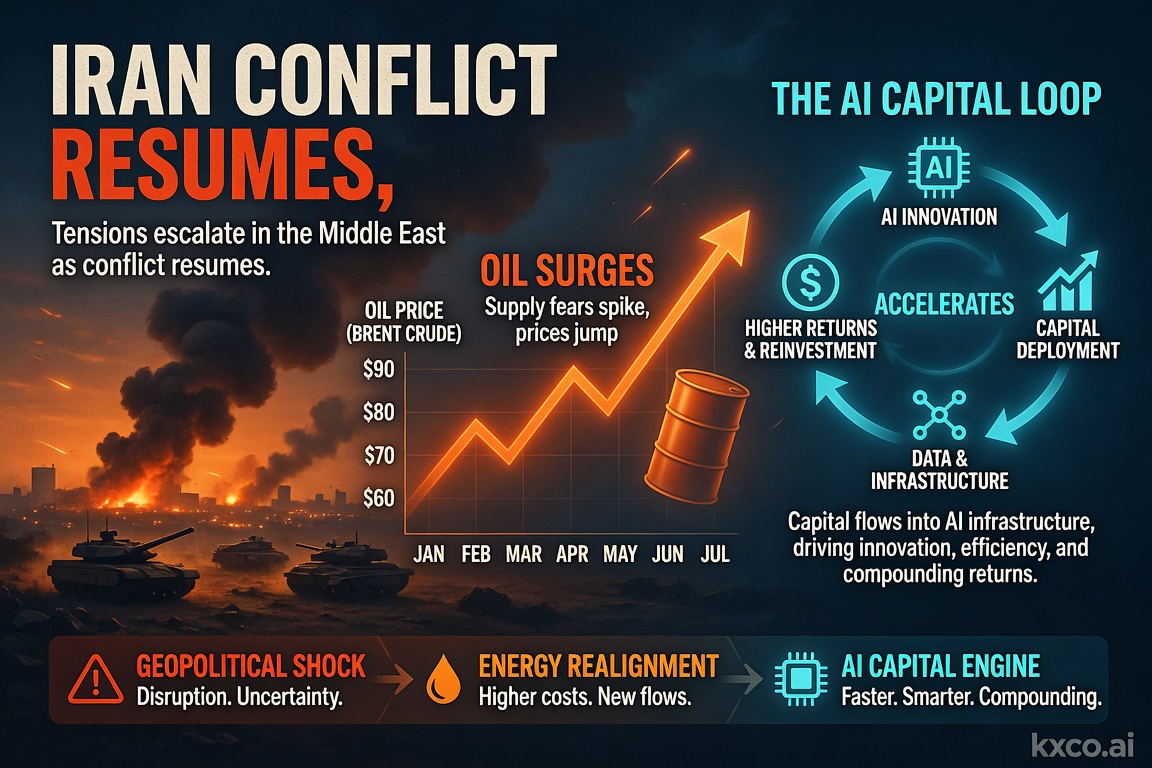
Economic Calendar and Trading Strategies for the Week Ahead: July 14–18, 2026
A pivotal week for markets: US strikes on Iran reignite the oil risk premium, June CPI and retail sales test the Fed's rate-cut path, and the $1 trillion AI capital loop keeps driving the tech trade. Full economic calendar plus trading strategies across oil, gold, Bitcoin, FX and AI stocks.
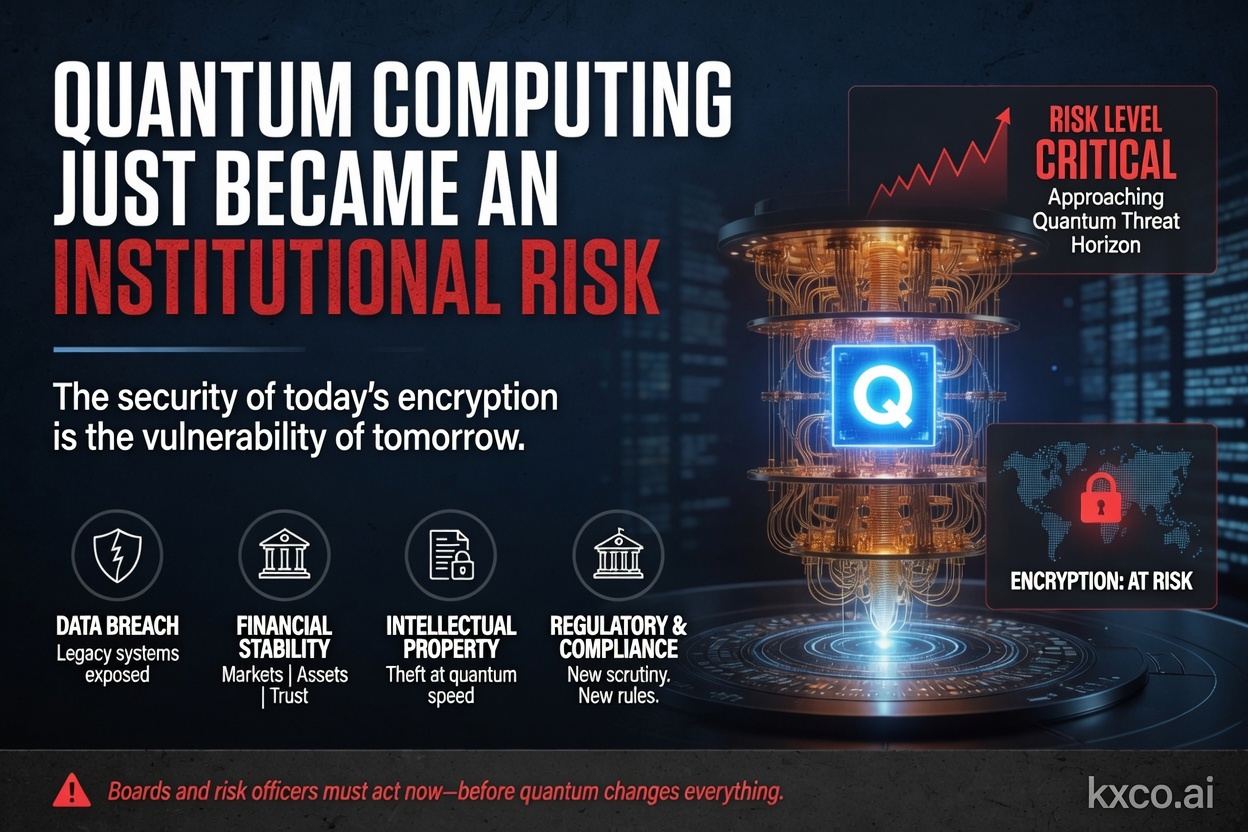
Quantum Computing Just Became an Institutional Risk
Shayne Heffernan on BlackRock's quantum-computing warning for Bitcoin and Ethereum, Google's cryptanalysis research, the two on-chain risk vectors, and how KXCO's Armature L1 — post-quantum from genesis, coordinated by its ontology — answers a threat that just went institutional.
Economic Calendar and Trading Strategies for July 7–11, 2026
A trader's guide to the week of July 7–11, 2026: the US and China economic calendar, the Fed-pivot test after a soft jobs report, and how to trade Nvidia, SpaceX, Bitcoin, the dollar, gold, silver, AI and quantum. Track every release on Live Trading News.
Every story, signed and delivered.
Subscribe to the kxco channel and get the headline, the AI-written key takeaways, and the chain-anchor link the moment we publish. Audio versions and per-ticker subscriptions arrive in the next iteration.