
Optogenetics: From Nobel Prize to Commercial Reality
Light as a precision switch for biology. One optogenetic gene therapy is under FDA review, others are in the clinic, and a handful of listed companies hold the exposure.
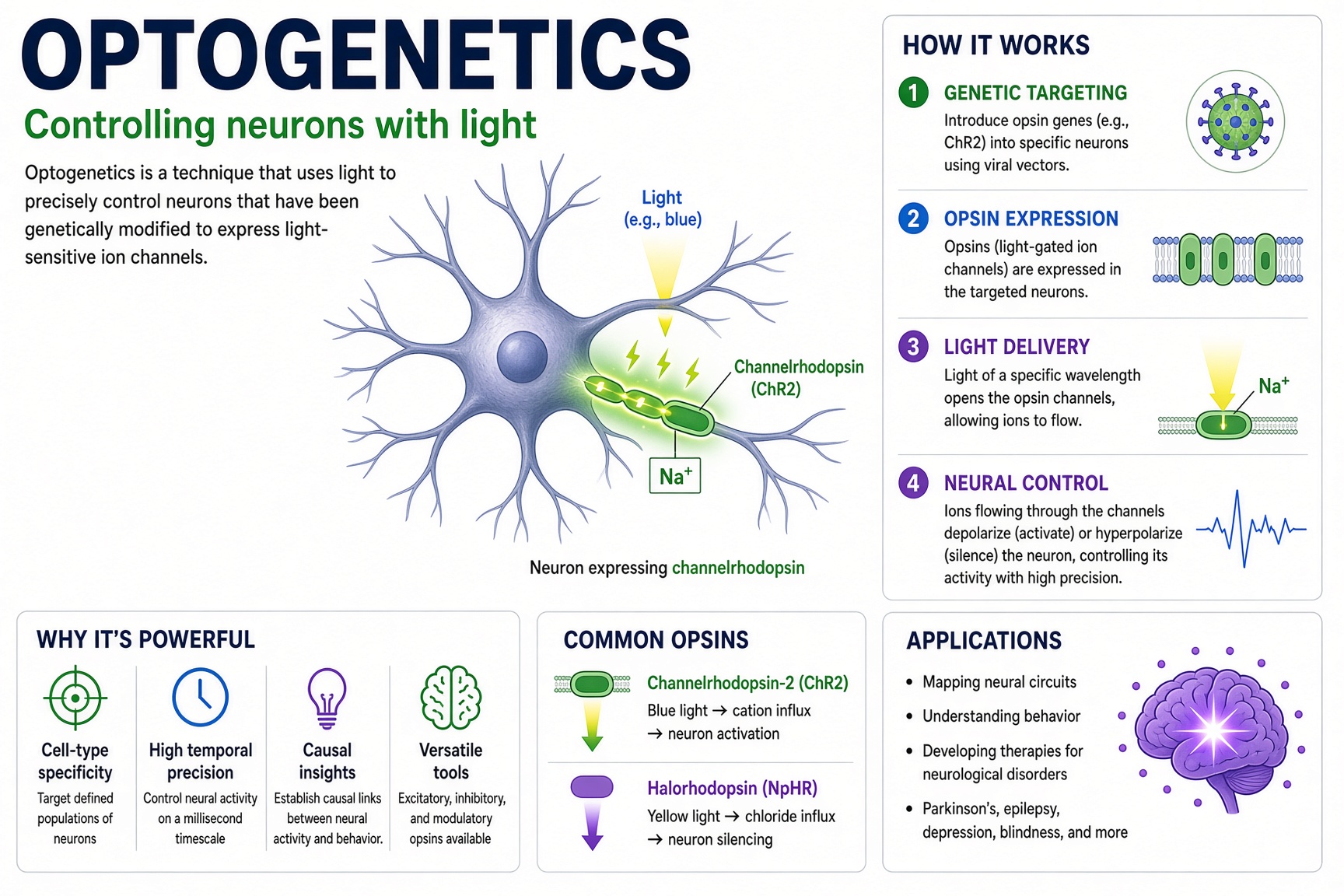

Figure 1. The 2026 Nobel laureates in Physiology or Medicine: Karl Deisseroth, Peter Hegemann and Georg Nagel, recognised for discoveries enabling the optical control of cells.
The 2026 Nobel Prize in Physiology or Medicine, awarded on 5 October to Karl Deisseroth, Peter Hegemann and Georg Nagel for the discovery of light-gated ion channels and the development of optogenetics, per the Nobel Assembly, has focused fresh attention on a technology that has already rewritten neuroscience and is now advancing toward clinical use. Optogenetics is not a single drug or device. It is a platform that combines genetic engineering with precise optical control to turn specific cells on or off with millisecond timing. Two decades after the first demonstrations in cultured neurons, the field has moved from laboratory curiosity to a therapeutic approach under regulatory review for vision restoration, while also serving as a discovery engine for new medicines in psychiatry and neurology.
For investors, clinicians and the broader scientific community, the Nobel recognition arrives at a turning point for the field. One optogenetic gene therapy for severe vision loss is under formal review by the US Food and Drug Administration. Multiple additional programmes are in mid-stage clinical trials. Public companies hold direct pipelines, strategic acquisitions or equity stakes in the leading private developers. The research-tools market that supports academic and industrial use continues to expand, while the therapeutic opportunity, though still early, is large enough to attract substantial capital. Understanding what optogenetics is, what it can do, which listed companies have exposure and how the commercial value develops from here is therefore timely.
What optogenetics is
Optogenetics is a method that renders selected cells sensitive to light by introducing genes that encode light-activated proteins, most commonly microbial opsins such as channelrhodopsin. When light of the appropriate wavelength reaches the cell, these proteins open ion channels or activate signalling pathways, altering the cell's electrical or biochemical state. Because the genetic construct can be placed under the control of cell-type-specific promoters, researchers or clinicians can target only the intended population of cells while leaving neighbouring cells unaffected.
The key proteins originated in algae and other microorganisms. Channelrhodopsin-2 (ChR2), identified through the work of Hegemann and Nagel, opens a cation channel in response to blue light and depolarises neurons, causing them to fire. Other opsins, such as halorhodopsin or archaerhodopsin, hyperpolarise cells and silence them. Engineered variants now respond to different colours of light, operate at lower light intensities, or activate intracellular pathways rather than simply changing membrane potential. The standard delivery vehicle is a viral vector, most commonly adeno-associated virus (AAV), which can be injected into the target tissue and produce sustained expression.
In experimental settings, light is delivered through implanted optical fibres, LED arrays or external projectors. In the clinic, the most advanced programmes combine a one-time gene therapy injection with specialised goggles that project patterned light onto the retina. The result is a system in which light functions as a remote control with cellular resolution and temporal precision measured in milliseconds, capabilities that electrical stimulation or conventional pharmacology cannot match.
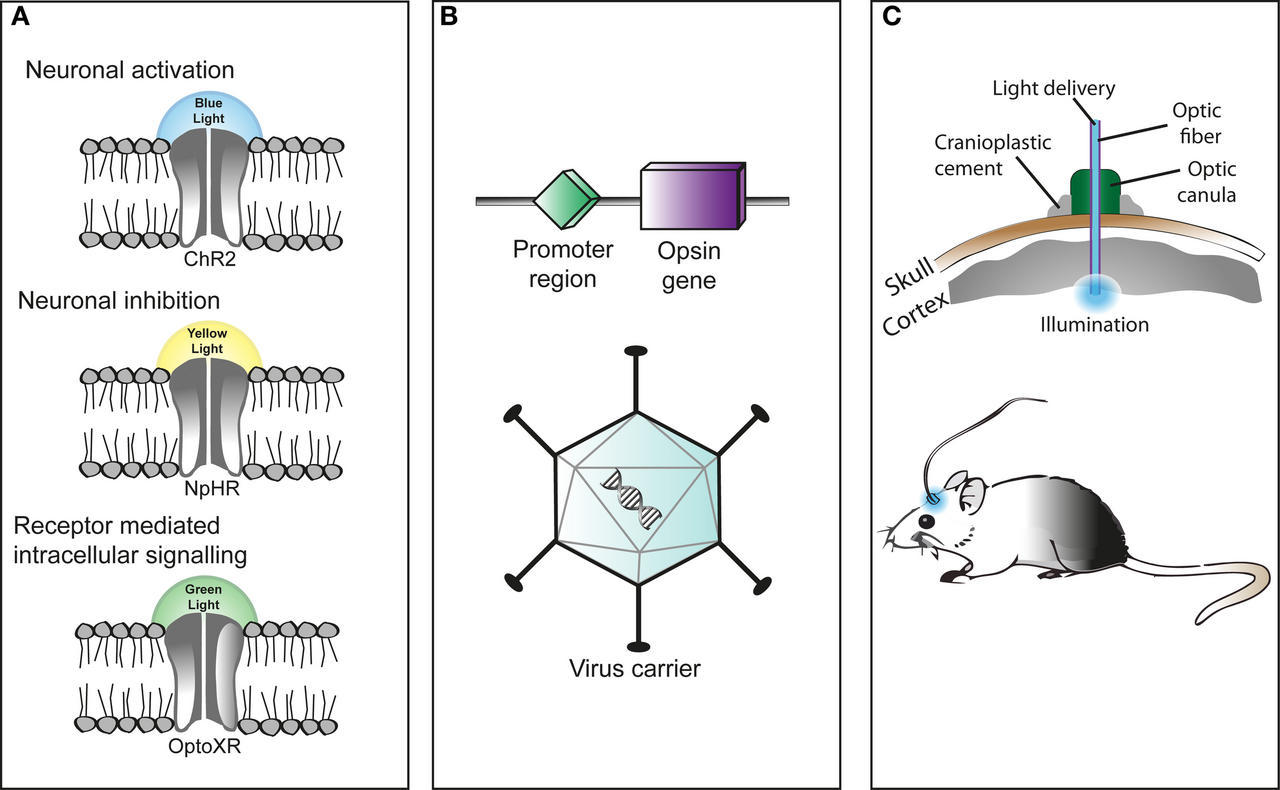
Figure 2. Schematic of optogenetic stimulation: (A) light-activated ion channels and pumps, (B) the genetic construct delivered by a viral vector, (C) light delivery through an optic fibre in a living animal.
The conceptual simplicity of the approach belies the engineering required to make it reliable. Opsins must be expressed at sufficient levels without toxicity. Light must reach the target cells at the correct intensity and wavelength without heating tissue or activating off-target populations. In freely moving animals, fibre implants or wireless devices must remain stable for weeks or months. In human therapy, the gene-therapy vector, the opsin sequence and the light-delivery system must all meet regulatory standards for safety and manufacturing consistency. These requirements have driven continuous refinement of both the biological components and the optical hardware.
What optogenetics does
The primary scientific contribution of optogenetics has been the ability to establish causal relationships between defined cellular populations and behaviour or physiology. Earlier techniques correlated activity with function or lesioned entire regions. Optogenetics allows an investigator to activate or inhibit a genetically defined set of neurons and observe the immediate consequence in a freely moving animal. This has clarified circuits involved in movement, fear, reward, memory formation, thirst, hunger, sleep, respiration and social behaviour.
Classic experiments demonstrated that activating specific amygdala neurons induced freezing behaviour in mice in the absence of any threat, and that silencing particular cells prevented the formation or recall of fear memories. Similar work has mapped circuits that drive locomotion, control appetite or mediate the reinforcing effects of addictive substances. In disease models, optogenetic manipulations have reproduced or alleviated features of Parkinson's disease, epilepsy, depression-like behaviour and chronic pain. Because the same tools can be used to identify the precise cells responsible for a symptom, the findings can guide the development of more conventional drugs that act on those cells.
Beyond neuroscience, optogenetic methods have been adapted to control gene expression, protein localisation, organelle function and immune-cell activity. In cardiology, light-sensitive proteins have been used to pace cardiac tissue or terminate arrhythmias in experimental settings. In metabolic research, they have been employed to modulate insulin release or energy expenditure. The common thread is spatial and temporal precision that is difficult to achieve with chemical or electrical methods alone. This precision has made optogenetics indispensable in systems neuroscience and has accelerated the identification of cell-type-specific targets for drug discovery.

Figure 3. Conceptual illustration of optogenetic control: light as a switch for specific neural circuits.
The technique has also been applied outside the brain. In the peripheral nervous system it has been used to study pain pathways and autonomic control. In the immune system, optogenetic tools have modulated the activity of engineered T cells or macrophages in model systems. Plant biologists have adapted similar approaches to control gene expression and developmental pathways. While the bulk of commercial and clinical interest remains focused on neuroscience and ophthalmology, the underlying platform is generalisable to any cell type that can be genetically modified and illuminated.
Therapeutic applications and clinical progress
The eye is the most advanced clinical setting for optogenetics. In diseases such as retinitis pigmentosa (RP), photoreceptors die while many of the inner retinal neurons remain intact. Optogenetic gene therapies deliver a light-sensitive protein to those surviving cells, in most programmes retinal ganglion cells or bipolar cells, so they can assume part of the photoreceptors' role. Because the approach does not depend on correcting a specific gene mutation, it can in principle apply across many genetic forms of retinal degeneration and to certain forms of age-related macular degeneration once photoreceptors are lost.
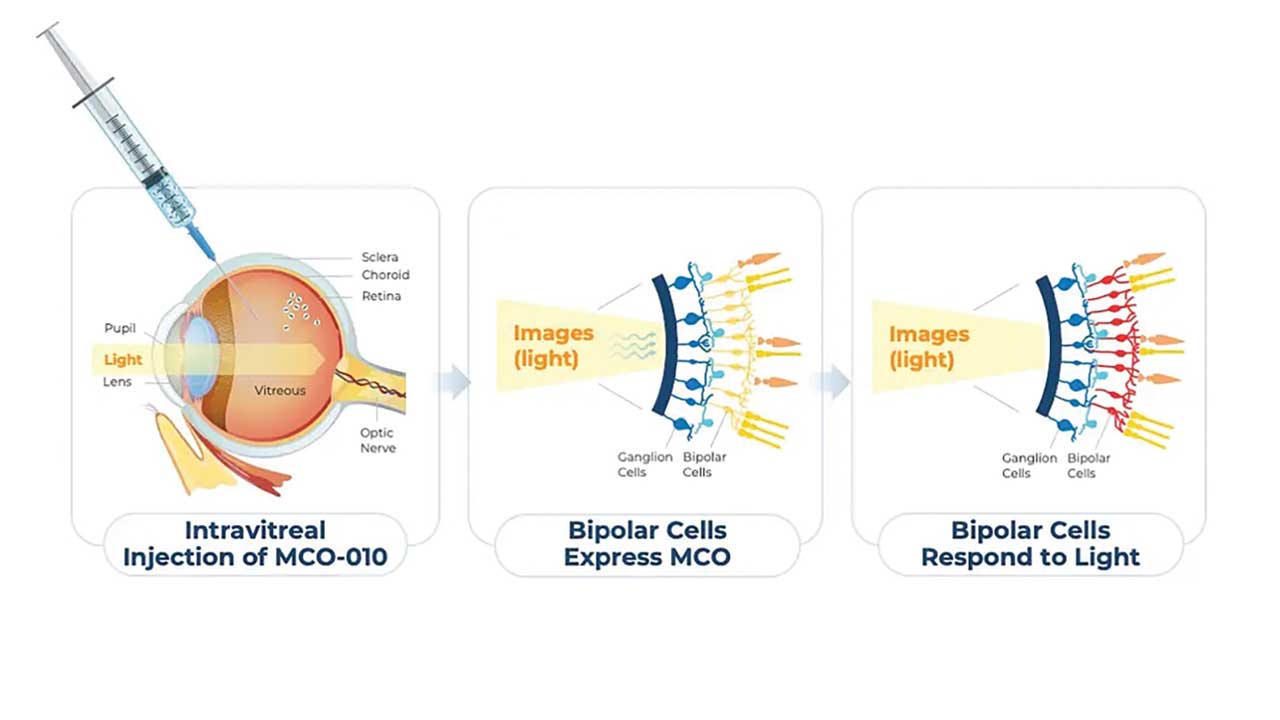
Figure 4. Mechanism of optogenetic vision restoration: an intravitreal gene-therapy injection leads to expression of light-sensitive proteins in surviving bipolar or ganglion cells, allowing them to respond to light.
Several programmes show where the field stands. Nanoscope Therapeutics has advanced sonpiretigene isteparvovec (MCO-010, brand name MOGENRY), an ambient-light-sensitive multi-characteristic opsin delivered by a single intravitreal injection. Its RESTORE trial in patients with severe vision loss from RP met its primary endpoint. At week 52 the high-dose group gained 0.337 logMAR in best-corrected visual acuity against sham, roughly three lines, per Ophthalmology Times. Nanoscope announced on 9 September 2026 that the FDA had accepted its biologics licence application, with a target action date in the first half of 2027, per Glance. Nanoscope is also developing the therapy in Stargardt disease, where it holds orphan drug and Regenerative Medicine Advanced Therapy (RMAT) designations, and plans a Phase 2 trial in geographic atrophy.
GenSight Biologics ($SIGHT.PA, Euronext Paris) is developing GS030, which combines an AAV gene therapy encoding the red-shifted opsin ChrimsonR with wearable light-stimulating goggles. Results of its Phase 1/2 PIONEER trial were published in the New England Journal of Medicine on 8 October 2026. The treatment was generally well tolerated, with no systemic adverse event related to the product or the injection. Six of ten treated patients showed a clinically significant gain in light sensitivity, and four of the eight who completed behavioural testing improved at detecting, locating and orienting to objects with the goggles, per Idéal Investisseur. GenSight plans its next trial, RECOVER, for the second half of 2027, subject to about €16 million of financing. Unlike ambient-light-sensitive approaches, GS030 relies on the external light source to achieve adequate stimulation, which introduces both a technical requirement and a usability question.
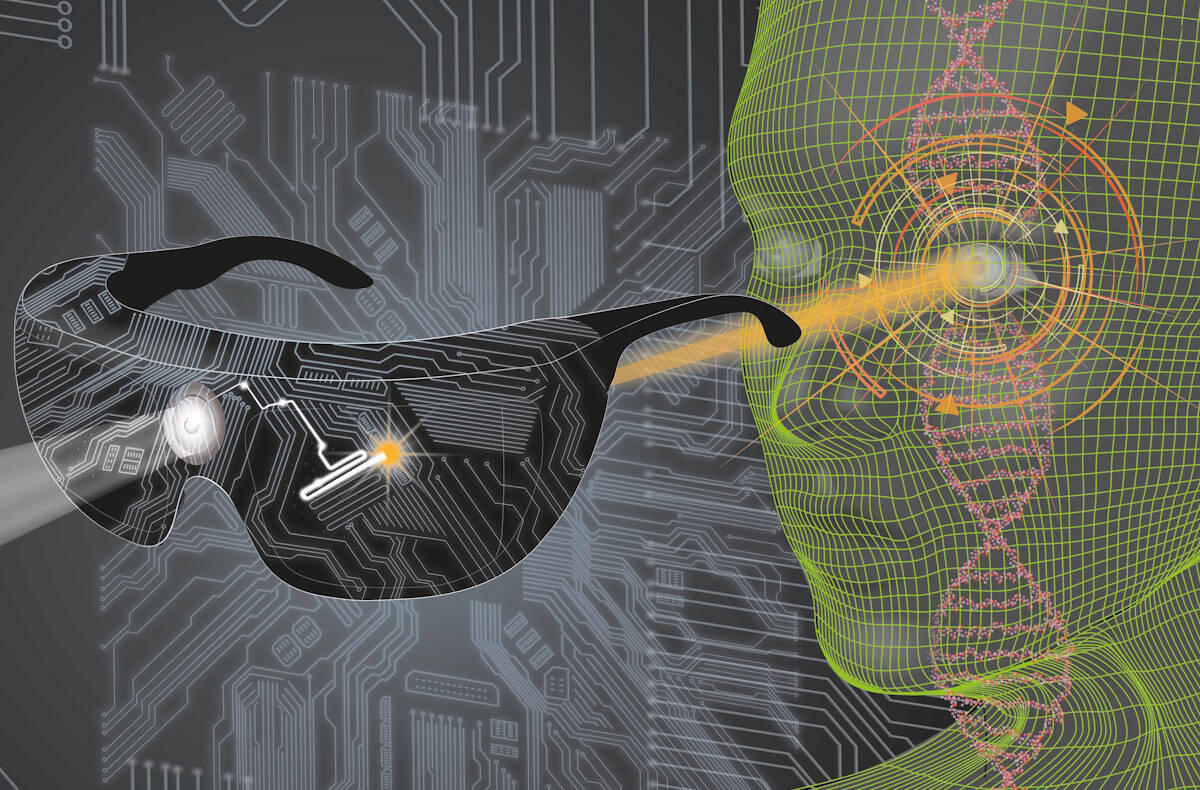
Figure 5. Conceptual rendering of light-stimulating goggles used with optogenetic gene therapy to activate engineered retinal cells.
Ray Therapeutics is advancing RTx-015, an engineered opsin therapy that holds RMAT designation from the FDA for RP. It closed an upsized $125 million Series B on 21 April 2026, led by Janus Henderson Investors, per Nordic Life Science, and is running RTx-021 in Stargardt disease and geographic atrophy. In China, UgeneX Therapeutics, incubated by Fosun Health Capital, is developing UGX-202, an AAV-delivered optogenetic construct for RP and other retinal degenerations. In October 2025 it granted AviadoBio an exclusive option on worldwide rights outside Greater China, worth up to $413 million in upfront, development and sales milestones plus royalties, per Fierce Biotech.
Two more Chinese developers are in the clinic in RP. Zhongmou Medical's ZM-02 has Chinese clinical-trial approval for late-stage RP and FDA orphan drug designation, per Hiteck's filing of 4 August 2026 (cninfo). Jianda Jiuzhou (GenAns Tech) holds FDA Fast Track and orphan drug designations for GA001 and started a registrational trial in July 2026, per the Beijing science and technology office.
Outside ophthalmology, most therapeutic activity remains earlier stage. Opsin Biotherapeutics is a joint venture of DesignPlex Biomedical and Nanoscope Technologies. On 1 October 2026 it won a two-year, $2.35 million Phase II grant from the National Institutes of Health for non-viral optogenetic treatment of chronic pain, per Dealroom. MapLight Therapeutics, which Deisseroth co-founded, uses optogenetic circuit mapping to find targets for conventional small-molecule drugs in schizophrenia, Alzheimer's disease psychosis and autism-related irritability. Its lead drug, ML-007C-MA, reported positive Phase 2 topline results in schizophrenia in July 2026, per Psychiatric Times. Direct optogenetic interventions for central nervous system disorders face additional hurdles of light delivery deep in tissue and long-term safety of expression in the brain. The nearer-term commercial path is therefore likely to remain the eye, with broader neurological applications following as hardware and delivery technologies improve.
The distinction between direct and indirect uses of the technology is important for investors. Direct applications insert an opsin into human cells and control those cells with light. The clinical product is the gene therapy, in some programmes paired with a light-delivery device. Indirect applications use optogenetics only in preclinical research to identify which cells drive a disease process, then develop conventional drugs or devices that act on those cells. Both approaches create value, but they run on different timelines and carry different regulatory and commercial profiles.
Listed companies with exposure
A small number of public companies have direct or indirect exposure to optogenetics. GenSight Biologics is the most pure-play listed developer. Its pipeline is built on optogenetics and a mitochondrial-targeting platform, and GS030 is the lead optogenetic candidate. The company is listed on Euronext Paris and trades over the counter in the United States as $GSGTF (OTC). At the 9 October 2026 close of €0.076 its market capitalisation was about €18 million, per ABC Bourse, reflecting the clinical-stage nature of the programmes and limited near-term revenue. The company has raised successive small financings to extend its cash runway while advancing both its LHON gene therapy and the optogenetic programme.
Novartis ($NVS, NYSE) acquired two optogenetics companies: Vedere Bio in October 2020, for $150 million upfront and up to $280 million in all, per Foundation Fighting Blindness, and Arctos Medical in September 2021 on undisclosed terms, per Novartis. Both brought preclinical AAV programmes intended to restore light sensitivity after photoreceptor loss, complementing Novartis's broader ophthalmology gene-therapy portfolio. The strategic rationale was the mutation-agnostic nature of the approach, which can in principle address many forms of inherited retinal dystrophy regardless of the underlying genetic cause. The acquisitions show large-pharma interest in the modality.
MapLight Therapeutics ($MPLT, NASDAQ) does not sell optogenetic therapies. It uses the technology as a discovery tool to identify circuit-level targets and then develops conventional drugs against them. Its IPO and a concurrent private placement, which closed on 28 October 2025, raised $296.3 million gross once the underwriters exercised their option in full, per MapLight's release. After the positive ZEPHYR readout in schizophrenia, its Phase 2 VISTA trial in Alzheimer's disease psychosis is the next test. Its connection is therefore indirect but material: the scientific foundation of its pipeline rests on optogenetic insights, and its valuation reflects investor willingness to pay for circuit-informed drug candidates.
In China, several A-share and Hong Kong-listed companies hold equity stakes in private developers. Fosun Pharma (SSE: 600196, HKEX: 2196) stands behind UgeneX: Fosun Health Capital, which Fosun Pharma founded, incubated the company and holds 50.8 percent, and a Fosun-sponsored Tianjin fund holds a further 25.4 percent, per China Fund News. UgeneX's UGX-202 is the subject of the AviadoBio option noted above. Hiteck Biological Pharma (SZSE: 300683) holds 15.1 percent of Zhongmou Medical through a wholly owned subsidiary, making it the third-largest shareholder, per the same China Fund News report.
Hangzhou Biotest Biotech (SSE: 688767) took part in Jianda Jiuzhou's July 2026 Series A round through its brain-computer interface fund. Joinn Laboratories (SSE: 603127) and Sanbo Brain Hospital (SZSE: 301293) are partners in a Beijing fund that is a shareholder of Jianda Jiuzhou, per Sina Finance. GenScript Biotech (HKEX: 1548) holds an indirect minority interest in Zhongmou through a subsidiary, about 2.3 percent on a look-through basis, per CLS.
Equipment suppliers Coherent ($COHR, NYSE) and Bruker ($BRKR, NASDAQ) are publicly listed and derive a portion of their revenue from research-grade lasers, LEDs and imaging systems used in optogenetic experiments. Thorlabs, a major supplier of the same hardware, is privately held, per Wikipedia. The listed suppliers' exposure is real but small relative to their overall businesses. For pure-play or high-conviction exposure to the therapeutic opportunity, investors look primarily at GenSight and, to a lesser extent, the Chinese listed companies with equity stakes in private developers. Larger pharmaceutical companies such as Novartis provide diversified exposure in which optogenetics is one of many ophthalmology and gene-therapy programmes.
The map: from a ticker to a clinical programme
Exhibit 1 draws that exposure as a graph. Read it from left to right: a listed company, the unlisted developer it owns, funds or acquired, and the clinical programme behind it. GenSight and MapLight are listed developers in their own right. The US FDA sits at the end of the one path that has reached formal review, MCO-010, and AviadoBio is drawn beside UGX-202 because it holds the option on it. Neither Nanoscope nor Ray is listed, which leaves GenSight, the Chinese holders and Novartis as the listed routes the map shows. Every link is numbered to a ledger under the graph that carries its source.
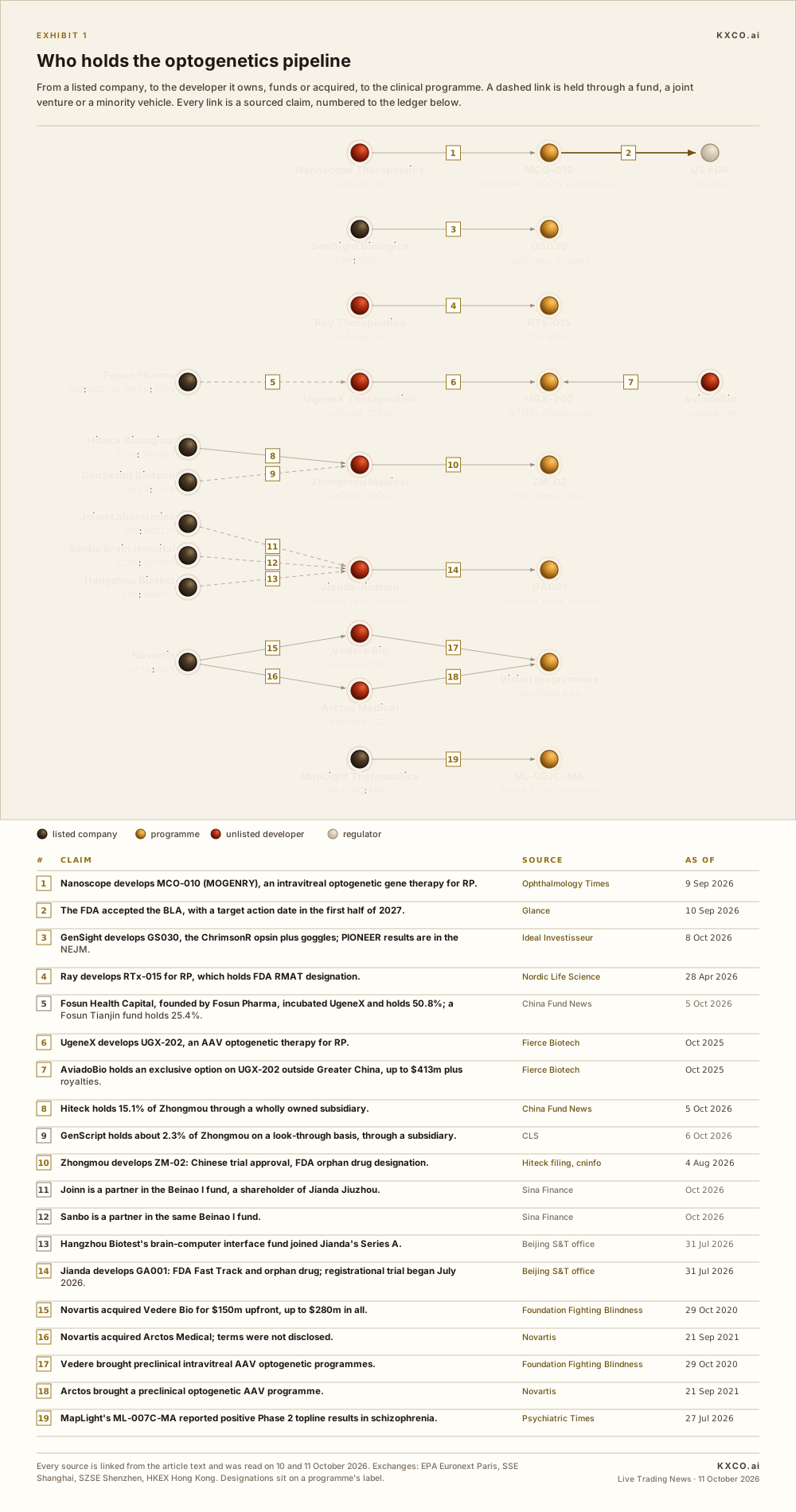
Exhibit 1. Who holds the optogenetics pipeline. Each numbered link is a sourced claim, listed under the graph with its source.
Market size and commercial value
Estimates of the optogenetics market vary widely because the term is applied both to a research-tools segment and to an emerging therapeutic category. For the research-tools market (light sources, actuators, sensors, viral vectors and integrated systems sold mainly to academic and pharmaceutical laboratories), Research and Markets projects $682.25 million in 2026, growing at 5.6 percent a year to $956.13 million by 2032, per its report summary. Other publishers' estimates differ with the scope of products included. Growth is driven by continued neuroscience funding, wider availability of ready-to-use viral vectors, and integration with imaging and electrophysiology platforms. North America accounts for the largest share, reflecting the concentration of well-funded research institutions and the NIH BRAIN Initiative's historical support for tool development.
The therapeutic opportunity is larger but still nascent. Retinitis pigmentosa alone affects more than 1.5 million people worldwide, about 1 in 4,000, per a 2025 review in Frontiers in Ophthalmology. Broader inherited retinal diseases and late-stage macular degeneration expand the addressable population further. A successful one-time gene therapy that restores meaningful vision in a substantial fraction of these patients could command premium pricing typical of rare-disease or specialty ophthalmology products. Deals such as the AviadoBio and UgeneX option, worth up to $413 million in milestones plus royalties, and Ray's $125 million Series B illustrate investor interest. MapLight's valuation, while driven primarily by its small-molecule programmes, reflects the value of circuit-level insights originally obtained with optogenetics.
Some market-research reports cite multi-billion-dollar figures for optogenetics. IMARC Group, for one, puts the global market at $58.6 billion in 2025, per its April 2026 release. Figures of that size incorporate broad adjacent markets or assume rapid therapeutic adoption that has not yet occurred. A more conservative reading is that the research-tools business is a several-hundred-million-dollar industry today, while the therapeutic franchise could reach low-to-mid billions in annual sales if one or more vision-restoration products achieve approval and meaningful uptake, with additional upside from later applications in pain, epilepsy or other neurological conditions. The commercial value is therefore concentrated in a small number of clinical-stage assets and in the intellectual property and know-how surrounding opsin engineering, vector design and light-delivery systems.
Pricing power for a successful therapy will depend on the magnitude and durability of vision gains, the size of the treated population and the competition. Gene therapies for rare retinal diseases have commanded list prices in the hundreds of thousands of dollars: Luxturna's list price, set on 3 January 2018, was $425,000 per eye and $850,000 for both, per Healio. An optogenetic product that works across multiple genetic causes of blindness could address a larger population than mutation-specific gene-replacement therapies, supporting both volume and premium pricing. Manufacturing costs for AAV vectors remain significant, so gross margins will also depend on dose, yield and scale. These factors will become clearer as the first products approach commercialisation.
Challenges and outlook
Several practical obstacles remain. Light penetration is limited in opaque tissue, so deep-brain applications require either implanted devices or the development of red-shifted or near-infrared opsins that can be activated with longer wavelengths. Long-term safety of sustained opsin expression, immune responses to AAV vectors and the durability of functional gains must be established in larger trials. For therapies that rely on external light sources (goggles or implants), patient acceptance and real-world usability will matter. Regulatory pathways for combination gene-therapy-plus-device products are still being refined. Manufacturing capacity for clinical-grade AAV remains a constraint across the broader gene-therapy industry.
Nevertheless, the trajectory is clear. The Nobel recognition has highlighted both the scientific foundation and the translational progress already achieved. With one product under formal FDA review and multiple others in mid-to-late-stage development for vision restoration, optogenetics is no longer confined to the laboratory. Listed companies with direct pipelines (GenSight), strategic acquisitions (Novartis), discovery platforms (MapLight) or equity stakes in private developers (Fosun Pharma, Hiteck and others) provide public-market exposure to different parts of the value chain. The research-tools market continues to expand steadily, while the therapeutic opportunity, though still early, is large enough to attract significant capital.
Looking further ahead, improvements in opsin sensitivity, red-shifted variants, non-viral delivery methods and miniaturised wireless light sources are the routes to a wider range of treatable conditions. Closed-loop systems that combine optogenetic stimulation with real-time neural recording are already used in research and may eventually support therapeutic applications in epilepsy or movement disorders. The same precision that made optogenetics indispensable in the laboratory is now being asked to deliver measurable clinical benefit. Early data suggest that the answer, at least in the retina, is yes.
Conclusion
Optogenetics began as a way to ask precise questions about how the brain works. It is now becoming a way to restore function when specific cells have failed. The combination of genetic targeting and optical control remains unmatched in its spatial and temporal resolution. As clinical data accumulate and delivery technologies improve, the commercial and medical value of that resolution is likely to grow. For investors evaluating listed companies, the relevant questions are no longer whether the science works in animals, but whether the leading clinical programmes can demonstrate durable, meaningful benefit in patients, secure regulatory approval, and scale manufacturing and commercialisation. Those answers will determine how much of the therapeutic opportunity is realised in the next five to ten years.
Stocks mentioned: $SIGHT.PA (Euronext Paris), $GSGTF (OTC), $NVS (NYSE), $MPLT (NASDAQ), $COHR (NYSE) and $BRKR (NASDAQ). Also mentioned, by exchange code: Fosun Pharma (SSE: 600196, HKEX: 2196), Hiteck Biological Pharma (SZSE: 300683), GenScript Biotech (HKEX: 1548), Joinn Laboratories (SSE: 603127), Sanbo Brain Hospital (SZSE: 301293) and Hangzhou Biotest Biotech (SSE: 688767).
Sources: the Nobel Assembly's announcement of 5 October 2026, company announcements and filings from Nanoscope, GenSight, Ray, MapLight, Novartis and Hiteck, and the press and market-research reports linked in the text. Figures are as at 10 October 2026 and subject to revision with new clinical or financial data.
Shayne Heffernan, Ph.D., is the founder of Live Trading News, the KnightsBridge Group, Knightsbridge Law and the KXCO.ai ecosystem spanning post-quantum cryptography, identity, attestation and enterprise ontology.
This article is for informational purposes and does not constitute investment advice.

KXCO's Free Post-Quantum Library Covers What TLS Leaves Out
TLS already moved: current Node.js releases and the major browsers negotiate a hybrid post-quantum key exchange. What an application signs, issues and stores has not. Executive Order 14412 sets 31 December 2030 for post-quantum key establishment and 31 December 2031 for signatures in federal high value systems. kxco-post-quantum is KXCO's free Apache-2.0 library for that layer, tested against NIST's vectors. KXCO sells only the operated part: a live answer on whether a key is still trusted.

AI Is Being Powered by Tech That Looks Almost Alien
Every frontier AI model runs on chips printed by one Dutch machine. ASML's extreme-ultraviolet scanner fires a laser at up to 50,000 droplets of molten tin a second, per ASML, and bounces the light off mirrors whose deviations are tens of picometres. Veritasium called it the closest thing we have to alien technology. This piece takes the film as the brief and checks it: the machine, High-NA, and the wafer-scale chips and liquid-cooled racks downstream of it.

Tokenisation and RWA With KXCO: ML-DSA-87 on Chain, Verifiable by Anyone
Armature, KXCO's chain, has verified ML-DSA-87, the highest security category in NIST FIPS 204, natively on chain since 6 October 2026, and KXCO's platform signing keys moved to it on 6 and 7 October. Regulators now name tokenisation a supervisory priority, and DORA already requires cryptography that can change with cryptanalysis. Six tests an institution should run before it trusts a tokenisation platform, and where to check KXCO's answer to each.

KXCO Pay Is Live: WooCommerce Crypto Payments Straight to Your Own Wallet
KXCO Pay 1.0.0 went live on WordPress.org on 7 October 2026. It adds Bitcoin, Ether, USDT and USDC to WooCommerce, and the customer pays the merchant's own address. The plugin holds no funds and no keys: it reads the chain through public services, prices each order from CoinGecko, locks the rate and settles the order once the payment confirms. A shortcode, a block and a REST API take payment on any page. Free under the GPL, with no commission on any payment.
Every story, signed and delivered.
Subscribe to the kxco channel and get the headline, the AI-written key takeaways, and the chain-anchor link the moment we publish. Audio versions and per-ticker subscriptions arrive in the next iteration.