
Ontology: The Operating System of the AI and Quantum Economy
A 2,400-year-old idea has quietly become the foundation of enterprise AI. What an ontology actually is, why Palantir built an empire on it, and how KXCO is rebuilding financial and business flows as verifiable, post-quantum graphs.
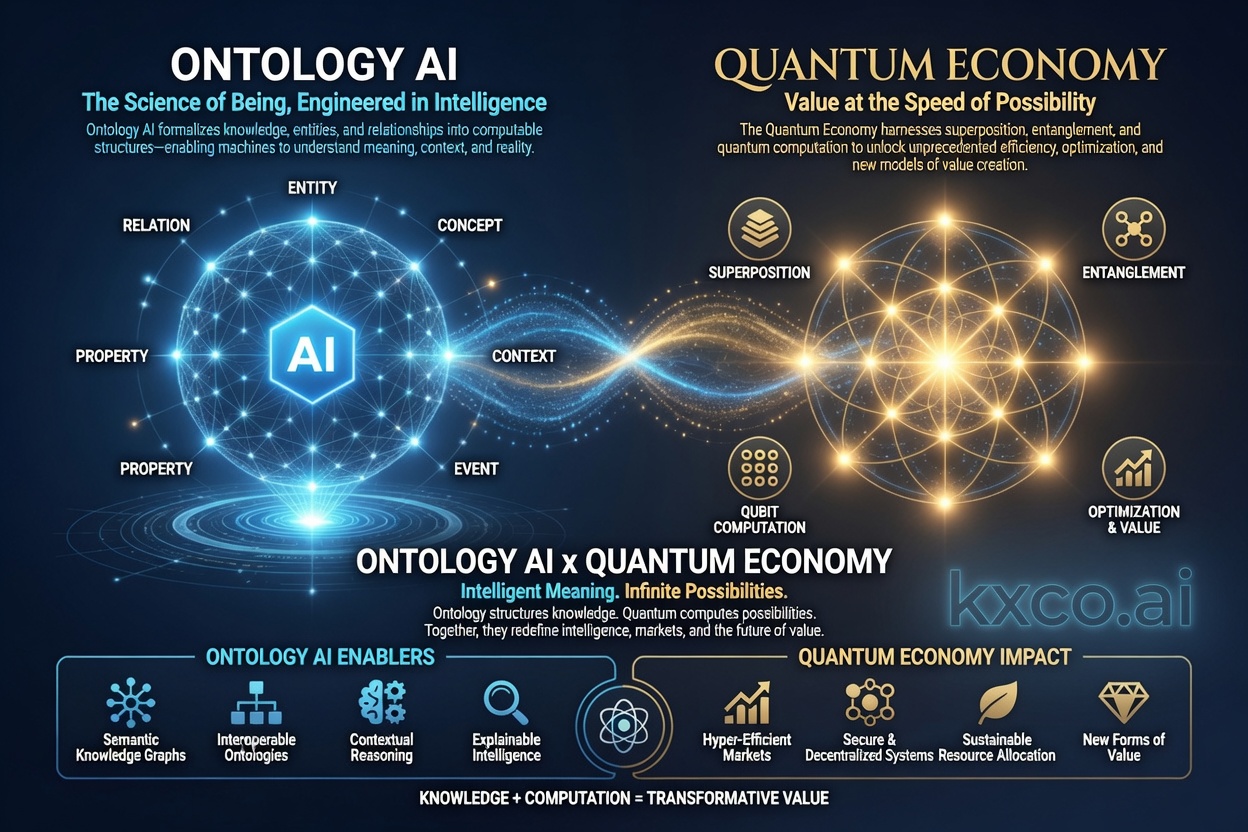
There is a word that sits quietly underneath almost every serious conversation about artificial intelligence, and almost nobody outside a handful of engineering teams ever says it out loud. The word is ontology. It is not a new word — it is roughly twenty-four centuries old — and yet it has quietly become one of the most important ideas in the modern economy. The companies that understand it are building durable advantages. The companies that do not are pouring money into AI that confidently tells them things that are not true.
I want to explain what ontology actually is, in plain English, and why I believe it is about to matter more than almost any other piece of technology infrastructure you will read about this year. I want to show how Palantir turned ontology into one of the most valuable software businesses on earth, how we at KXCO are using the same idea to rebuild the plumbing of finance, and why the combination of artificial intelligence and quantum computing turns ontology from a nice-to-have into something close to a survival requirement.
"Everyone is racing to add intelligence to their business. Almost no one is asking the prior question: does the machine even know what it is looking at? Ontology is how you answer that question. It is the difference between an AI that reasons and one that merely guesses." — Shayne Heffernan
What ontology actually is
Start with the original meaning. In philosophy, ontology is the study of being — of what exists and how the things that exist relate to one another. Aristotle described it as the science of "being as being." For most of history it was a discipline for philosophers, not engineers. It asked questions like: what is a thing? What makes one thing the same kind of thing as another? What is the relationship between an object and its properties?
In the late twentieth century, computer scientists working on artificial intelligence borrowed the word, because they had run into exactly the same problem in a new form. If you want a machine to reason about the world, you first have to tell the machine what is in the world and how it fits together. The computer scientist Thomas Gruber gave the definition that the field still uses: an ontology is "a formal, explicit specification of a shared conceptualization." That sounds abstract, so let me unpack it, because every word is doing work.
Shared means everyone — and every system — agrees on the same definitions. The trading desk, the risk team, the compliance department, and the software all mean the same thing when they say "client."
Conceptualization means it captures the concepts that matter in your world — clients, accounts, trades, instruments, counterparties — not just rows of raw data.
Explicit and formal mean it is written down precisely enough that a computer can act on it, not left implicit in someone's head or buried in a spreadsheet.
In practice, a modern ontology has four moving parts, and once you see them you cannot unsee them. There are objects — the things that exist, like a customer or a payment. There are properties — the attributes each object carries, like a customer's risk rating or a payment's amount. There are links — the relationships between objects, such as "this customer holds that account." And in the most advanced systems there are actions — the operations you are allowed to perform, like "approve this loan" or "settle this trade," which actually write changes back into the model.
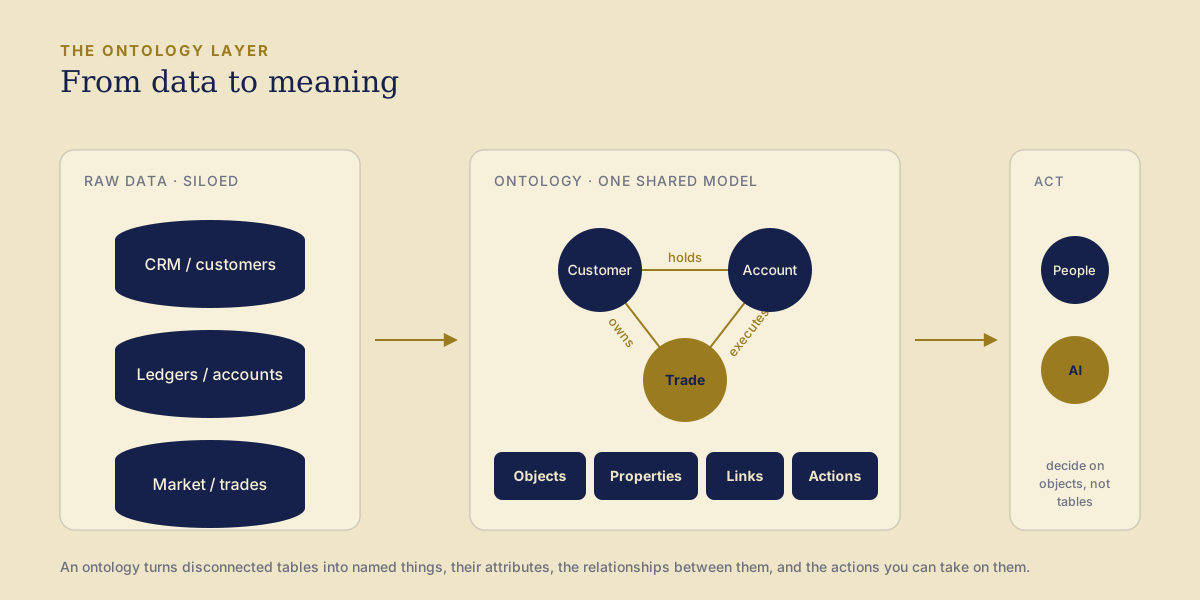
It helps to contrast this with the things people often confuse it with. A database stores data in tables — rows and columns — but it does not, on its own, know what those rows mean or how they connect to the rest of the business. A knowledge graph stores real-world entities and the relationships between them, which is closer, but a knowledge graph is the filled-in map; the ontology is the legend that tells you what the symbols mean and which connections are even allowed. Put simply: the ontology defines the rules and vocabulary — what kinds of things exist, what attributes they have, what relationships are permitted — and the knowledge graph is the living instance of those rules populated with your actual data.
This distinction is not academic. It is the entire reason ontology has become commercially valuable. Most large organizations are drowning in data and starving for meaning. They have hundreds of databases, each built by a different team at a different time for a different purpose, each with its own private definition of "customer" or "revenue" or "exposure." When you try to ask a question that spans more than one of those systems — a perfectly reasonable business question like "what is our total exposure to this counterparty across every desk and product?" — you discover that no single system can answer it, because no single system shares a definition with the others. An ontology is the layer that fixes this. It sits above all those scattered systems and gives the whole organization one coherent, agreed-upon model of itself.
Why ontology matters
Here is the blunt version of why this matters: without an ontology, every smart thing you try to build sits on quicksand.
Think about what happens inside a typical large company when leadership decides to "use AI" or "become data-driven." The data science team is asked to build a model. Before they can build anything, they spend the first several months — sometimes years — just figuring out what the data means, reconciling the seven different definitions of a customer, deciding which of the four revenue figures is the real one, and stitching together systems that were never designed to talk to each other. Then they build a model. Then a different team is asked to build a different model, and they start the entire archaeological dig over again from scratch, because none of that hard-won understanding was written down in a form anyone or anything else could reuse.
The ontology is where that understanding gets written down once, formally, and reused forever. It turns institutional knowledge — the stuff currently locked in the heads of your most experienced people — into a permanent, machine-readable asset. That is a profound shift. It means the second AI project is dramatically cheaper than the first. It means a new analyst, or a new piece of software, or a new AI agent, can be pointed at the model and immediately understand the business the way your best veteran understands it.
"Data is not knowledge. A million rows in a database is just a million rows until something tells you what they mean and how they connect. The ontology is the meaning layer — and meaning is the only thing a machine can actually act on safely." — Shayne Heffernan
There is also a quieter, deeper reason ontology matters, and it has to do with trust. When meaning is scattered and implicit, every number is contestable. The risk team's exposure figure does not match the front office's, and both spend the afternoon arguing about whose spreadsheet is right instead of making a decision. When meaning is centralized in an ontology, there is one definition, one source, one answer. Disagreements move from "whose data is correct" to "what should we do" — which is where human judgment actually belongs.
How Palantir made ontology famous
If you have heard the word ontology in a business context at all, there is a good chance it came from Palantir. More than any other company, Palantir took this academic idea and turned it into the centerpiece of a software empire, and it is worth understanding exactly what they did, because it is the template a lot of the industry is now copying.
Palantir's core insight was that the hard part of enterprise software is not storing data or even analyzing it — it is modeling the organization. Their platforms, Foundry for commercial customers and Gotham for government, are built around what Palantir calls the Ontology: a semantic layer that sits on top of all of an organization's messy underlying systems and represents the business as a connected web of objects, properties, links, and actions. In Palantir's own documentation, an object type defines an entity or event in an organization; a property defines that object's characteristics; a link type defines a relationship between two object types; and an action type defines a set of changes a user can make to objects, properties, and links in a single transaction.
That last piece — actions — is the part most people miss, and it is the part that makes Palantir's ontology so powerful. A lot of analytics software is read-only: it shows you a dashboard, and then you go and do something in some other system. Palantir's ontology is "kinetic." The same model you use to understand the business is the model you use to change it. When an operator approves a shipment, reroutes a supply chain, or grounds an aircraft, that decision is an action taken on an object in the ontology, and it writes straight back into the operational reality. The model is not a picture of the business sitting off to the side. It is a live, two-way digital twin of the organization that people and software act through.
This is also why Palantir's move into artificial intelligence has been so effective. Their AI Platform, AIP, does not just bolt a chatbot onto a pile of documents. It binds large language models directly to the ontology. That means when you ask an AI agent a question or hand it a task, it is not free-associating over raw text — it is reasoning over a structured, governed model of your actual business, where a "customer" is a defined object with real properties and real permitted actions, and where the agent can only take the actions the ontology allows. The ontology gives the AI both grounding and guardrails at the same time. That single architectural decision is, in my view, the reason Palantir has been able to deploy AI into serious, high-stakes operational settings while much of the industry is still stuck building demos.
The lesson is not "go buy Palantir." The lesson is architectural, and it is available to anyone willing to learn it: the ontology is the product. Everything valuable — the analytics, the automation, the AI — is downstream of having a faithful, shared, actionable model of your world. Get the ontology right and the rest becomes possible. Skip it and you are building a skyscraper with no foundation.
How KXCO uses ontology
At KXCO, we build infrastructure for the financial institutions, payment companies, and digital-asset platforms that are rebuilding the financial system for a post-quantum world. We are a software company — we do not hold customer assets and we do not operate the regulated businesses ourselves. We build the rails, the identity, the signing, the settlement, and the ledgers that licensed institutions run on. And ontology sits at the very center of how we do it.
Our products — the Armature post-quantum ledger, the KXCO Identity layer, the Purse wallet platform, our post-quantum document signing, and the KXCO Cloud security platform — look from the outside like separate things. Underneath, they are unified by a single ontology. We model a financial institution and everything it touches as a connected graph of objects: institutions, accounts, identities, instruments, transactions, counterparties, signatures, and the settlement rails that move value between them. Each of those is a defined object type with its own properties. Each relationship between them — who controls an account, who is party to a transaction, which identity signed which document — is a defined, typed link.
What makes our approach different from a classic enterprise ontology is what we attach to every link and every action: cryptographic provenance, built to survive quantum computers. Every meaningful change in the model — every action, in the Palantir sense — is signed with a post-quantum algorithm and can be anchored to an independent ledger. We use the NIST-standardized post-quantum signature scheme ML-DSA at the heart of this. The result is not just a shared model of the institution; it is a verifiable one. You do not have to trust that the relationships in the graph are accurate. You can check them. Even this article you are reading is signed with that same post-quantum cryptography and anchored to our ledger, which is a small, deliberate demonstration of the principle: the record of what happened is tamper-evident by design.
"We took the Palantir insight — model the world as objects, links, and actions — and we added the thing finance cannot live without: proof. Every relationship in our ontology carries its own post-quantum signature. The model does not ask you to trust it. It lets you verify it." — Shayne Heffernan
This matters because finance runs on questions of fact that are also questions of trust. Who owns this? Who authorized that? Did this settlement actually happen, and is the record of it the same record everyone else holds? In the world we are moving into — instant settlement, tokenized assets, AI agents transacting on behalf of institutions — those questions have to be answered in milliseconds, by machines, with certainty. A shared model alone is not enough. The model has to be provable. That is the gap KXCO is built to close.
Modeling financial and business flows in a new way
Now let me get concrete, because this is where the idea stops being philosophy and starts being money.
For as long as computers have run finance, a financial flow has been represented as records in tables. A payment is a row in a payments table. An account balance is a number in an accounts table. A trade is a row in a trade table, and somewhere else there is a settlement table, and somewhere else a counterparty table, and a compliance system with its own copy of some of the same facts. To understand a single flow of value end to end — where it came from, what it touched, who was on the other side, how it settled, whether it cleared compliance — you have to join all of those tables together, hope the keys line up, and reconcile the inevitable mismatches. This is why banks employ armies of people to do reconciliation, and why a transaction that should be instant can take days to be considered final.
We model it the other way around. In our ontology, a financial flow is not a scatter of rows across a dozen tables. It is a path through a graph. A client is an object. The account is an object linked to that client. The instrument is an object the account funds. The counterparty is an object the instrument faces. The settlement rail is an object the flow clears through. And the regulator or auditor is an object that can see the whole graph. The flow itself is the path that connects them — and every step along that path is an action with its own signed, timestamped, post-quantum-anchored record of who did what, to which object, and when.
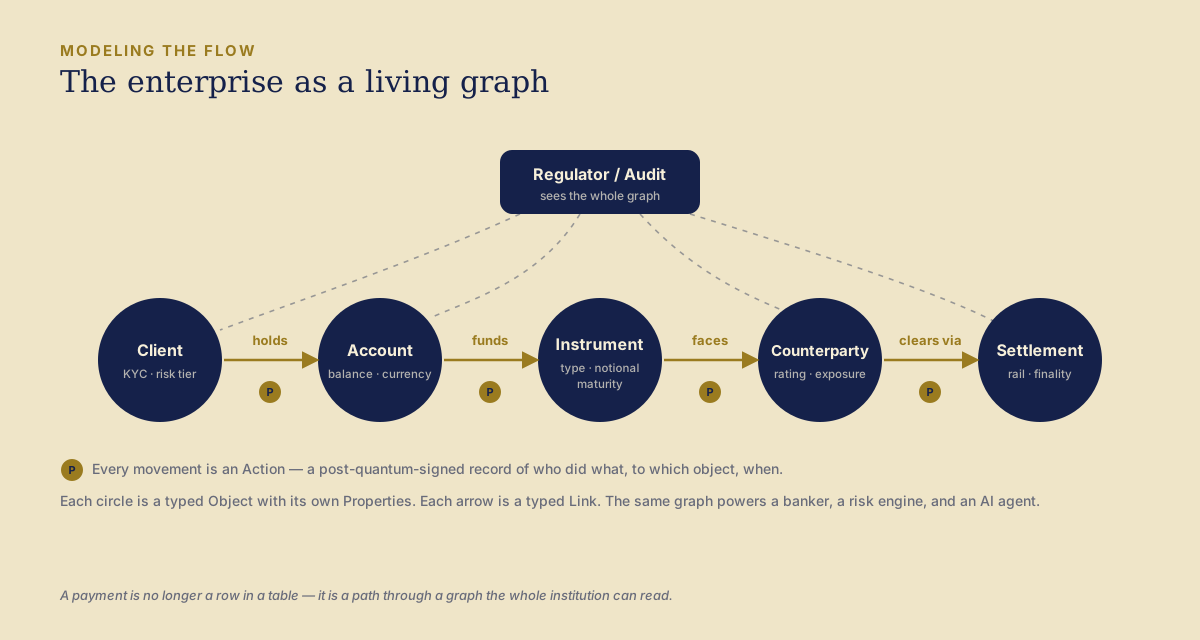
The difference this makes is hard to overstate. When a payment is a path through a shared graph rather than a row in a private table, several things become true at once that were previously expensive or impossible:
There is one version of the truth. The banker, the risk engine, the compliance officer, and an AI agent are all reading the same graph. They are not reconciling four private copies of reality; there is only one.
The relationships are first-class. "This counterparty is connected to that one through three intermediaries" is not a query you have to assemble from scratch under deadline — it is simply visible in the graph. Concentration risk, related-party exposure, and the hidden chains that cause contagion become things you can see rather than things you discover after they blow up.
Every movement is provable. Because each action carries a post-quantum signature, the audit trail is not a log somebody could quietly edit. It is a cryptographically tamper-evident record. Settlement finality stops being a matter of waiting and trusting and becomes a matter of verification.
The model is machine-actionable. An AI agent does not have to guess what a "trade" is or stitch together what happened. It reasons over defined objects and can only take the actions the ontology permits — which is exactly what makes it safe to let software act on real money.
Walk through a single cross-border payment to see how different the two worlds feel. In the table-based world, the payment is created as a row in one bank's system, copied into a correspondent bank's system, copied again into a clearing system, checked against a sanctions list held in yet another system, and finally written into a settlement record somewhere else — five or more private copies of the same event, each in its own format, reconciled after the fact, each a place where the copies can quietly drift out of agreement. If a regulator later asks what happened, the bank reassembles the story from those scattered logs and asks everyone to trust the reconstruction. In the ontology-based world, that same payment is one object that moves along a single path through the shared graph: it is created once, linked to the sending and receiving accounts, checked against the compliance object, and cleared through the settlement rail — and at every step it accumulates a post-quantum signature. There is nothing to reconcile, because there were never multiple copies. There is nothing to reconstruct for the regulator, because the regulator can read the same provable path everyone else can. The work that used to happen after the fact — reconciliation, audit, investigation — is replaced by a record that was correct and verifiable the moment it was made.
This is what I mean when I say we are modeling financial and business flows in a new way. We are not making the old table-based plumbing a little faster. We are changing the unit of representation from the row to the relationship — from the isolated record to the connected, verifiable flow. A business stops being a stack of disconnected ledgers and becomes a single living graph that the whole institution, and its regulators, and its software, can all read at once.
"Stop thinking about a transaction as a row in a database. Start thinking about it as a path through a graph that the entire institution can see and prove. Once you make that shift, reconciliation, audit, and risk stop being separate departments and start being properties of the model itself." — Shayne Heffernan
The same pattern applies far beyond payments. A supply chain is a graph of suppliers, shipments, and obligations. A loan book is a graph of borrowers, collateral, and covenants. A corporate structure is a graph of entities, ownership, and control. In every case, the table-based approach hides the relationships that actually carry the risk, and the ontology-based approach makes them visible, queryable, and — in our version — verifiable.
Why ontology becomes critical in the AI and quantum era
Everything I have described so far has been true for years. What has changed — what makes this the moment ontology stops being a specialist concern and becomes urgent — is the simultaneous arrival of two forces: artificial intelligence that can act, and quantum computing that can break.
Take artificial intelligence first. The defining weakness of today's AI is that it is fluent without being grounded. A large language model will produce a confident, well-written answer whether or not it actually knows anything true about your business, because it is predicting plausible text, not consulting a model of reality. Point that same model at raw database tables and it will guess at what the columns mean and hallucinate the connections. This is not a flaw you can prompt your way out of. It is structural. The only durable fix is to give the AI a grounded world to reason over — a model where a "client" is a defined object with real properties, where the permitted relationships and actions are explicit, and where the AI's reasoning is anchored to something true rather than something likely.
That grounded world is the ontology. This is the single most important thing I can tell anyone deploying AI in a serious setting: the quality of your AI is capped by the quality of your ontology. An AI agent reasoning over a well-built ontology can be trusted with real decisions because it knows what it is looking at and can only act within defined limits. The same agent reasoning over a swamp of raw data is a liability dressed up as an asset. As we move from AI that answers questions to AI that takes actions — agents that move money, approve transactions, rebalance portfolios — the ontology is what stands between "powerful automation" and "a confident machine doing the wrong thing at scale."
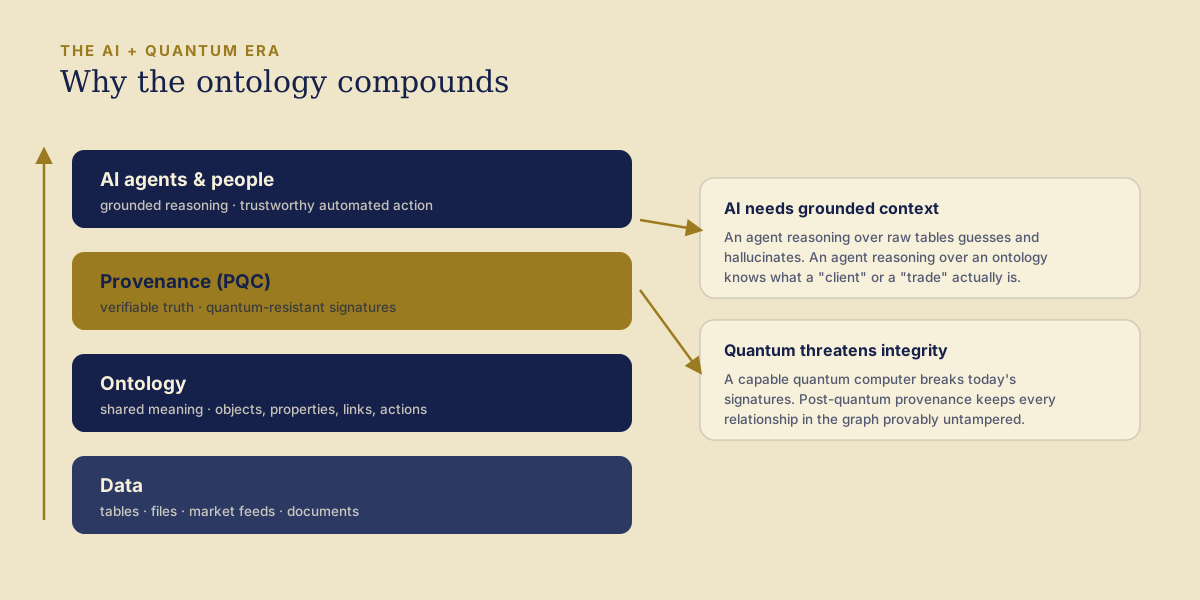
Now add quantum computing, and the second force comes into focus. A sufficiently capable quantum computer will be able to break the public-key cryptography that currently secures essentially all digital trust — the signatures and encryption that let us prove who authorized a payment, who owns an asset, and whether a record has been tampered with. The threat is not purely future, either: adversaries can harvest encrypted data and signed records today and decrypt or forge them later, once the hardware exists. This is why standards bodies and governments are pushing the migration to post-quantum cryptography now, ahead of the machines that make it necessary.
Put the two forces together and the conclusion is unavoidable. We are about to hand enormous decision-making power to AI agents that act on our models of the world — at exactly the same moment that the cryptography protecting the integrity of those models is going obsolete. An AI reasoning over an ontology whose relationships can be silently forged is worse than useless; it is dangerous, because it will act decisively on corrupted truth. The ontology gives the AI its world. Post-quantum provenance is what guarantees that world is real and unaltered. You need both, and you need them together.
"The AI era makes the ontology essential, and the quantum era makes it fragile. An intelligent agent acting on a model it cannot verify is the most dangerous thing in finance. That is exactly why we built our ontology post-quantum from the foundation — the meaning and the proof are the same layer." — Shayne Heffernan
This is the convergence we have been building KXCO toward. The market is going to demand systems that are intelligent, instant, and automated — and simultaneously verifiable, tamper-evident, and quantum-resistant. Those two demands sound like they are in tension. They are reconciled in a single place: an ontology that carries its own proof. A model of the business that an AI can act on, and that anyone can verify, secured by cryptography built to outlast the machines coming to break it.
The bottom line
Ontology is one of those rare ideas that is simultaneously ancient and urgently modern. It started as a question philosophers asked about the nature of being. It became, in the hands of computer scientists, a way to give machines a shared understanding of the world. Palantir proved it could be the foundation of a category-defining software business. And it is now, I believe, the quiet foundation of the entire AI economy — because intelligence without grounding is just confident noise, and in finance, confident noise is how you lose everything.
At KXCO we have taken that idea one step further than anyone has needed to before. We model financial and business flows not as rows in tables but as verifiable paths through a living graph, and we secure every relationship in that graph with post-quantum proof. It is a different way of representing money, ownership, and obligation — one built for a world where machines make decisions and quantum computers test the integrity of everything we thought was secure.
The companies that win the next decade will not be the ones with the most data, or even the flashiest AI. They will be the ones who took the time to build a faithful, shared, verifiable model of their world — and then let intelligence loose on top of it. That model has a name. It is the oldest idea in philosophy and the newest frontier in finance. It is the ontology, and it is time the rest of the market started taking it as seriously as the engineers already do.
Shayne Heffernan is the founder of KXCO and a long-time markets analyst. This article reflects his views on enterprise architecture and financial infrastructure and is not investment advice.
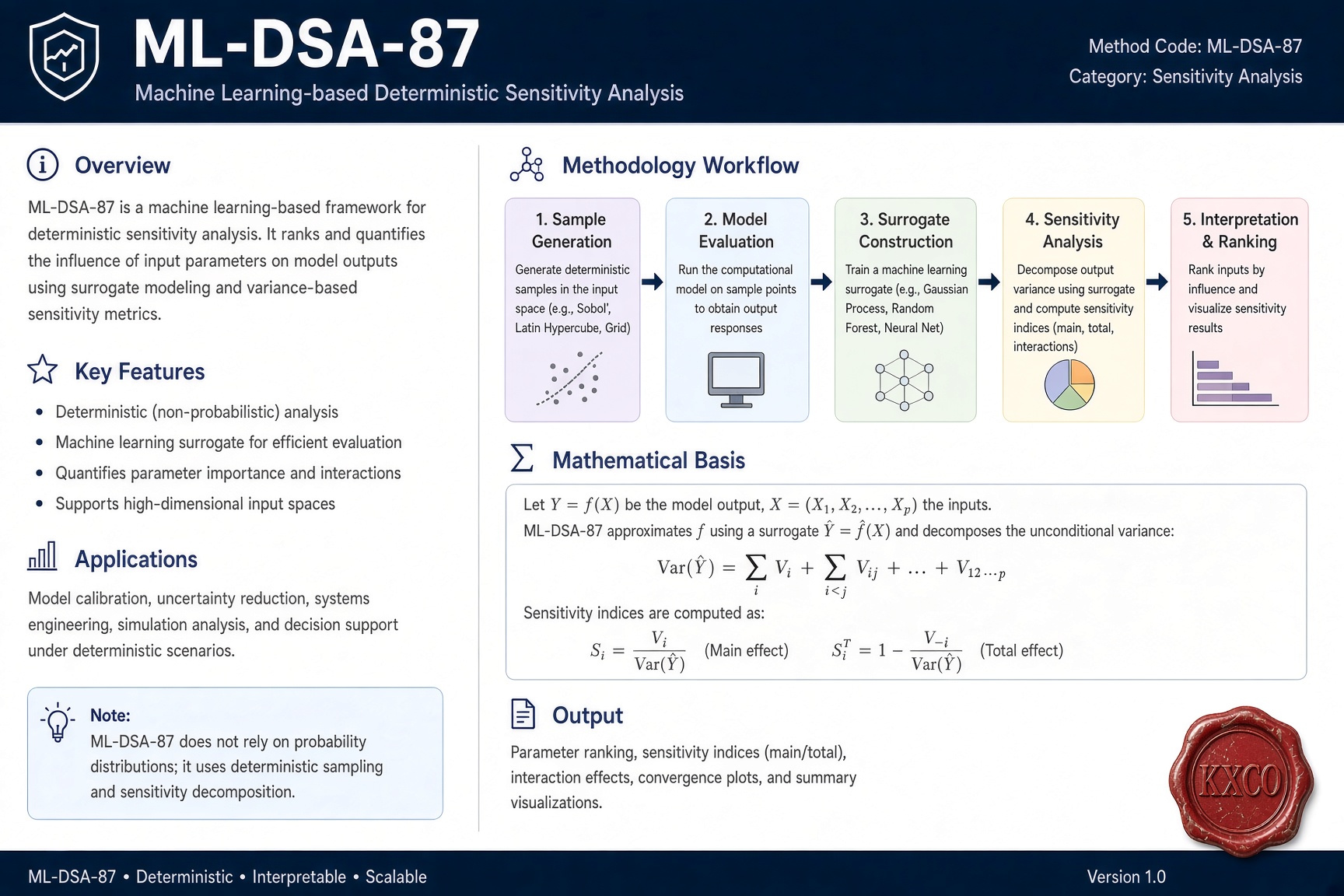
KXCO Now Verifies ML-DSA-87 in Consensus, the Signature Level Named by the NSA
On 6 October 2026 KXCO's chain began verifying ML-DSA-87 signatures as a rule of consensus, and the first ML-DSA-87 identity registered 28 seconds later. ML-DSA-87 is the category 5 level of NIST's FIPS 204, specified by the NSA for US national security systems and preferred by Australia's Information Security Manual. KXCO ships it for signing and for keys held in hardware, accepts it across its network and verifies it on chain, and anyone can check a verdict.
Post-Quantum Has a Deadline: 2030 for Keys, 2031 for Signatures
Executive Order 14412 gives federal high-value systems until 31 December 2030 for post-quantum key establishment and until 31 December 2031 for signatures. Six of the seven official calendars put a milestone in 2030. The Order reaches vendors through the contract, the purchase, the build, the data and the inventory. The runtimes already moved: a stock Node.js client negotiates X25519MLKEM768 by default. What is left is in the application.
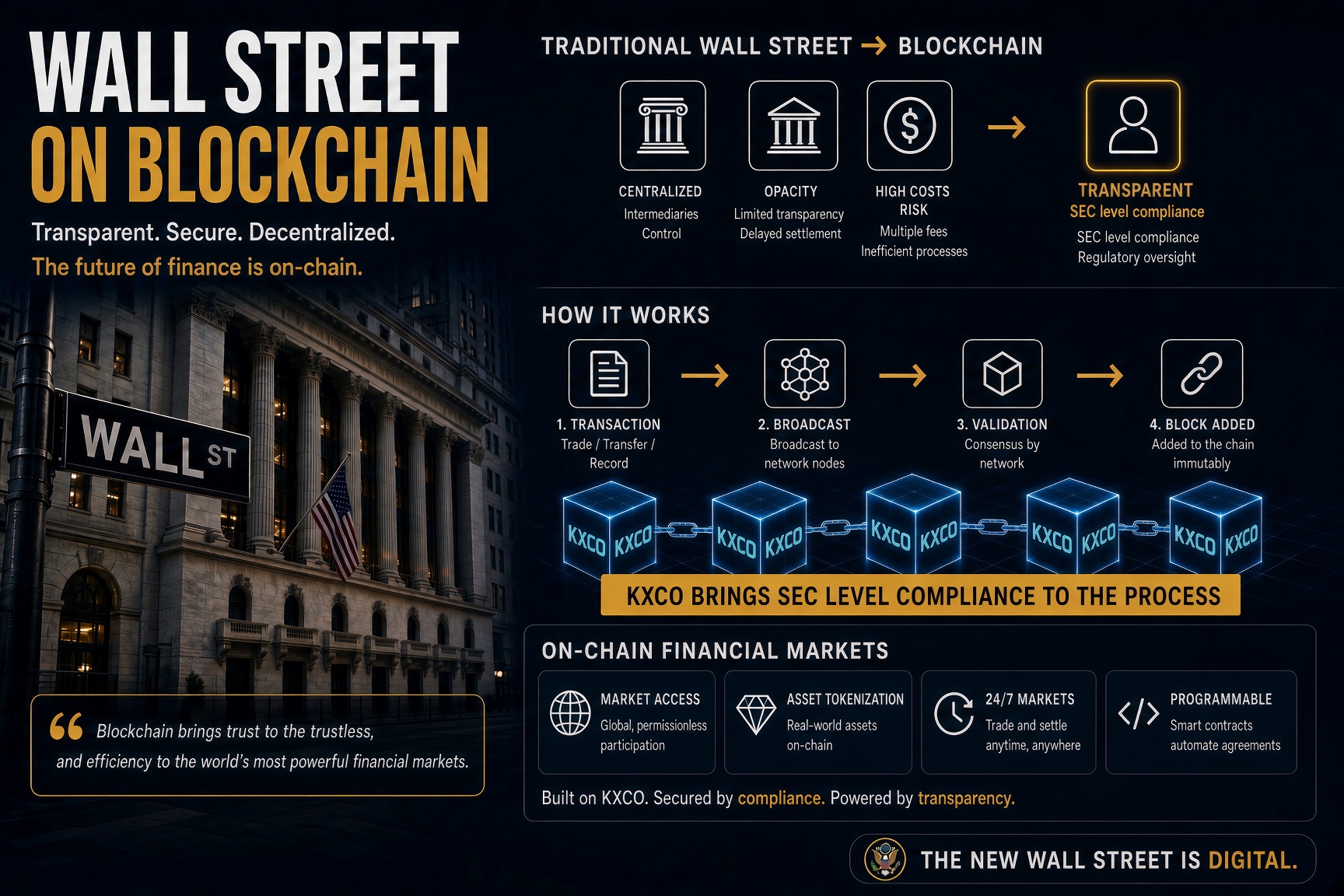
Tokenising a Share in Code: the Register Entry, the Credential and 4 Checks
The SEC has said what a tokenised share's record must hold: wallet, quantity and issue date on chain, the holder's name off chain, permissioned participants, and the same dividends as the share. This developer note builds it in JavaScript: an ML-DSA-65 signed register entry, a stranger's check, the same check at Armature's 0x0b precompile, a credential gate and an exact dividend at a record date.
The 2030 Post-Quantum Deadline in Code: 6 Changes and the Test for Each
A stock Node.js client already negotiates X25519MLKEM768, so TLS 1.3 took the first post-quantum step on its own. Nothing the application owns has moved. This developer note reads Executive Order 14412 and OMB M-26-15 as six changes: ML-KEM key establishment, ML-DSA signatures, a one-import move to Category 5, PQC-signed JWS at the gateway, re-encryption of long-lived data and a CycloneDX CBOM from the lockfile. Every block was run against the published packages.
Every story, signed and delivered.
Subscribe to the kxco channel and get the headline, the AI-written key takeaways, and the chain-anchor link the moment we publish. Audio versions and per-ticker subscriptions arrive in the next iteration.