
Nouriel Roubini: The Perennially Erroneous Socialist Pundit
Nouriel Roubini, an economist hailed for predicting the 2008 financial crisis, has since become a prominent figure known for his consistently pessimistic outlook and socialist inclinations. Despite his early success, Roubini's subsequent predictions and policy recommendations have often fallen short, leading to skepticism about his credibility and ideological biases.
The Early Success: Roubini gained widespread recognition for his foresight in predicting the 2008 global financial crisis. His warnings about the housing bubble and ensuing economic meltdown were indeed prescient and earned him the moniker "Dr. Doom." However, since that high point, his track record has been far from infallible.
Consistent Pessimism: One notable characteristic of Roubini's analyses is his consistent pessimism. While a cautious approach is crucial in economic forecasting, Roubini's predictions often border on alarmism. Whether it's forecasting a double-dip recession, a collapse of the Eurozone, or a global depression, Roubini tends to paint a bleak picture without always considering alternative scenarios or acknowledging positive economic indicators.
The Socialist Stance: Roubini's ideological leaning toward socialism is evident in his policy recommendations. Advocating for expansive government intervention, wealth redistribution, and heavy regulation, he aligns himself with socialist economic principles. While these ideas have their proponents, Roubini's dogmatic adherence to them raises questions about the flexibility of his economic perspectives.
Inaccuracy in Tech Predictions: Roubini's foray into the realm of technology has been marked by inaccuracies. His dismissive stance on cryptocurrencies, particularly Bitcoin, as a "Ponzi scheme" and a "bubble" has been challenged by the growing acceptance and adoption of digital currencies. As blockchain technology reshapes industries, Roubini's failure to recognize its potential highlights a blind spot in his analysis.
Failure to Anticipate Economic Resilience: Despite facing numerous economic challenges, Roubini's failure to acknowledge the resilience of global economies in the face of adversity is notable. The post-2008 recovery, the economic rebound after the COVID-19 pandemic, and the adaptability of markets have demonstrated a more robust system than Roubini's predictions have often suggested.
Conclusion: While Nouriel Roubini's early success in predicting the 2008 financial crisis earned him acclaim, his subsequent analyses and predictions have been marked by consistent pessimism, ideological biases, and inaccuracies. As economic landscapes continue to evolve, it becomes crucial to scrutinize forecasters like Roubini, questioning not only their past successes but also their ability to adapt to changing economic realities.
AI is the Neat Handwriting of the Illiterate
A model in the hands of someone who has read the filing and walked the plant is a clerk. The same model, speaking for someone who has done neither, is a disguise. On AI slop, phantom citations and factslop, why finish stopped being evidence of work, and the containment layer KXCO built so a machine cannot speak as the institution until a source is attached.
Worthship: Do Not Conform to the Age
Worthship is the older English word for worship, and it means to ascribe worth. Bishop Robert Barron preached Romans 12 on 30 August. This essay follows the text into the prison letters, and puts two questions to a graph: do the four readings of that Sunday agree, and was Paul free or in chains when he wrote about despair?
The Truth in All Its Ugliness Must Survive
A majority vote does not determine the truth. Consensus is a mood, gossip is a sport, and a model will write the pretty version for free. Why the ugly number has to survive, why a record beats a dashboard, and what KXCO was built to keep standing when the room changes its mind.
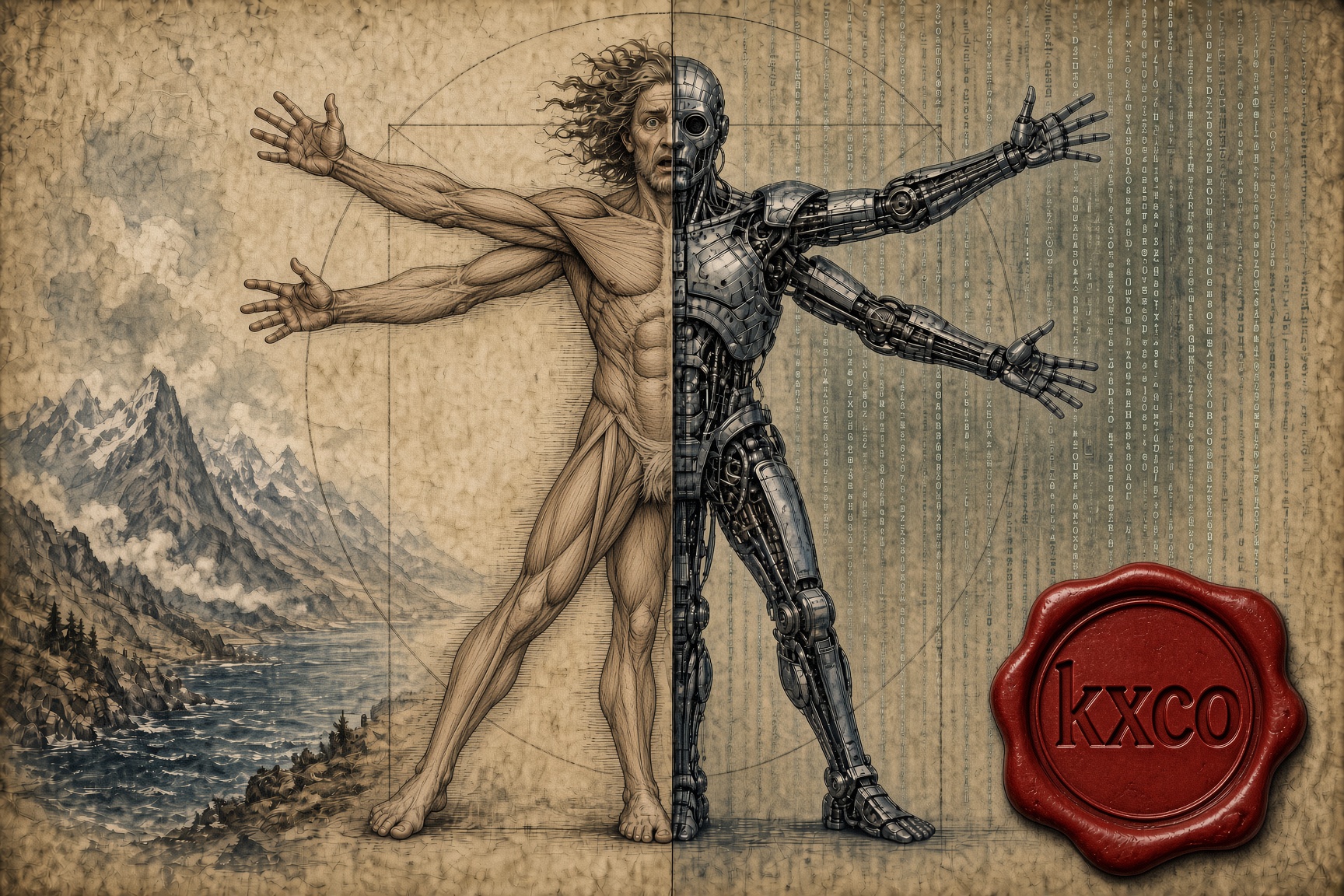
Don't Be the Best, Be the Only: Winning in an AI World
AI is repricing competence downward. What it cannot reproduce is a life. The case for remaining non-fungible, why friction still produces the best ideas, and what it means to build AI systems that keep the human intellect in them.
Every story, signed and delivered.
Subscribe to the kxco channel and get the headline, the AI-written key takeaways, and the chain-anchor link the moment we publish. Audio versions and per-ticker subscriptions arrive in the next iteration.