
No Real Inflation, Only an Eroding Dollar
Rising energy prices drove US consumer inflation up 0.4 percent in February, and the rate for the past 12 months accelerated to 1.7 percent, the government reported Tuesday.
The cost of gasoline at the pump surged 6.4 percent last month, while fuel oil jumped 9.9 percent and natural gas rose 1.6 percent, the Labor Department said.
Excluding food and energy, the "core" Consumer Price Index (CPI) edged up just 0.1 percent compared to January, and was up 1.3 percent for the past year, the report said.
A wave of price increases has been expected as the US economy returns to more normal activity after the strict lockdowns imposed last year to contain the Covid-19 pandemic, and energy prices have already been on the rise for the past three months.
Investors have become rattled in recent weeks, fearing the reopening economy will ignite an inflationary spiral that will oblige the Federal Reserve to raise lending rates.
President Joe Biden's $1.9 trillion rescue package, which is nearing passage is Congress, is also expected to boost the world's largest economy.
But Fed Chair Jerome Powell has said repeatedly that price spikes in coming months are likely to be transitory, and the central bank will not increase interest rates until inflation is solidly above its 2.0 percent goal.
Many economists agree with the Fed's outlook.
"In the coming months, base effects, one-time price increases stemming from the reopening of the economy, and some pass-through of higher prices from supply chain bottlenecks should lift core inflation to 2.5 percent in the spring," said Kathy Bostjancic of Oxford Economics.
"However, we share the Fed's view that the rise will be transitory and will not represent the start of an upward spiral."
Some categories showed prices falling or stable, including new and used vehicles, apparel and medical care, while shelter rose just 0.2 percent, the data showed.
However, food at home rose 0.3 percent in February, and was up 3.5 percent over the past 12 months.
But with restaurants still mostly closed for indoor dining, prices for food away from home edged up just 0.1 percent. For the past year, they were up 3.7 percent, the report said.
AI is the Neat Handwriting of the Illiterate
A model in the hands of someone who has read the filing and walked the plant is a clerk. The same model, speaking for someone who has done neither, is a disguise. On AI slop, phantom citations and factslop, why finish stopped being evidence of work, and the containment layer KXCO built so a machine cannot speak as the institution until a source is attached.
Worthship: Do Not Conform to the Age
Worthship is the older English word for worship, and it means to ascribe worth. Bishop Robert Barron preached Romans 12 on 30 August. This essay follows the text into the prison letters, and puts two questions to a graph: do the four readings of that Sunday agree, and was Paul free or in chains when he wrote about despair?
The Truth in All Its Ugliness Must Survive
A majority vote does not determine the truth. Consensus is a mood, gossip is a sport, and a model will write the pretty version for free. Why the ugly number has to survive, why a record beats a dashboard, and what KXCO was built to keep standing when the room changes its mind.
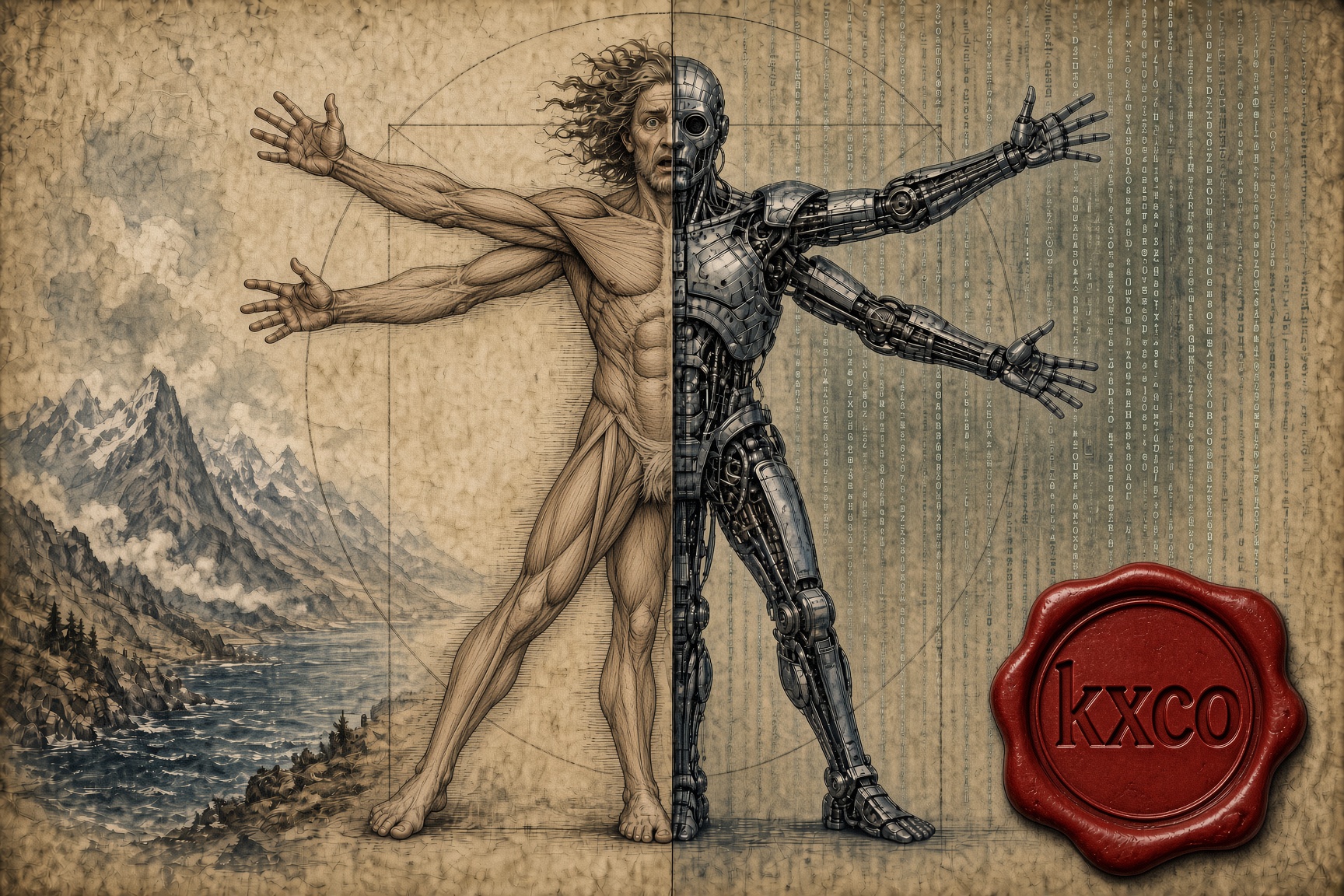
Don't Be the Best, Be the Only: Winning in an AI World
AI is repricing competence downward. What it cannot reproduce is a life. The case for remaining non-fungible, why friction still produces the best ideas, and what it means to build AI systems that keep the human intellect in them.
Every story, signed and delivered.
Subscribe to the kxco channel and get the headline, the AI-written key takeaways, and the chain-anchor link the moment we publish. Audio versions and per-ticker subscriptions arrive in the next iteration.