
Musk Loves Crypto, Again
Tesla founder Elon Musk said Wednesday he personally has invested in bitcoin and other cryptocurrencies but that he does not manipulate or "dump" the digital currencies.
In a wide-ranging online panel discussion that included Twitter and Square founder Jack Dorsey, Musk said he believes in cryptocurrencies as a way to "increase the power of the individual in relation to government," and that he has invested in ethereum and dogecoin in addition to bitcoin.
Musk said he loses money when the value of bitcoin or other cryptocurrencies declines but that he has not been selling despite the volatility.
"I pump but I don't dump," he told the forum sponsored by the Crypto Council for Innovation.
"I would like to see bitcoin succeed."
Musk said he expected that Tesla would resume auto sales in bitcoin which he suspended over concerns about high energy use for "mining" of the cryptocurrency.
"Tesla's mission is accelerating the advent of sustainable energy," he said.
"We can't be the company that does that and also not do appropriate diligence on the energy usage... now the it looks like bitcoin is shifting a lot more towards renewables."
Dorsey, whose Square digital payments firm recently announced plans for a bitcoin wallet, said he is a staunch believer in the currency as a way to reduce transaction costs and improve people's lives.
He said he sees bitcoin as a "native currency" for the internet that allows more people to easily make cross-border payments and supports different online business models.
For Twitter, he said, bitcoin "creates so many different business models" which could for example reduce its dependence on advertising.
"We can't just see this as an asset that we own and an investment vehicle is something that has the potential to change everything and make the lives of everyone was kind of better in some small, maybe marginal way," he said.
"My hope is that it creates world peace."
AI is the Neat Handwriting of the Illiterate
A model in the hands of someone who has read the filing and walked the plant is a clerk. The same model, speaking for someone who has done neither, is a disguise. On AI slop, phantom citations and factslop, why finish stopped being evidence of work, and the containment layer KXCO built so a machine cannot speak as the institution until a source is attached.
Worthship: Do Not Conform to the Age
Worthship is the older English word for worship, and it means to ascribe worth. Bishop Robert Barron preached Romans 12 on 30 August. This essay follows the text into the prison letters, and puts two questions to a graph: do the four readings of that Sunday agree, and was Paul free or in chains when he wrote about despair?
The Truth in All Its Ugliness Must Survive
A majority vote does not determine the truth. Consensus is a mood, gossip is a sport, and a model will write the pretty version for free. Why the ugly number has to survive, why a record beats a dashboard, and what KXCO was built to keep standing when the room changes its mind.
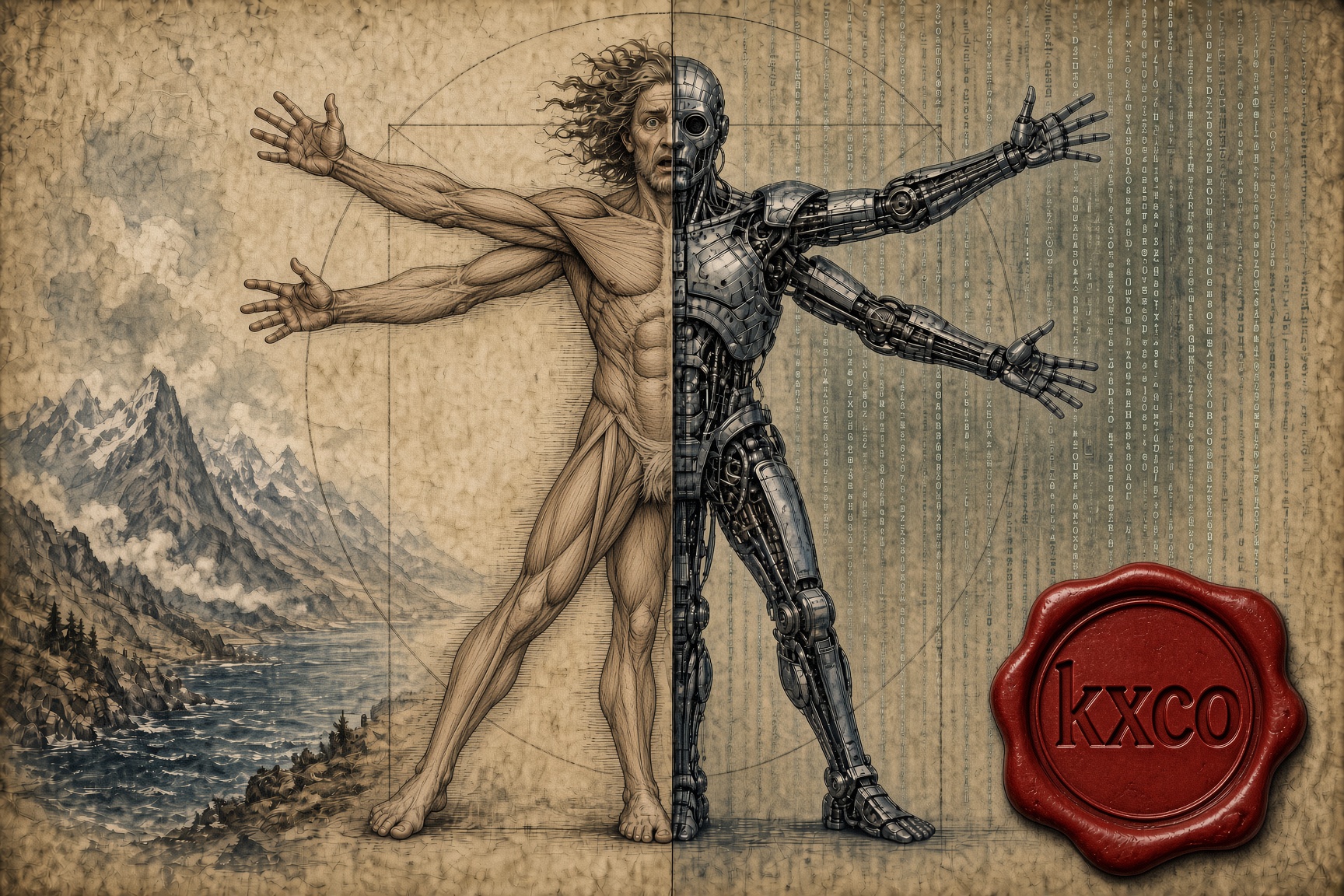
Don't Be the Best, Be the Only: Winning in an AI World
AI is repricing competence downward. What it cannot reproduce is a life. The case for remaining non-fungible, why friction still produces the best ideas, and what it means to build AI systems that keep the human intellect in them.
Every story, signed and delivered.
Subscribe to the kxco channel and get the headline, the AI-written key takeaways, and the chain-anchor link the moment we publish. Audio versions and per-ticker subscriptions arrive in the next iteration.