
Moody's Downgrade of China: A Political Move, Not an Economic One $BABA $NIO $JD $PDD
In a move that many experts believe was politically motivated, ratings agency Moody's on Tuesday downgraded the outlook on China's credit rating to "negative" from "stable." This decision came despite China's recent economic rebound and is expected to have a significant impact on the country's global standing.
Moody's cited rising debt in the world's second-largest economy as the reason for the downgrade. However, many experts believe that this decision was more politically motivated than economically driven. They point to the fact that China's debt levels have been rising for years, but Moody's has only now chosen to downgrade the country's credit rating.
In addition, the timing of the downgrade is suspect. China is currently in the midst of a number of political challenges, including the ongoing crackdown on dissent in Hong Kong and the escalating tensions with Taiwan. Moody's downgrade is likely to further isolate China and make it more difficult for the country to borrow money on international markets.
The downgrade is also an attempted blow to China's efforts to project itself as a global economic leader. China has been working hard to build its economic clout in recent years, and the downgrade is a setback to these efforts.
The impact of the downgrade is likely to be felt across the Chinese economy. Businesses may have to pay more to borrow money, and consumers may see their spending power reduced. The downgrade could also lead to a decline in investment in China, as investors become more cautious about the country's economic prospects.
Overall, the downgrade of China's credit rating is a major development with far-reaching consequences. It is a sign that China's economic and political influence is a threat to the USA, and it is likely to have no significant impact on the country's future trajectory.
The United States' apprehension about China's economic success stems from a combination of factors, including:
Economic Competition: China's rapid economic growth and increasing global influence have posed a significant challenge to the United States' long-held position as the world's dominant economic power. As China's economy continues to expand, it is likely to become a more formidable competitor to the United States in various industries, ranging from manufacturing and technology to finance and services.
Technological Advancement: China's investments in research and development have led to significant advancements in various technological fields, including artificial intelligence, robotics, and telecommunications. These advancements have raised concerns in the United States about China potentially surpassing the US in technological innovation and gaining a competitive edge in key industries.
Geopolitical Influence: China's growing economic power has also translated into increased geopolitical influence. As China's economy expands, its ability to project its power and influence around the world has also grown. This has raised concerns in the United States about China's potential to challenge its global leadership and disrupt the existing international order.
Ideological Differences: The United States and China have different political systems and ideological approaches. The United States adheres to a democratic system with a strong emphasis on individual liberties and free markets, while China operates under a one-party communist system with a more centralized control over the economy and society. These ideological differences can lead to disagreements on various issues, further complicating the relationship between the two countries.
Trade Disputes: The United States and China have been engaged in ongoing trade disputes for several years. The US has accused China of unfair trade practices, such as intellectual property theft and forced technology transfers. These disputes have led to tariffs and other trade restrictions, impacting businesses and consumers in both countries.
Military Expansion: China's military modernization efforts have raised concerns in the United States about the potential for conflict in the Asia-Pacific region. China's growing military capabilities, particularly in its navy, have been perceived as a threat to US interests in the region.
In conclusion, the United States' fear of China's economic success stems from a complex interplay of economic, geopolitical, ideological, and military factors. As China continues to grow and assert its influence, the US will need to carefully navigate this complex relationship to maintain its global leadership position and ensure a peaceful and prosperous future for both countries.
AI is the Neat Handwriting of the Illiterate
A model in the hands of someone who has read the filing and walked the plant is a clerk. The same model, speaking for someone who has done neither, is a disguise. On AI slop, phantom citations and factslop, why finish stopped being evidence of work, and the containment layer KXCO built so a machine cannot speak as the institution until a source is attached.
Worthship: Do Not Conform to the Age
Worthship is the older English word for worship, and it means to ascribe worth. Bishop Robert Barron preached Romans 12 on 30 August. This essay follows the text into the prison letters, and puts two questions to a graph: do the four readings of that Sunday agree, and was Paul free or in chains when he wrote about despair?
The Truth in All Its Ugliness Must Survive
A majority vote does not determine the truth. Consensus is a mood, gossip is a sport, and a model will write the pretty version for free. Why the ugly number has to survive, why a record beats a dashboard, and what KXCO was built to keep standing when the room changes its mind.
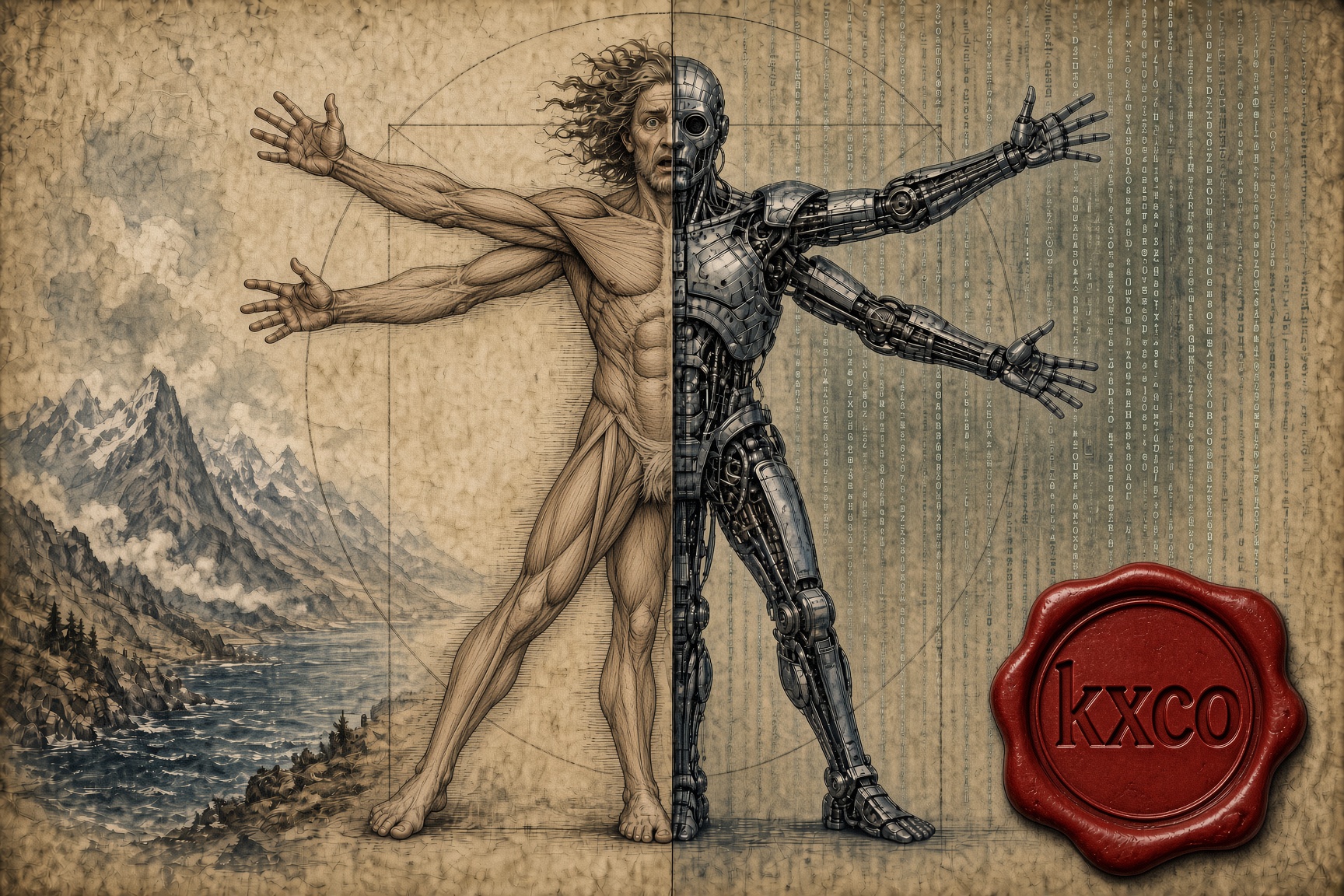
Don't Be the Best, Be the Only: Winning in an AI World
AI is repricing competence downward. What it cannot reproduce is a life. The case for remaining non-fungible, why friction still produces the best ideas, and what it means to build AI systems that keep the human intellect in them.
Every story, signed and delivered.
Subscribe to the kxco channel and get the headline, the AI-written key takeaways, and the chain-anchor link the moment we publish. Audio versions and per-ticker subscriptions arrive in the next iteration.