
Modern-Day Britain and the Tragic French Revolution
Modern-Day Britain and the Tragic French Revolution:
Looking back over the history the French Revolution stands as a reminder of how rapidly a country may spiral into anarchy when the very foundation of its people starts to implode.
Though the France of the 18th century and modern day Britain live in quite different times and contexts, there are disturbing similarities that call for our attention.
Not new events—moral decline, financial instability, and the loss of religious influence were the harbingers of catastrophe in revolutionary France and are once more raising heads in the United Kingdom today.
Common Prostitution and Pornography
Paris grew a metropolis full with vice in the last years of the Ancien Régime. There was rampant prostitution, and society's moral compass appeared to swing wildly without direction. Fast forward to Britain now, and we are currently with a comparable moral conundrum. The expansion of pornography and the spread of prostitution are indications of a deeper social sickness than just personal choice. A nation's traditional values are broken when it starts to commercialize human bodies and relationships, therefore undermining society norms that have long kept communities together.
High Debt Load
Debt was drowning France before the French Revolution. The country teetered on financial catastrophe from reckless spending, disastrous wars, and complete lack of economic discipline. Familiar? Additionally struggling with an excessive debt load—public and personal—modern Britain is also Government borrowing is relentless; welfare expenditure is becoming more unsustainable; and a consumer society driven by cheap credit puts us precariously close to financial disaster. History shows us that when such strong chains weigh down a nation's economy, the ground is ready for turmoil and revolution.
The erasure of the Church
More than only toppled a monarchy, the French Revolution attacked the core of French society by erasing the Catholic Church, which had been a pillar of life for millennia. Churches were raided, priests were harassed, and the spiritual foundation of the country was shattered in favour of secularism and the worship of reason. The Church of England finds itself in a similarly vulnerable posture in modern Britain. Attendance is declining; secularism is growing; the voice of the Church is progressively muffled by the chorus of modern ideas. This decline of religious power creates a moral void that, left empty, can cause social unrest.
The French Revolution: A Disaster Not a Victory
Though the truth is far more terrible, the French Revolution is sometimes idealized as a triumph for liberty, equality, and brotherhood. That whatever came next was a Reign of Terror rather than a golden age of freedom. Tens of thousands of people—including many innocent—were put to death. From the ashes sprang Napoleon Bonaparte, who replaced one type of despotism with another, amid the social and economic upheaval that rocked France. The revolution split the very institutions that had kept France together for millennia, leaving a power vacuum rapidly occupied by opportunists and despots.
The promised paradise never materialized. Rather, France suffered years of conflict, misery, and loss. For France, the revolution was a catastrophe rather than a triumph; its legacy of violence and tyranny tormented the country for centuries.
The Modern-Day Alert: A Mass Immigration Youth Bulge
The connections, however, do not stop with moral and financial collapse. Britain today suffers the phenomena of a "youth bulge," a surging population of young people whose combination with the demands of widespread immigration produces a volatile mix. Though often deprived of opportunity, the young, full of enthusiasm and energy, can become a force for good or, should they become disillusioned, a trigger for upheaval. Although mass immigration brings diversity and fresh opportunities, it also strains the social fabric and fuels tensions that, if improperly controlled could cause war.
Finally,
Disaster is laying its foundation. Indices of a society on the verge include the declining moral standards, debt burden, loss of religious authority, and problems presented by a youth bulge and mass immigration. The lessons of the French Revolution are clear: revolutions born of moral decay, financial devastation, and social unrest do not lead to freedom—they lead to chaos and pain.
Britain has to take these cautions seriously. We have to be careful not to let the forces guiding us down a similar road cause us to be rebuilding from the wreckage of our own making. The moment to act is now, before the terrible repercussions of historical repeatability recur.
AI is the Neat Handwriting of the Illiterate
A model in the hands of someone who has read the filing and walked the plant is a clerk. The same model, speaking for someone who has done neither, is a disguise. On AI slop, phantom citations and factslop, why finish stopped being evidence of work, and the containment layer KXCO built so a machine cannot speak as the institution until a source is attached.
Worthship: Do Not Conform to the Age
Worthship is the older English word for worship, and it means to ascribe worth. Bishop Robert Barron preached Romans 12 on 30 August. This essay follows the text into the prison letters, and puts two questions to a graph: do the four readings of that Sunday agree, and was Paul free or in chains when he wrote about despair?
The Truth in All Its Ugliness Must Survive
A majority vote does not determine the truth. Consensus is a mood, gossip is a sport, and a model will write the pretty version for free. Why the ugly number has to survive, why a record beats a dashboard, and what KXCO was built to keep standing when the room changes its mind.
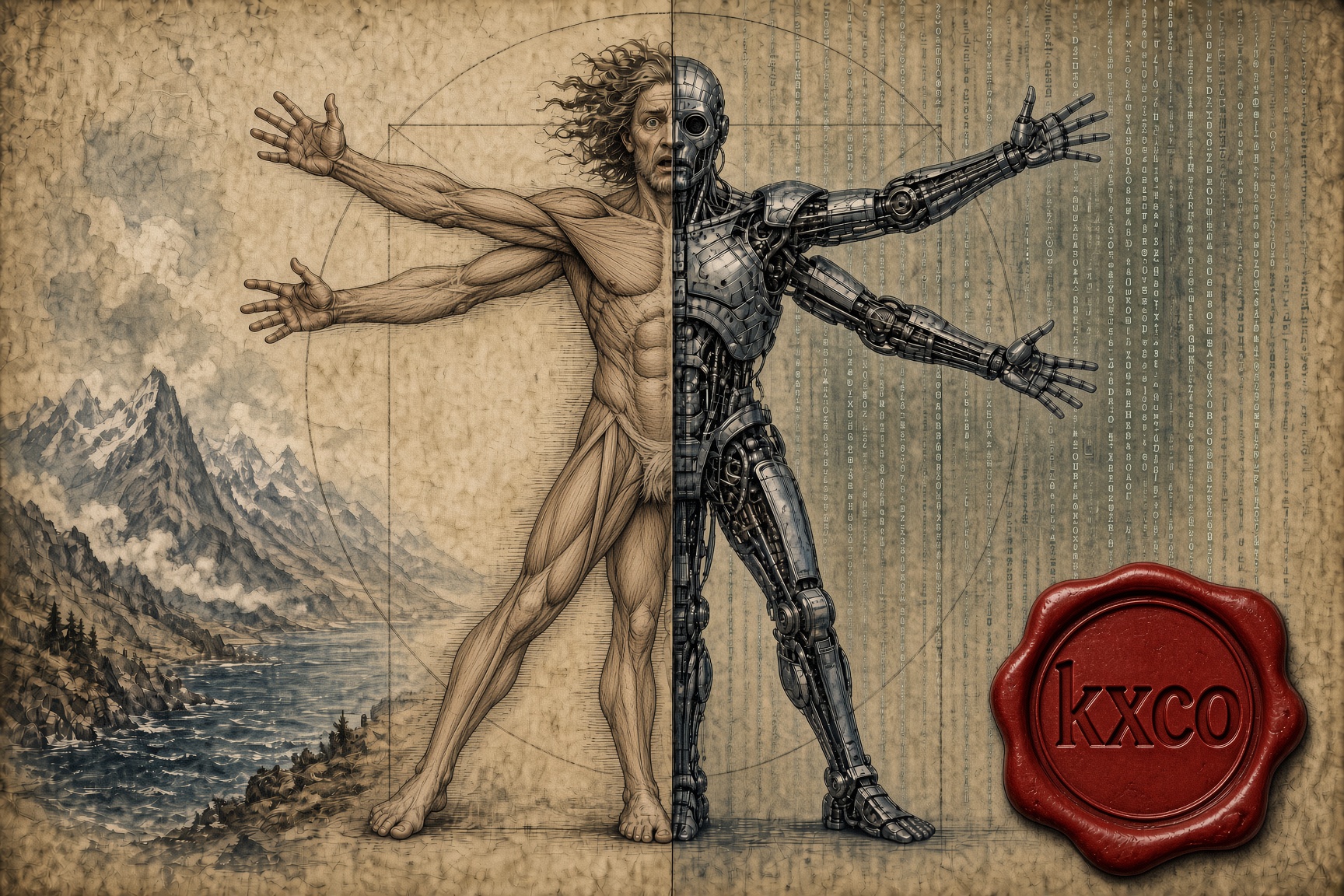
Don't Be the Best, Be the Only: Winning in an AI World
AI is repricing competence downward. What it cannot reproduce is a life. The case for remaining non-fungible, why friction still produces the best ideas, and what it means to build AI systems that keep the human intellect in them.
Every story, signed and delivered.
Subscribe to the kxco channel and get the headline, the AI-written key takeaways, and the chain-anchor link the moment we publish. Audio versions and per-ticker subscriptions arrive in the next iteration.