
KXCO Step by Step Guide to Becoming a Trader
Becoming a day trader is a thrilling and potentially profitable way to earn a living. Day traders buy and sell financial instruments, such as stocks, options, or futures, within a single trading day. They aim to profit from small price movements in the market, and the profits can add up over time. However, day trading requires a significant amount of knowledge, skill, and discipline. In this article, we'll discuss what it takes to become a successful day trader.
Educate yourself
The first step to becoming a day trader is to educate yourself about the markets and trading. You need to understand the terminology, concepts, and strategies involved in trading. You can learn about trading by reading books, taking online courses, attending seminars, and watching instructional videos.
It's essential to have a solid understanding of technical analysis and fundamental analysis. Technical analysis involves studying charts and using indicators to identify trends and patterns in the market. Fundamental analysis involves analyzing financial statements and economic data to assess the health of a company or market.
Develop a trading strategy
Once you have a basic understanding of trading, you need to develop a trading strategy. A trading strategy is a set of rules that you follow when entering and exiting trades. Your strategy should include your entry and exit points, the amount of capital you're willing to risk on each trade, and your risk management plan.
There are many trading strategies to choose from, such as scalping, swing trading, and trend trading. It's essential to choose a strategy that suits your personality, trading style, and risk tolerance.
Practice with a demo account
Before you start trading with real money, it's important to practice with a demo account. A demo account allows you to simulate trading with virtual money in real-time market conditions. This will give you the opportunity to test your trading strategy and see how it performs in different market conditions.
When using a demo account, treat it as if it's real money. Stick to your trading strategy and don't take unnecessary risks. Once you're consistently profitable with your demo account, you can start trading with real money.
Manage your risk
Risk management is an essential aspect of day trading. You need to have a plan in place for managing your risk, such as setting stop-loss orders or using trailing stops. A stop-loss order is an order to sell a security when it reaches a certain price. A trailing stop is a stop-loss order that follows the price of the security as it moves in your favor.
It's important to only risk a small percentage of your trading account on each trade, typically no more than 1-2%. This will help you manage your risk and prevent significant losses.
Stay disciplined
One of the biggest challenges of day trading is staying disciplined. It's easy to get caught up in the excitement of the market and make impulsive trades. However, impulsive trades can lead to significant losses.
To stay disciplined, stick to your trading strategy and only trade when the conditions are right. Avoid trading based on emotions or rumors. Take breaks throughout the day to clear your mind and stay focused.
Conclusion
Becoming a day trader can be a challenging but rewarding career path. To be successful, you need to educate yourself, develop a trading strategy, practice with a demo account, manage your risk, and stay disciplined. Remember that trading involves risk, and there's no guarantee of profit. However, with the right mindset, knowledge, and skills, you can become a profitable day trader.
AI is the Neat Handwriting of the Illiterate
A model in the hands of someone who has read the filing and walked the plant is a clerk. The same model, speaking for someone who has done neither, is a disguise. On AI slop, phantom citations and factslop, why finish stopped being evidence of work, and the containment layer KXCO built so a machine cannot speak as the institution until a source is attached.
Worthship: Do Not Conform to the Age
Worthship is the older English word for worship, and it means to ascribe worth. Bishop Robert Barron preached Romans 12 on 30 August. This essay follows the text into the prison letters, and puts two questions to a graph: do the four readings of that Sunday agree, and was Paul free or in chains when he wrote about despair?
The Truth in All Its Ugliness Must Survive
A majority vote does not determine the truth. Consensus is a mood, gossip is a sport, and a model will write the pretty version for free. Why the ugly number has to survive, why a record beats a dashboard, and what KXCO was built to keep standing when the room changes its mind.
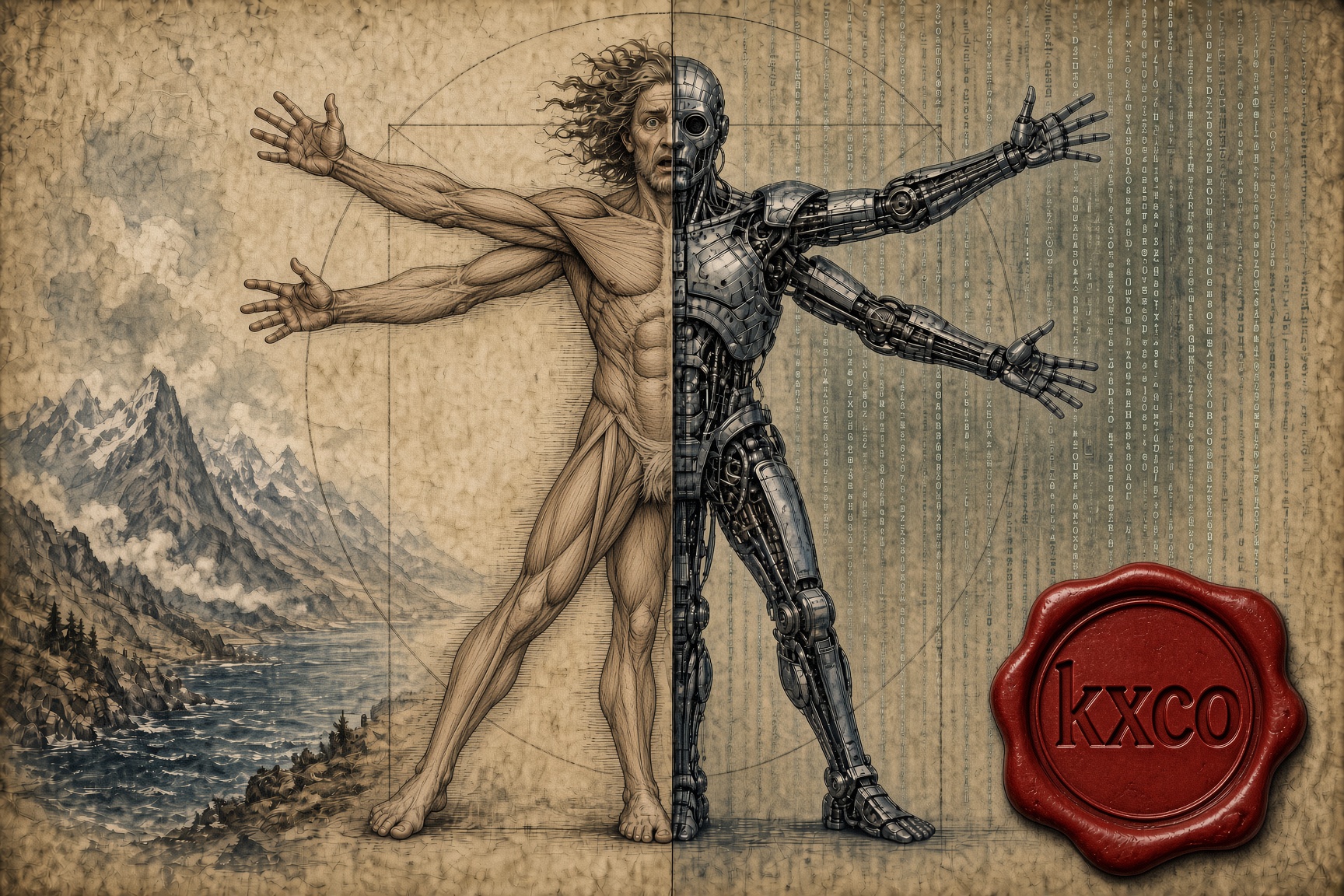
Don't Be the Best, Be the Only: Winning in an AI World
AI is repricing competence downward. What it cannot reproduce is a life. The case for remaining non-fungible, why friction still produces the best ideas, and what it means to build AI systems that keep the human intellect in them.
Every story, signed and delivered.
Subscribe to the kxco channel and get the headline, the AI-written key takeaways, and the chain-anchor link the moment we publish. Audio versions and per-ticker subscriptions arrive in the next iteration.