
Just Stop Oil: Performance Terrorism and the Consequences
Just Stop Oil has gained notoriety for their extreme tactics in advocating for environmental action. The group has engaged in activities that I have labeled as performance terrorism due to their disruptive and damaging nature. Their actions included defacing artwork, monuments, and historical sites, and blocking traffic, all under the guise of raising awareness about climate change.

The core of their campaign was to convince the public that the world was on the brink of an environmental catastrophe, often employing fearmongering tactics. These actions not only caused physical damage but also inflicted psychological harm, especially among young people who were led to believe in an imminent apocalypse.
Their protests have been controversial, drawing criticism from various quarters for the method and manner of their activism. Critics argue that their approach was more about spectacle than substance, creating chaos without contributing to meaningful dialogue or solutions. The damage to public and cultural property was substantial, leading to significant costs for repairs and restoration.
The judicial system responded to these actions with appropriate severity, reflecting the societal impact of their disruptions. The sentences handed down were seen by many as fair and necessary to deter similar acts in the future. It was a clear message that while activism is an essential part of a democratic society, it must be conducted responsibly and without harm to others or public property.
Counterproductive Impact
Negative Public Perception: The group’s extreme methods have alienated potential supporters. Instead of fostering a dialogue about sustainable energy and environmental protection, their actions have often shifted the focus to the legality and morality of their protests.
Legal Consequences: Members have faced significant legal repercussions for their actions, including jail time. This not only diverts resources from the movement but also paints the activists as lawbreakers rather than change-makers (Evening Standard) (Artnet News).
Distraction from the Message: The dramatic nature of their protests has often overshadowed their core message. For instance, throwing soup on Van Gogh’s "Sunflowers" or gluing themselves to iconic artworks garners media attention, but the narrative frequently centers on the vandalism rather than the environmental issues they aim to highlight (Evening Standard) (Artnet News).
This situation underscores the importance of balancing passionate advocacy with respect for the public domain and the rights of others. In a democratic society, causes and movements must find ways to coexist with everyday life without resorting to destruction and chaos. The right to protest does not extend to ruining art, monuments, or historic sites, which are part of our collective heritage and should be preserved for future generations.
Just Stop Oil has targeted several notable artworks in their protests, often using methods such as throwing substances on the paintings or gluing themselves to the frames. Here are some of the key incidents:
Vincent van Gogh’s "Peach Trees in Blossom": On June 30, 2022, activists attached themselves to this painting at the Courtauld Institute in London.
J.M.W. Turner’s "Tomson’s Aeolian Harp": On July 1, 2022, protesters glued themselves to this painting at the Manchester Art Gallery.
John Constable’s "The Hay Wain": Activists glued themselves to this iconic painting at the National Gallery in London on July 4, 2022.
Giampietrino’s "The Last Supper": This artwork was targeted at the Royal Academy in London on July 5, 2022.
Vincent van Gogh’s "Sunflowers": On October 14, 2022, tomato soup was thrown on this painting at the National Gallery in London (Evening Standard) (Artnet News).
Pablo Picasso’s "Massacre in Korea": Extinction Rebellion activists glued themselves to this painting at the National Gallery of Victoria in Melbourne on October 8, 2022.
Raphael’s "Sistine Madonna": Protesters glued their hands to the frame of this painting at the Old Masters Picture Gallery in Dresden on August 23, 2022.
Laocoön and His Sons: Activists glued themselves to the base of this ancient sculpture at the Vatican Museum on August 18, 2022.
Umberto Boccioni’s "Unique Forms of Continuity in Space": Four activists glued themselves to this sculpture at the Museo del Novecento in Milan on July 30, 2022 (Artnet News).
These acts have sparked significant debate and controversy, as they disrupt public life and risk damaging invaluable cultural heritage. The actions are seen by many as "performance terrorism," intended to shock and draw attention to their cause, but often at the expense of the public and historical treasures.
AI is the Neat Handwriting of the Illiterate
A model in the hands of someone who has read the filing and walked the plant is a clerk. The same model, speaking for someone who has done neither, is a disguise. On AI slop, phantom citations and factslop, why finish stopped being evidence of work, and the containment layer KXCO built so a machine cannot speak as the institution until a source is attached.
Worthship: Do Not Conform to the Age
Worthship is the older English word for worship, and it means to ascribe worth. Bishop Robert Barron preached Romans 12 on 30 August. This essay follows the text into the prison letters, and puts two questions to a graph: do the four readings of that Sunday agree, and was Paul free or in chains when he wrote about despair?
The Truth in All Its Ugliness Must Survive
A majority vote does not determine the truth. Consensus is a mood, gossip is a sport, and a model will write the pretty version for free. Why the ugly number has to survive, why a record beats a dashboard, and what KXCO was built to keep standing when the room changes its mind.
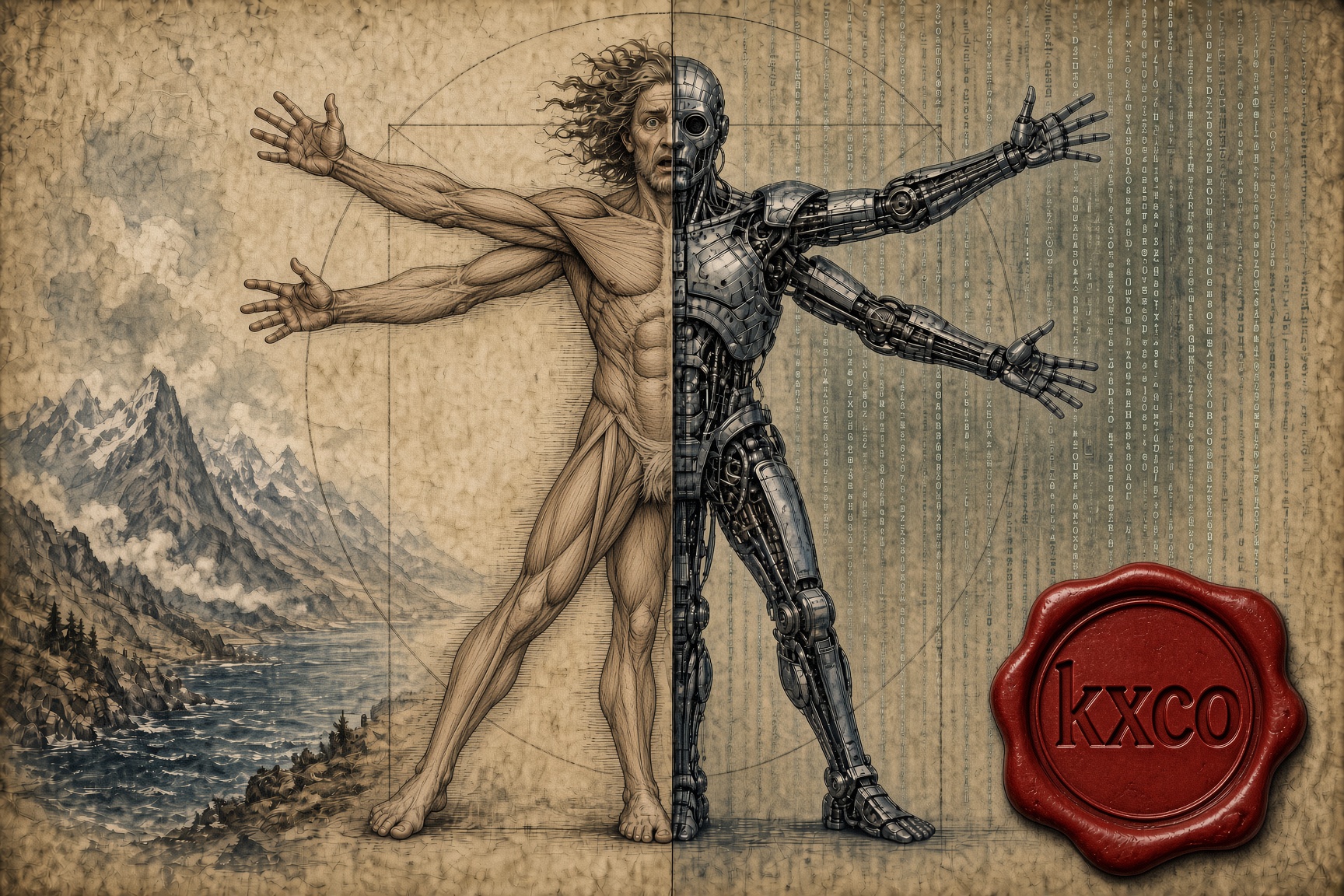
Don't Be the Best, Be the Only: Winning in an AI World
AI is repricing competence downward. What it cannot reproduce is a life. The case for remaining non-fungible, why friction still produces the best ideas, and what it means to build AI systems that keep the human intellect in them.
Every story, signed and delivered.
Subscribe to the kxco channel and get the headline, the AI-written key takeaways, and the chain-anchor link the moment we publish. Audio versions and per-ticker subscriptions arrive in the next iteration.