
Jamie Dimon: Hypocrisy on Bitcoin and JPMorgan's Deepening Involvement in the Crypto Industry $BTC $JPM
Jamie Dimon, the CEO of JPMorgan Chase, has been a vocal critic of Bitcoin and other cryptocurrencies for years, often portraying them as tools for criminal activities. However, recent developments reveal a stark contrast between Dimon's public statements and JPMorgan's increasing involvement in the cryptocurrency industry.
Dimon's Criticisms of Bitcoin
Jamie Dimon and his disdain for Bitcoin is well-documented. He has consistently criticized the cryptocurrency, labeling it as "worthless" and linking it to illicit activities such as money laundering, tax evasion, and terrorism financing. In a recent interview with Fox Business Network, Dimon reiterated his negative stance on Bitcoin, emphasizing its alleged association with illegal activities.
Dimon's perspective aligns with his call for stricter regulations on the crypto market, advocating that cryptocurrencies should be subjected to the same anti-money-laundering rules as traditional financial institutions. His sentiments echo those of other banking executives, such as Bank of America's Brian Moynihan, who have voiced concerns about the regulatory oversight of digital assets.
JPMorgan's Role in the Crypto Industry
Despite Jamie Dimon's public criticisms of Bitcoin, JPMorgan's actions tell a different story. Contrary to Dimon's dismissive stance, JPMorgan has been actively exploring opportunities in the cryptocurrency space, signaling a strategic shift in the bank's approach to digital assets.
Recent developments indicate JPMorgan's growing involvement in the crypto industry. The bank's interest is evident in its initiatives, partnerships, and investments related to blockchain technology and digital currencies. Moreover, JPMorgan's participation in discussions about Bitcoin exchange-traded funds (ETFs) and other crypto-related ventures underscores its recognition of the potential benefits and opportunities offered by the burgeoning asset class.
Contradictions and Controversies
Jamie Dimon's criticisms of Bitcoin appear increasingly contradictory in light of JPMorgan's evolving stance on cryptocurrencies. While Dimon continues to disparage Bitcoin publicly, JPMorgan's actions suggest a more nuanced perspective on digital assets, reflecting the bank's strategic interests and evolving business strategies.
The divergence between Dimon's rhetoric and JPMorgan's activities raises questions about the bank's true intentions and motivations in the crypto industry. As the regulatory landscape continues to evolve, and institutional interest in cryptocurrencies grows, JPMorgan's contradictory position underscores the complexities and contradictions inherent in the intersection of traditional banking and digital innovation.
Jamie Dimon's longstanding criticisms of Bitcoin contrast sharply with JPMorgan's increasing involvement in the cryptocurrency industry. While Dimon continues to disparage Bitcoin publicly, JPMorgan's actions reveal a more nuanced and strategic approach to digital assets. As the crypto industry continues to mature and regulatory frameworks evolve, the contradictions between Dimon's rhetoric and JPMorgan's activities highlight the complexities and challenges facing traditional financial institutions in navigating the rapidly changing landscape of digital innovation.
AI is the Neat Handwriting of the Illiterate
A model in the hands of someone who has read the filing and walked the plant is a clerk. The same model, speaking for someone who has done neither, is a disguise. On AI slop, phantom citations and factslop, why finish stopped being evidence of work, and the containment layer KXCO built so a machine cannot speak as the institution until a source is attached.
Worthship: Do Not Conform to the Age
Worthship is the older English word for worship, and it means to ascribe worth. Bishop Robert Barron preached Romans 12 on 30 August. This essay follows the text into the prison letters, and puts two questions to a graph: do the four readings of that Sunday agree, and was Paul free or in chains when he wrote about despair?
The Truth in All Its Ugliness Must Survive
A majority vote does not determine the truth. Consensus is a mood, gossip is a sport, and a model will write the pretty version for free. Why the ugly number has to survive, why a record beats a dashboard, and what KXCO was built to keep standing when the room changes its mind.
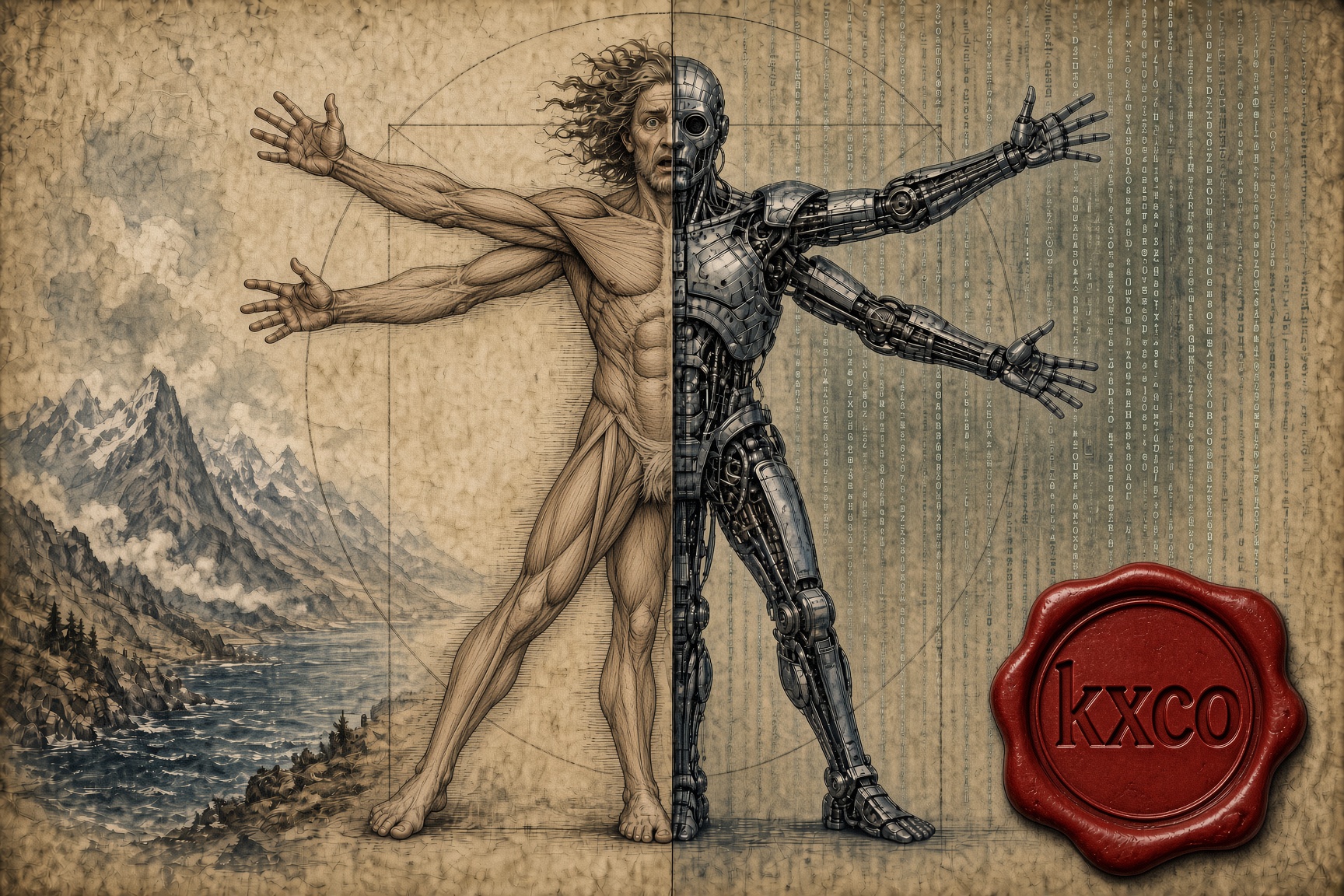
Don't Be the Best, Be the Only: Winning in an AI World
AI is repricing competence downward. What it cannot reproduce is a life. The case for remaining non-fungible, why friction still produces the best ideas, and what it means to build AI systems that keep the human intellect in them.
Every story, signed and delivered.
Subscribe to the kxco channel and get the headline, the AI-written key takeaways, and the chain-anchor link the moment we publish. Audio versions and per-ticker subscriptions arrive in the next iteration.