
Italy $38b in Stimulus
Italy's government approved on Friday a 32-billion-euro ($38-billion-dollar) economic relief package for coronavirus-stricken businesses and workers.
It included 11 billion euros of grants to worst-affected firms that will be paid out by the end of April, Prime Minister Mario Draghi said in a news conference.
Draghi called the decree a "partial answer" to those who are struggling with the fallout from the pandemic, "but the best that we could do" given budgetary constraints.
Around 8 billion euros were earmarked for welfare support, including for furloughed and unemployed workers, and almost 5 billion euros for vaccinations and the health sector.
A freeze on job dismissals, expiring in late March, was prolonged until the end of June, with a further extension until late October valid for some industries.
The measures were funded by public debt, and Draghi said the government would borrow even more this year to finance more economic stimulus measures.
Friday's decree included an amnesty on unpaid tax bills, which was championed by Matteo Salvini's far-right League and opposed by leftists in the national unity coalition.
There were other measures for categories badly affected by mandatory shutdowns, including seasonal workers, theatre and cinema employees, and the ski industry.
Italy, which 13 months ago became the first European country to be hit by the coronavirus pandemic, has been plunged into its worst recession since World War II.
Last year, gross domestic product fell by 8.9 per cent, while almost 450,000 people lost their jobs, with disproportionately high numbers among women, young people and the self-employed.
Draghi is hoping to provide some relief by ramping up a sluggish vaccination programme, and is drafting an economic relaunch plan to be funded by European Union grants and loans.
Italy is eligible for around 200 billion euros from the bloc's flagship virus recovery fund, but in return, it has to commit to an ambitious reform plan, subject to Brussels' approval.
Huge expectations are riding on Draghi, a former European Central Bank president famous for doing "whatever it takes" to save the euro, and installed as Italy's premier in February.
Since then, he has mostly worked behind the scenes, attracting some criticism. Friday marked his first news conference in more than a month in office.
AI is the Neat Handwriting of the Illiterate
A model in the hands of someone who has read the filing and walked the plant is a clerk. The same model, speaking for someone who has done neither, is a disguise. On AI slop, phantom citations and factslop, why finish stopped being evidence of work, and the containment layer KXCO built so a machine cannot speak as the institution until a source is attached.
Worthship: Do Not Conform to the Age
Worthship is the older English word for worship, and it means to ascribe worth. Bishop Robert Barron preached Romans 12 on 30 August. This essay follows the text into the prison letters, and puts two questions to a graph: do the four readings of that Sunday agree, and was Paul free or in chains when he wrote about despair?
The Truth in All Its Ugliness Must Survive
A majority vote does not determine the truth. Consensus is a mood, gossip is a sport, and a model will write the pretty version for free. Why the ugly number has to survive, why a record beats a dashboard, and what KXCO was built to keep standing when the room changes its mind.
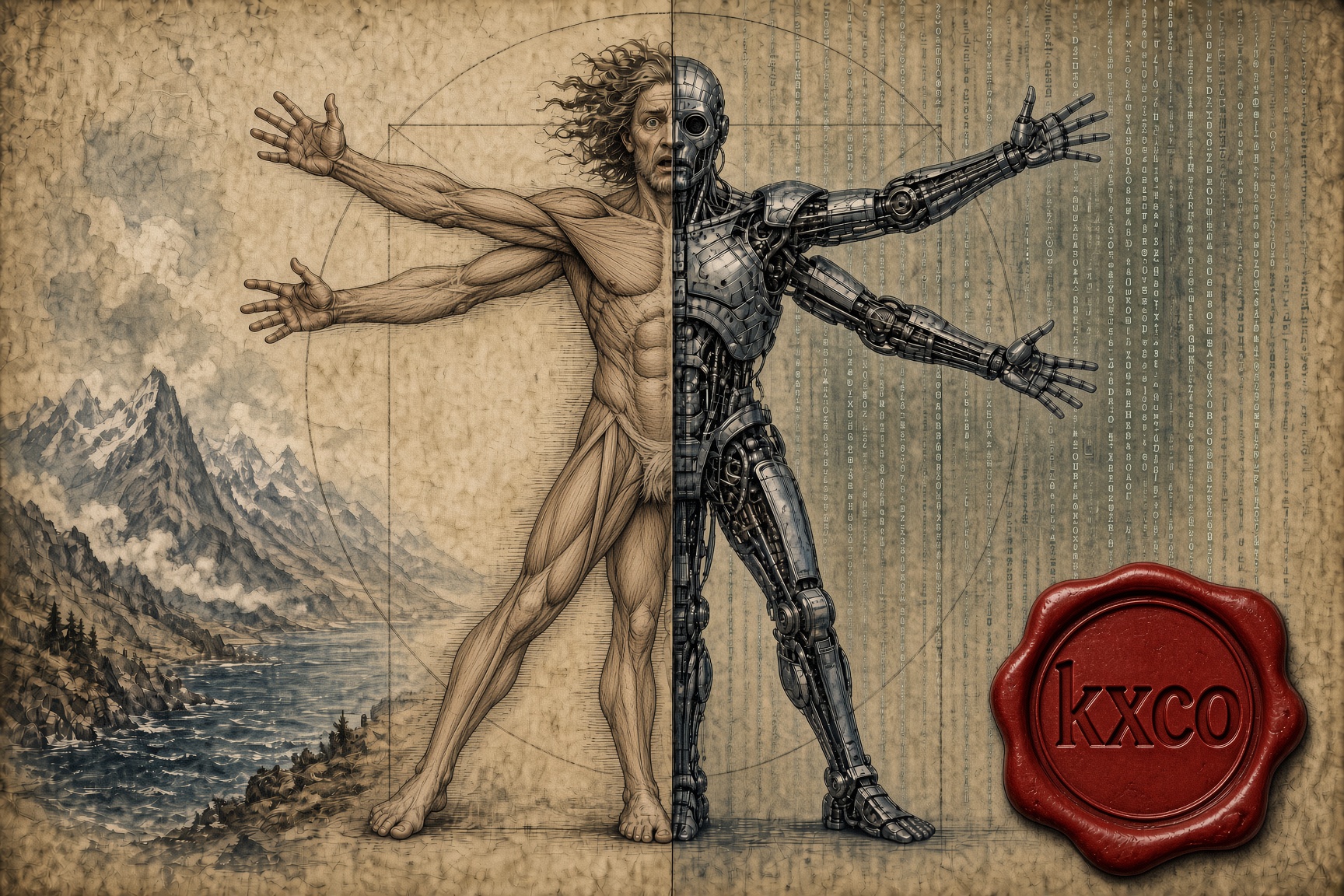
Don't Be the Best, Be the Only: Winning in an AI World
AI is repricing competence downward. What it cannot reproduce is a life. The case for remaining non-fungible, why friction still produces the best ideas, and what it means to build AI systems that keep the human intellect in them.
Every story, signed and delivered.
Subscribe to the kxco channel and get the headline, the AI-written key takeaways, and the chain-anchor link the moment we publish. Audio versions and per-ticker subscriptions arrive in the next iteration.