
Here's Why You Need a Stop Loss on Bitcoin $BTC
Yes, using a stop loss when entering a trade on Bitcoin is important, even if you get squeezed out five times in a row. It is cheaper than getting liquidated.
Where you place your stop loss when trading Bitcoin will depend on a number of factors, including your trading strategy, risk tolerance, and the current market conditions. However, there are a few general guidelines that you can follow:
Place your stop loss below a key support level. This will help you to limit your losses if the market breaks through that support level.
Place your stop loss at a percentage below your entry price. This is a common way to set a stop loss, and it can be effective for limiting your losses on individual trades. However, it is important to note that this approach does not take into account the current market conditions.
Use a trailing stop loss. A trailing stop loss automatically adjusts itself as the price of Bitcoin moves in your favor. This can help you to lock in profits and limit your losses on winning trades.
A stop loss is an order to sell an asset at a specified price below the current market price. It is used to limit losses if the market moves against you.
A liquidation is when your exchange sells your Bitcoin to cover your losses if you do not have enough margin to maintain your position. This can happen very quickly, and you can lose all of your Bitcoin.
Using a stop loss can help you to avoid liquidation. If the market moves against you, your stop loss will be triggered and your Bitcoin will be sold at the specified price. This may mean that you take a small loss, but it is better than losing all of your Bitcoin.
It is important to note that no stop loss is perfect. There is always a chance that the market will move past your stop loss before it is triggered. However, using a stop loss is still a good way to limit your losses.
Here are some tips for using stop losses effectively:
Place your stop loss at a level that you are comfortable with. This may be a certain percentage below your entry price, or it may be a technical level such as a support or resistance level.
Be sure to monitor your trades and adjust your stop loss as needed. If the market is moving in your favor, you may want to move your stop loss up to protect your profits.
Don't be afraid to get squeezed out of a trade. It is better to take a small loss than to get liquidated.
Remember, the goal of using a stop loss is to protect your capital. If you get squeezed out of a trade, it is simply a sign that the market is not moving in your favor. There will always be other opportunities to trade.
AI is the Neat Handwriting of the Illiterate
A model in the hands of someone who has read the filing and walked the plant is a clerk. The same model, speaking for someone who has done neither, is a disguise. On AI slop, phantom citations and factslop, why finish stopped being evidence of work, and the containment layer KXCO built so a machine cannot speak as the institution until a source is attached.
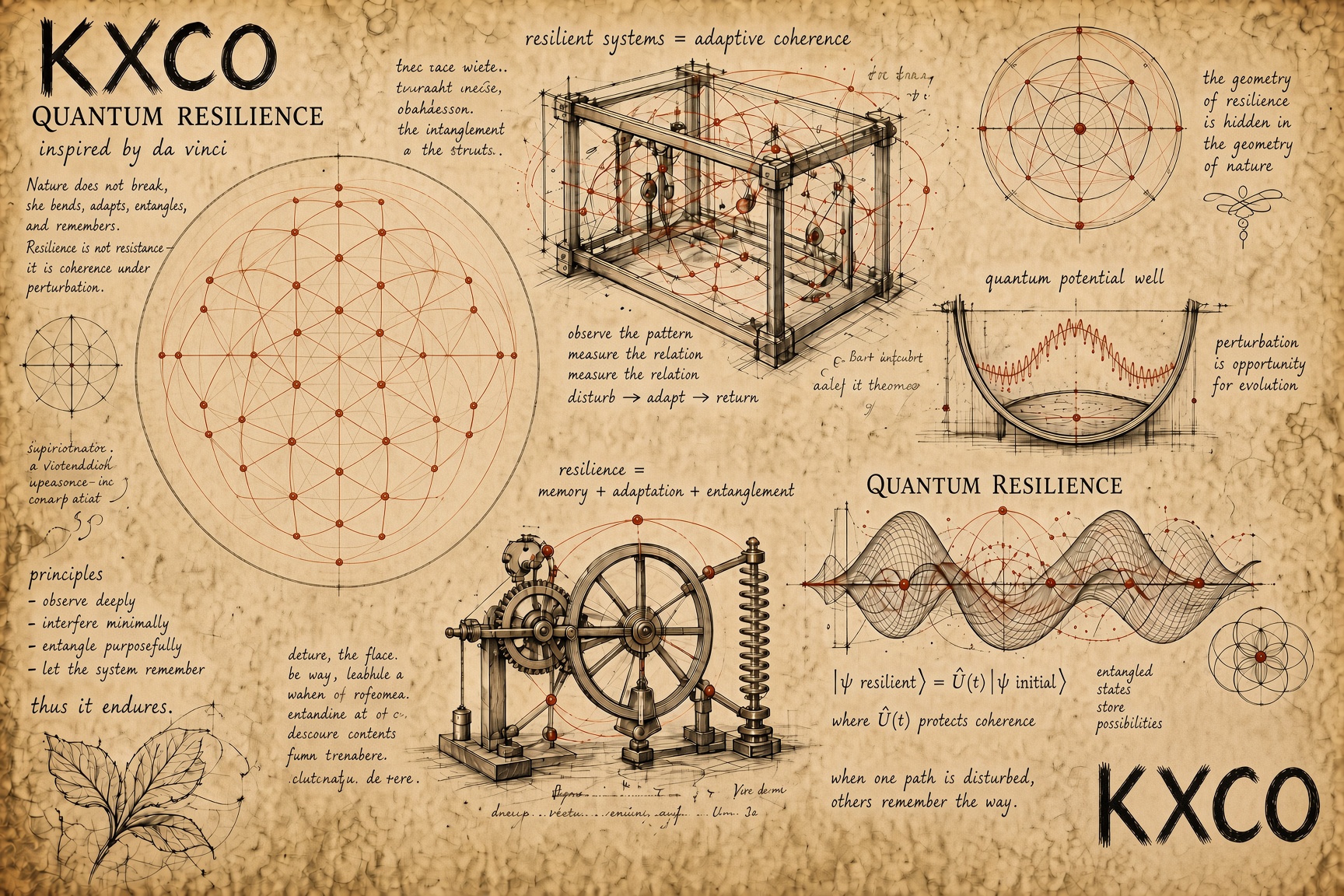
KXCO Put Its Quantum Cryptography in Public, With the Receipts Attached
KXCO has published the cryptography under its entire platform as fourteen open packages, and attached the evidence: NIST conformance, interoperability with three independent implementations, build provenance and reproducible releases. Every claim is checkable by a stranger.
Worthship: Do Not Conform to the Age
Worthship is the older English word for worship, and it means to ascribe worth. Bishop Robert Barron preached Romans 12 on 30 August. This essay follows the text into the prison letters, and puts two questions to a graph: do the four readings of that Sunday agree, and was Paul free or in chains when he wrote about despair?

The Truth in All Its Ugliness Must Survive
A majority vote does not determine the truth. Consensus is a mood, gossip is a sport, and a model will write the pretty version for free. Why the ugly number has to survive, why a record beats a dashboard, and what KXCO was built to keep standing when the room changes its mind.
Every story, signed and delivered.
Subscribe to the kxco channel and get the headline, the AI-written key takeaways, and the chain-anchor link the moment we publish. Audio versions and per-ticker subscriptions arrive in the next iteration.