
Hard Work in the Bible
The phrase "you have not because you ask not" is a verse from the Bible, specifically James 4:2. It is often interpreted to mean that if we want something from God, we need to ask for it. If we don't ask, we won't receive.
Here are some additional thoughts on the meaning of the phrase "you have not because you ask not":
It is a reminder that we need to be proactive in our relationship with God. We can't just sit back and wait for God to give us what we want. We need to ask for it.
It is a warning against asking God for things with the wrong motives. If we are only asking for things to satisfy our own desires, then we are not likely to receive them.
It is a reminder that God is always there for us. He is willing to give us what we need, but we need to ask for it.
If you are looking for something from God, I encourage you to pray about it. Ask him in faith, with the right motives, and be patient. He will answer your prayers in his own time.
Hard Work
The Bible has a lot to say about hard work. In fact, there are many verses that emphasize the importance of hard work and diligence. For example, in the book of Proverbs, we are told that "the hand of the diligent will rule, but the slothful will be put to forced labor" (Proverbs 12:24). This verse teaches us that hard work leads to success, while laziness leads to poverty.
Another verse that emphasizes the importance of hard work is Ecclesiastes 9:10, which says, "Whatever your hand finds to do, do it with your might." This verse teaches us that we should always give our best effort to whatever we do, regardless of how small or insignificant it may seem.
The Bible also teaches us that hard work is a way to honor God. In the book of Deuteronomy, we are told that "the Lord your God will bless you in all your work" (Deuteronomy 28:12). This verse teaches us that when we work hard, we are not only honoring ourselves and our families, but we are also honoring God.
Hard Work in the Modern World
The importance of hard work in the Bible is still relevant today. In the modern world, there is a lot of competition for jobs and resources. If we want to be successful, we need to be willing to work hard.
However, there are some important differences between hard work in the Bible and hard work in the modern world. In the Bible, hard work was often done in the context of agriculture or other manual labor. Today, hard work can take many different forms, including white-collar jobs, technical skills, and entrepreneurial endeavors.
Another difference is that the Bible often emphasizes the importance of working for the common good. In the book of Nehemiah, we are told that Nehemiah and the Israelites worked together to rebuild the walls of Jerusalem. This was a difficult task, but it was important to the people of Jerusalem.
In the modern world, it is still important to work for the common good. However, we often have to work within a system that is not always fair or equitable. This can make it difficult to find work that is both meaningful and rewarding, so get yourself to Church and volunteer or ask them for charities that are connected to the Church.
Conclusion
Hard work is still an important value in the modern world. However, we need to be careful not to equate hard work with success. There are many people who work hard but do not achieve success, again get to Church and learn money does not equal success, happiness does .
The Bible teaches us that hard work is a way to honor God and to achieve success, it's a fact.
AI is the Neat Handwriting of the Illiterate
A model in the hands of someone who has read the filing and walked the plant is a clerk. The same model, speaking for someone who has done neither, is a disguise. On AI slop, phantom citations and factslop, why finish stopped being evidence of work, and the containment layer KXCO built so a machine cannot speak as the institution until a source is attached.
Worthship: Do Not Conform to the Age
Worthship is the older English word for worship, and it means to ascribe worth. Bishop Robert Barron preached Romans 12 on 30 August. This essay follows the text into the prison letters, and puts two questions to a graph: do the four readings of that Sunday agree, and was Paul free or in chains when he wrote about despair?
The Truth in All Its Ugliness Must Survive
A majority vote does not determine the truth. Consensus is a mood, gossip is a sport, and a model will write the pretty version for free. Why the ugly number has to survive, why a record beats a dashboard, and what KXCO was built to keep standing when the room changes its mind.
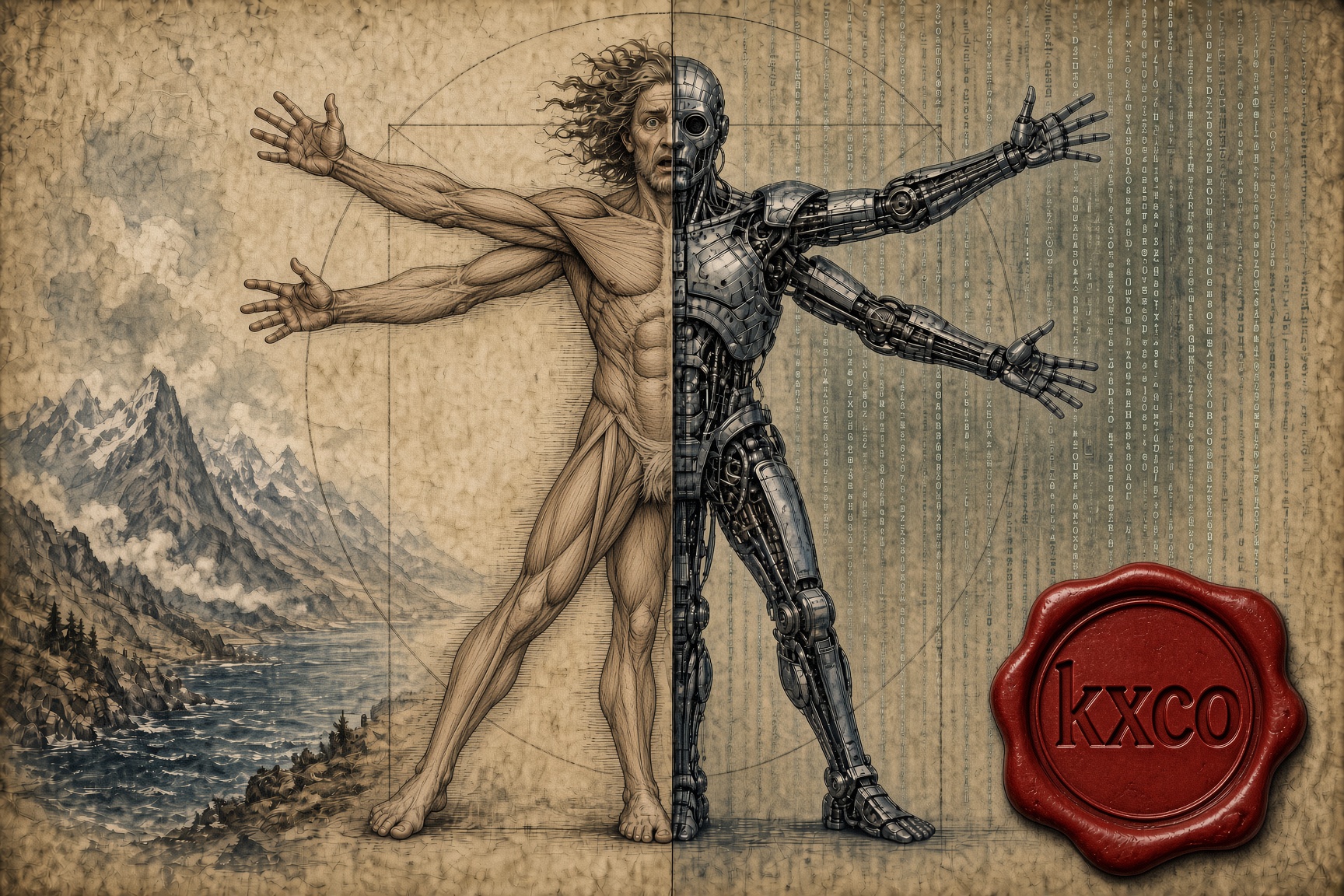
Don't Be the Best, Be the Only: Winning in an AI World
AI is repricing competence downward. What it cannot reproduce is a life. The case for remaining non-fungible, why friction still produces the best ideas, and what it means to build AI systems that keep the human intellect in them.
Every story, signed and delivered.
Subscribe to the kxco channel and get the headline, the AI-written key takeaways, and the chain-anchor link the moment we publish. Audio versions and per-ticker subscriptions arrive in the next iteration.