
Google $GOOG Betting Big on the AI Future
Google’s Record-Breaking $85 Billion Raise
Part of theAI Stocks Center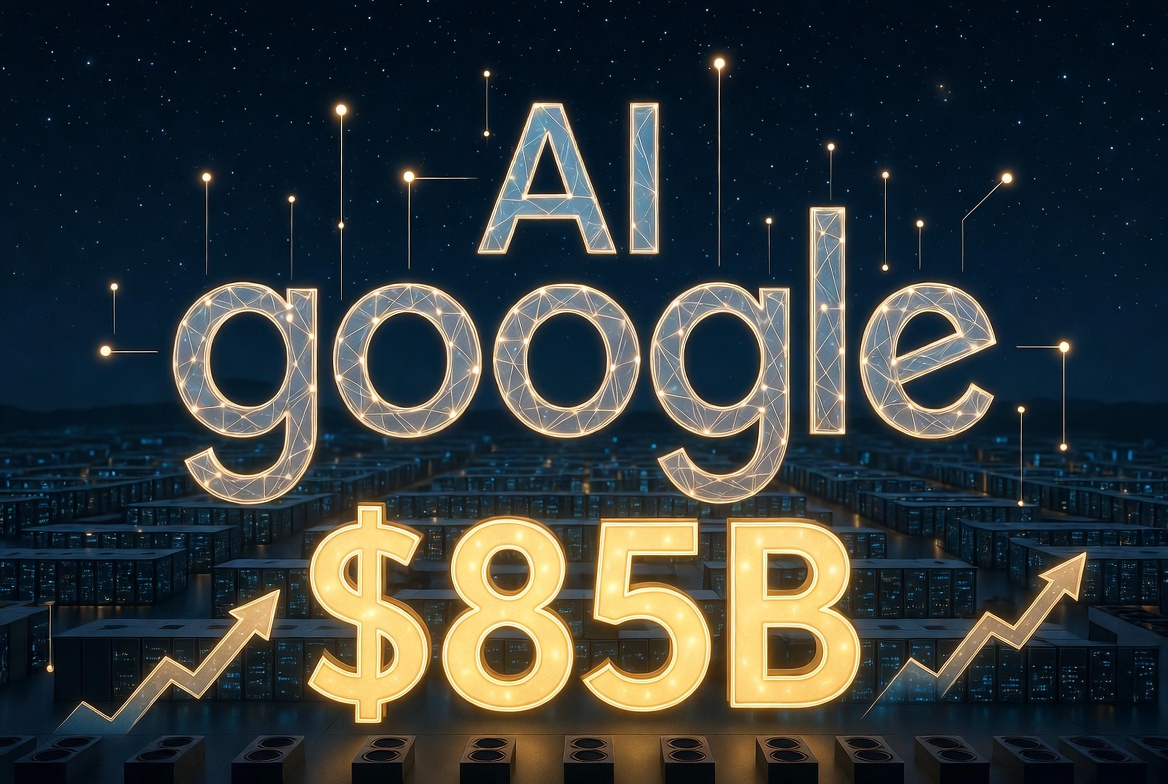
By Shayne Heffernan June 4, 2026
In the high-stakes world of artificial intelligence, where the gap between leaders and followers can be measured in trillions of dollars and years of technological lead time, Alphabet Inc. just made one of the boldest financial moves in corporate history. The Google parent company has upsized an equity offering to approximately $85 billion — the largest single equity raise on record — to supercharge its AI infrastructure, data centers, and overall compute capabilities.
This isn’t just another funding round. It’s a clear declaration of intent: Alphabet is all-in on dominating the next phase of the AI revolution, and it’s willing to tap public markets aggressively to do so, even after years of disciplined share buybacks.
The Deal That Shook the Markets
On June 2, 2026, Alphabet announced plans for an $80 billion equity offering. By June 3, strong investor demand led the company to upsize it to roughly $84.75–85 billion. The structure includes a mix of direct sales, at-the-market programs, and a notable $10 billion private placement from Berkshire Hathaway, which boosts Warren Buffett’s stake in the company.
To put this in perspective: this single raise dwarfs the previous record set by Brazilian oil giant Petrobras in 2010 ($70 billion). It also comes at a time when Alphabet has been aggressively buying back its own shares. Shifting from buyer to massive issuer of equity signals just how urgent the capital needs are for AI buildout.
Sundar Pichai, Alphabet’s CEO, framed it plainly: this capital is “part of our multi-year investment strategy to meet the AI opportunity ahead and support the demand we’re seeing from enterprises and consumers.” At Google I/O and in recent earnings calls, he and CFO Anat Ashkenazi have repeatedly highlighted unprecedented demand for AI compute resources across Google Cloud and internal projects.
Why Now? The Explosive Economics of AI Infrastructure
AI isn’t cheap. Training and running frontier models at scale requires enormous clusters of specialized hardware, massive amounts of power, sophisticated cooling systems, and global networking capabilities. The hyperscalers — Google, Microsoft, Amazon, Meta — are locked in an arms race that is reshaping entire industries: semiconductors, energy, construction, and beyond.
Alphabet’s capital expenditure (CapEx) guidance for 2026 has already been revised upward multiple times, now sitting between $180 billion and $190 billion for the full year. That’s roughly double what the company spent in 2025. A significant portion — analysts estimate around 60-70% — is going toward technical infrastructure: servers, custom AI chips (like the latest TPUs), data centers, and networking gear.
The $85 billion raise provides dry powder without loading up the balance sheet with debt in an environment where interest rates, while lower than their 2022-2023 peaks, remain a factor. It also sends a powerful signal to partners, competitors, and talent: Google is not slowing down.
Google Cloud has been a standout performer. In Q1 2026, it grew 63% year-over-year to over $20 billion in revenue, driven largely by AI solutions and Gemini models. The backlog nearly doubled in a single quarter, reflecting enterprise hunger for AI tools that can be deployed at scale.
The Strategic Landscape: Google vs. The Field
Alphabet isn’t alone in spending eye-watering sums. Microsoft is pouring billions into OpenAI partnerships and its own Azure infrastructure. Meta continues heavy investment in Llama models and custom silicon. Amazon Web Services remains the cloud leader but faces intensifying competition.
What sets Google apart is its unique integration across search, YouTube, Android, Waymo, and now agentic AI systems. Gemini has reportedly reached 900 million users, and the company is pushing hard into “agentic” AI — systems that don’t just answer questions but take autonomous actions on behalf of users.
The infrastructure buildout supports all of this. New data centers aren’t just warehouses for servers; they’re becoming AI factories that require specialized power substations, liquid cooling, and ultra-high-speed interconnects. Alphabet’s move also hedges against potential supply chain constraints in chips and energy.
Berkshire Hathaway’s participation is particularly interesting. Buffett has historically been cautious on pure tech plays, but this investment suggests confidence in Google’s long-term moat — its data advantage, distribution reach, and engineering talent.
Challenges and Risks on the Horizon
No story this big comes without caveats. Dilution from such a massive equity offering is real, and Alphabet’s stock dipped initially on the announcement as investors digested the share count increase.
There are broader questions too:
Returns on Capital: Can these enormous investments generate proportional profits? AI monetization is still early, even if cloud growth looks promising.
Energy Constraints: Data centers are power-hungry. Finding reliable, carbon-friendly energy at scale remains a bottleneck for the entire industry.
Regulation and Antitrust: Google faces ongoing scrutiny in multiple jurisdictions. Large investments could invite more attention.
Competition: Open-source models and smaller, more agile players could disrupt parts of the market.
Yet, the market seems to be rewarding boldness. The AI infrastructure thesis remains intact despite occasional volatility in chip stocks and cooling companies.
The Broader Ecosystem Impact
This raise doesn’t just benefit Alphabet. It ripples through the entire supply chain. Demand for GPUs, custom ASICs, memory, networking gear, cooling systems, and power infrastructure will only accelerate.
Here’s a table of relevant stocks positioned across the AI infrastructure value chain as of early June 2026:
Company | Ticker | Sector | Key Relevance to AI Buildout | Notable 2026 Performance/Context |
|---|---|---|---|---|
NVIDIA | NVDA | Semiconductors | Dominant AI GPU provider | Continued leadership in accelerators |
Broadcom | AVGO | Semiconductors | Custom ASICs, networking for data centers | Strong but volatile on AI chip demand |
Taiwan Semiconductor | TSM | Semiconductors | Foundry for advanced AI chips | Critical supply chain player |
Vertiv Holdings | VRT | Data Center Infrastructure | Cooling & power management | Major beneficiary of density increases |
Arista Networks | ANET | Networking | High-speed Ethernet switches for AI clusters | Strong enterprise adoption |
Equinix | EQIX | Data Center REIT | Global data center operator | Real estate play on AI expansion |
Super Micro Computer | SMCI | Servers | AI-optimized server systems | High beta to overall buildout |
Micron Technology | MU | Memory | High-bandwidth memory (HBM) for AI | Strong demand tailwinds |
Constellation Energy | CEG | Energy | Nuclear power for data centers | Energy reliability play |
Alphabet | GOOGL | Tech / Cloud | End customer & infrastructure builder | The company driving this narrative |
This list is not exhaustive, but it captures the breadth of the opportunity — from chips to power to physical facilities.
What This Means for Investors and the Industry
As someone who has followed markets and technology convergence for decades, I see Alphabet’s move as validation of the “AI Supercycle” thesis. We’re moving beyond the hype phase into the heavy infrastructure phase — the one that determines who actually wins.
The companies that can efficiently convert capital into usable AI compute at scale will emerge as the clear victors. Google’s integrated approach — owning the models, the distribution, the cloud platform, and now doubling down on the physical layer — positions it strongly.
For the broader economy, this is both exciting and sobering. The capital intensity of modern AI means only the largest players can truly compete at the frontier. That raises legitimate questions about market concentration, but it also drives innovation at a pace we’ve rarely seen.
The $85 billion raise isn’t the end of the story. It’s likely just one chapter in a multi-year arms race. Expect other hyperscalers to explore similar financing options if demand continues outstripping internal cash flow.
Final Thoughts
Alphabet’s record equity offering is more than a financial transaction. It’s a bet on the transformative power of artificial intelligence and Google’s ability to lead it. In a world grappling with productivity challenges, aging populations, and complex global problems, the potential upside is enormous.
Will it pay off? History suggests that bold, well-executed technology investments during inflection points tend to create lasting value. Google has done it before — with search, Android, and cloud. The AI era may prove to be its most significant chapter yet.
Investors should watch execution closely: CapEx efficiency, cloud margin expansion, and real-world adoption of agentic systems. For now, though, the message from Mountain View is loud and clear — the future is AI, and they’re building the foundation to own a big piece of it.
Shayne Heffernan Ph.D. is an economist and founder of Live Trading News, with decades of experience analyzing global markets, emerging technologies, and capital flows.
(Word count: approximately 2,450)
This raise, combined with the company’s updated $180-190 billion CapEx guidance, underscores a level of conviction that should comfort long-term believers in Google’s AI strategy while reminding everyone that the infrastructure bill for the AI future is going to be staggeringly large.

Economic Calendar and Trading Strategy This Week
The S&P 500 closed at a record on Friday and the tape is bullish, so the job this week is choosing, not chasing. Palantir is up 28.6 per cent from the KXCO ontology's recorded 15 July snapshot and SpaceX is up 15.6 per cent since we published on 22 July. Here is the full economic calendar for 10 to 14 August, what each print means for positioning, and the fourteen value gaps the ontology's Analyst Outlook layer is pointing at, from Oracle at 70 per cent down to Arm at 2 per cent.
Who Is Who in the AI Space: The Definitive Guide to AI Stocks in 2026
The definitive 2026 guide to AI stocks: $NVDA, $GOOGL, $MSFT, $AMZN, $META, $TSM, $AVGO, $ORCL and $PLTR in the US; $BABA, $TCEHY and $BIDU in China — each mapped to its layer of the AI value chain, with cashtags, market caps and the investment thesis for each.
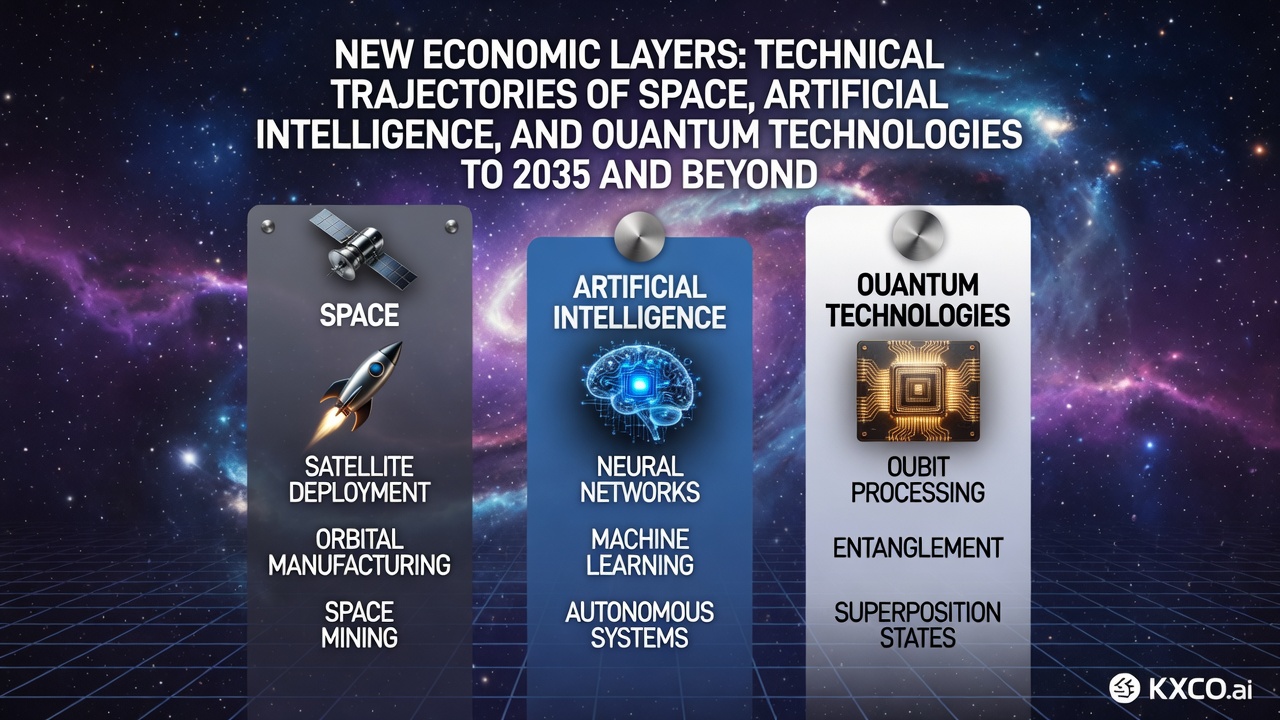
The New Economies: Space, AI, and Quantum
Three new economic layers are taking shape: space is becoming an industrial domain, artificial intelligence is evolving into continuous infrastructure, and quantum technologies are moving into operational use in simulation and sensing. While technical and energy constraints remain significant, the period through 2035 is likely to see these layers expand in parallel, creating new requirements for verifiable trust and post-quantum security. KXCO is positioning its infrastructure as the transaction

Anthropic Becomes a $1 Trillion AI Powerhouse
Anthropic has officially crossed the $1 trillion valuation threshold, becoming one of the most valuable private companies in the world.
Every story, signed and delivered.
Subscribe to the kxco channel and get the headline, the AI-written key takeaways, and the chain-anchor link the moment we publish. Audio versions and per-ticker subscriptions arrive in the next iteration.