
Gold is a Great Buy at these Prices
Gold prices tend to increase during times of massive money printing. This is because gold is seen as a hedge against inflation, and inflation is often a consequence of massive money printing.
When central banks print money, they increase the supply of money in circulation. This can lead to inflation, which is a decrease in the purchasing power of money. Gold is often seen as a way to protect against inflation, because its value tends to go up when the value of money goes down.
In addition, gold is often seen as a safe haven asset during times of economic uncertainty. When investors are uncertain about the future of the economy, they often turn to gold as a way to protect their wealth.
In recent years, there has been a lot of money printing by central banks around the world. This has led to a rise in the price of gold. In 2020, the gold price reached an all-time high of over $2,000 per ounce.
Gold is often seen as a safe haven asset, and its price can go up during times of economic uncertainty. In recent months, there has been a lot of uncertainty in the global economy, and this has led to a rise in the price of gold.
There are a number of factors that could support the gold price in the coming months. These include:
Inflation: Inflation is on the rise in many countries around the world. Gold is often seen as a hedge against inflation, as its price tends to go up when the value of fiat currencies goes down.
Economic uncertainty: There is a lot of uncertainty in the global economy at the moment. This is due to a number of factors, including the war in Ukraine, the ongoing COVID-19 pandemic, and rising inflation. Investors often turn to gold during times of economic uncertainty, as it is seen as a safe haven asset.
Lower interest rates: Interest rates are very low in many countries around the world. This makes gold more attractive to investors, as it offers an alternative to low-yielding assets such as bonds.
Of course, there are also some factors that could weigh on the gold price in the coming months. These include:
A temporary stronger US dollar: The US dollar has been strengthening against other currencies in recent months. This could make gold less attractive to investors, as it is priced in US dollars.
A rise in real interest rates: If real interest rates rise, this could make gold less attractive to investors, as it does not offer any income.
Overall, there are a number of factors that could support the gold price in the coming months.
AI is the Neat Handwriting of the Illiterate
A model in the hands of someone who has read the filing and walked the plant is a clerk. The same model, speaking for someone who has done neither, is a disguise. On AI slop, phantom citations and factslop, why finish stopped being evidence of work, and the containment layer KXCO built so a machine cannot speak as the institution until a source is attached.
Worthship: Do Not Conform to the Age
Worthship is the older English word for worship, and it means to ascribe worth. Bishop Robert Barron preached Romans 12 on 30 August. This essay follows the text into the prison letters, and puts two questions to a graph: do the four readings of that Sunday agree, and was Paul free or in chains when he wrote about despair?
The Truth in All Its Ugliness Must Survive
A majority vote does not determine the truth. Consensus is a mood, gossip is a sport, and a model will write the pretty version for free. Why the ugly number has to survive, why a record beats a dashboard, and what KXCO was built to keep standing when the room changes its mind.
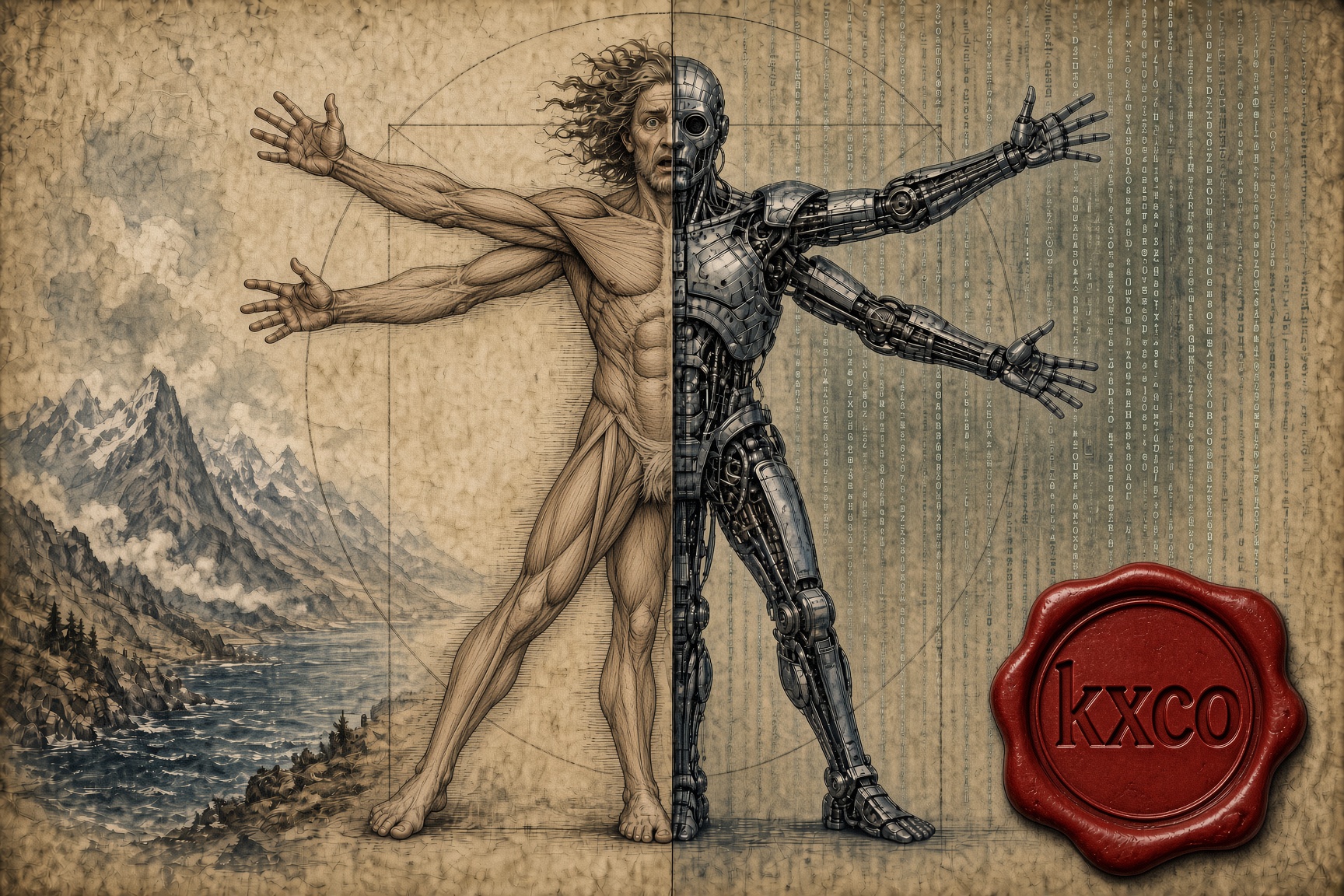
Don't Be the Best, Be the Only: Winning in an AI World
AI is repricing competence downward. What it cannot reproduce is a life. The case for remaining non-fungible, why friction still produces the best ideas, and what it means to build AI systems that keep the human intellect in them.
Every story, signed and delivered.
Subscribe to the kxco channel and get the headline, the AI-written key takeaways, and the chain-anchor link the moment we publish. Audio versions and per-ticker subscriptions arrive in the next iteration.