
Global Trade $28.5 trillion in 2021
All major trading economies saw imports and exports rise above pre-pandemic levels in the fourth quarter of 2021, with trade in goods increasing more strongly in the developing world than in developed countries.
UNCTAD’s Global Trade Update published on 17 February shows that in 2021, world trade in goods remained strong and trade in services finally returned to its pre-COVID-19 levels.
"Overall, the value of global trade reached a record level of $28.5 trillion in 2021," the report says. That’s an increase of 25% on 2020 and 13% higher compared to 2019, before the COVID-19 pandemic struck.
While most global trade growth took hold during the first half of 2021, progress continued in the year’s second half.
After a relatively slow third quarter, trade growth picked up again in the fourth quarter, when trade in goods increased by almost $200 billion, achieving a new record of $5.8 trillion.
Meanwhile, trade in services rose by $50 billion to reach $1.6 trillion, just above pre-pandemic levels.
The report shows that in the fourth quarter 2021, all major trading economies saw imports and exports rise well above pre-pandemic levels in 2019.
But trade in goods increased more strongly in the developing world than in developed countries.
Exports of developing countries were about 30% higher than during the same period in 2020, compared with 15% for wealthier nations.
The growth was higher in commodity-exporting regions, as commodity prices increased. Moreover, South-South trade growth was above the global average, with a 32% year-on-year increase.
Except transport equipment, all economic sectors saw a substantial year-over-year increase in the value of their trade during the final quarter of 2021.
"High fuel prices are behind the strong increase in the value of trade of the energy sector," the report says, "Trade growth was also above average for metals and chemicals."
As a result of the global shortage of semiconductors, trade growth in communication equipment, road vehicles and precision instruments was subdued.
The UNCTAD report indicates that trade growth will slow during the first quarter of 2022.
Positive growth rates are expected for both trade in goods and services, albeit only marginally, keeping trade values at levels similar to the last three months of 2021.
"The positive trend for international trade in 2021 was largely the result of increases in commodity prices, subsiding pandemic restrictions and a strong recovery in demand due to economic stimulus packages," the report says.
"As these trends are likely to abate, international trade trends are expected to normalize during 2022."
Trade growth in 2022 is likely to be lower than expected, given the macroeconomic trends.
The International Monetary Fund has revised its world economic growth forecast downwards by 0.5 points, the report notes, considering persistent inflation in the United States and concerns related to China’s real estate sector.
It also points to ongoing logistic disruptions and rising energy prices, saying that "efforts to shorten supply chains and to diversify suppliers could affect global trade patterns during 2022."
On trade flows, the report projects the trend of regionalization to increase because of various trade agreements and regional initiatives, as well as "increasing reliance of geographically closer suppliers."
Moreover, trade patterns in 2022 are expected to reflect the increasing global demand for products that are environmentally sustainable.
The report also flags the record levels of global debt, warning that concerns over debt sustainability are likely to intensify due to mounting inflationary pressures.
"A significant tightening of financial conditions would heighten pressure on the most highly indebted governments, amplifying vulnerabilities and negatively affecting investments and international trade flows," the report cautions.
AI is the Neat Handwriting of the Illiterate
A model in the hands of someone who has read the filing and walked the plant is a clerk. The same model, speaking for someone who has done neither, is a disguise. On AI slop, phantom citations and factslop, why finish stopped being evidence of work, and the containment layer KXCO built so a machine cannot speak as the institution until a source is attached.
Worthship: Do Not Conform to the Age
Worthship is the older English word for worship, and it means to ascribe worth. Bishop Robert Barron preached Romans 12 on 30 August. This essay follows the text into the prison letters, and puts two questions to a graph: do the four readings of that Sunday agree, and was Paul free or in chains when he wrote about despair?
The Truth in All Its Ugliness Must Survive
A majority vote does not determine the truth. Consensus is a mood, gossip is a sport, and a model will write the pretty version for free. Why the ugly number has to survive, why a record beats a dashboard, and what KXCO was built to keep standing when the room changes its mind.
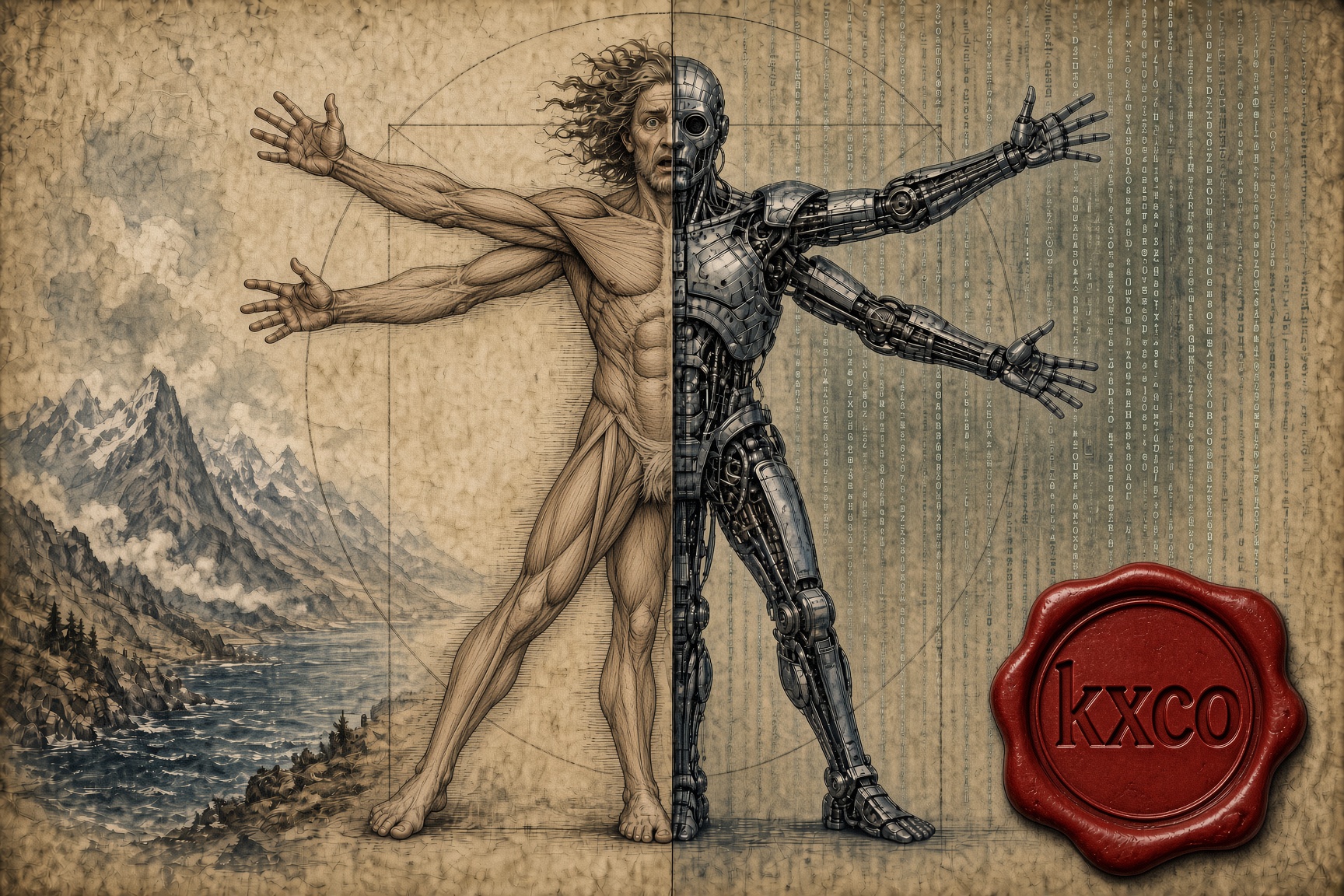
Don't Be the Best, Be the Only: Winning in an AI World
AI is repricing competence downward. What it cannot reproduce is a life. The case for remaining non-fungible, why friction still produces the best ideas, and what it means to build AI systems that keep the human intellect in them.
Every story, signed and delivered.
Subscribe to the kxco channel and get the headline, the AI-written key takeaways, and the chain-anchor link the moment we publish. Audio versions and per-ticker subscriptions arrive in the next iteration.