
Get Your Bitcoin Off USA Exchanges
The United States could potentially use executive orders or legislative measures to regulate or restrict cryptocurrencies like Bitcoin, similar to how Executive Order 6102 was used in 1933 to confiscate gold from U.S. citizens. However, there are significant differences between the two situations, and such an action would raise complex legal, ethical, and practical challenges. Talk to Knightsbridge if you need help.
Here are some factors to consider:
Legal Framework: The legal basis for confiscating gold in 1933 was the Emergency Banking Act of 1933 and subsequent Executive Order 6102, which gave the government authority to require citizens to exchange their gold holdings for U.S. dollars. To take a similar action against Bitcoin, the government would need to establish a legal framework that justifies such a move.
Property Rights: Confiscating gold and confiscating Bitcoin are different in terms of property rights. Gold was a physical asset that could be confiscated, while Bitcoin is a digital asset stored in personal wallets. Confiscating Bitcoin would require a different approach, such as regulating exchanges and onramps to restrict the ability to buy, sell, or use Bitcoin.
Constitutional Issues: Any attempt to seize or restrict the use of Bitcoin would likely face legal challenges on constitutional grounds, including potential violations of the Fourth Amendment (unlawful search and seizure) and the Fifth Amendment (deprivation of property without due process).
International Implications: Bitcoin is a global digital currency, and its regulation or confiscation in the U.S. could have international implications. It might affect diplomatic relations and raise questions about the extraterritorial reach of U.S. regulations.
Technological Challenges: Unlike gold, which could be physically confiscated, Bitcoin exists in a decentralized and global digital network. Regulating or restricting it would require advanced technological measures and could face resistance from the global crypto community.
Public Backlash: Any attempt to seize or heavily regulate Bitcoin would likely face significant public backlash, as many people view cryptocurrencies as a means of financial autonomy and privacy. Such actions could be seen as government overreach and lead to public protests and legal challenges.
It's important to note that the government's approach to cryptocurrency regulation in the United States has generally focused on financial oversight, tax compliance, and anti-money laundering measures. While regulatory requirements have been imposed on cryptocurrency exchanges and businesses, outright confiscation or severe restrictions on individuals' ability to use Bitcoin would be a drastic step and would likely face significant legal and political hurdles.
As the cryptocurrency landscape evolves, it's essential for individuals and businesses to stay informed about regulatory developments and engage in responsible and compliant practices related to cryptocurrency usage.
AI is the Neat Handwriting of the Illiterate
A model in the hands of someone who has read the filing and walked the plant is a clerk. The same model, speaking for someone who has done neither, is a disguise. On AI slop, phantom citations and factslop, why finish stopped being evidence of work, and the containment layer KXCO built so a machine cannot speak as the institution until a source is attached.
Worthship: Do Not Conform to the Age
Worthship is the older English word for worship, and it means to ascribe worth. Bishop Robert Barron preached Romans 12 on 30 August. This essay follows the text into the prison letters, and puts two questions to a graph: do the four readings of that Sunday agree, and was Paul free or in chains when he wrote about despair?
The Truth in All Its Ugliness Must Survive
A majority vote does not determine the truth. Consensus is a mood, gossip is a sport, and a model will write the pretty version for free. Why the ugly number has to survive, why a record beats a dashboard, and what KXCO was built to keep standing when the room changes its mind.
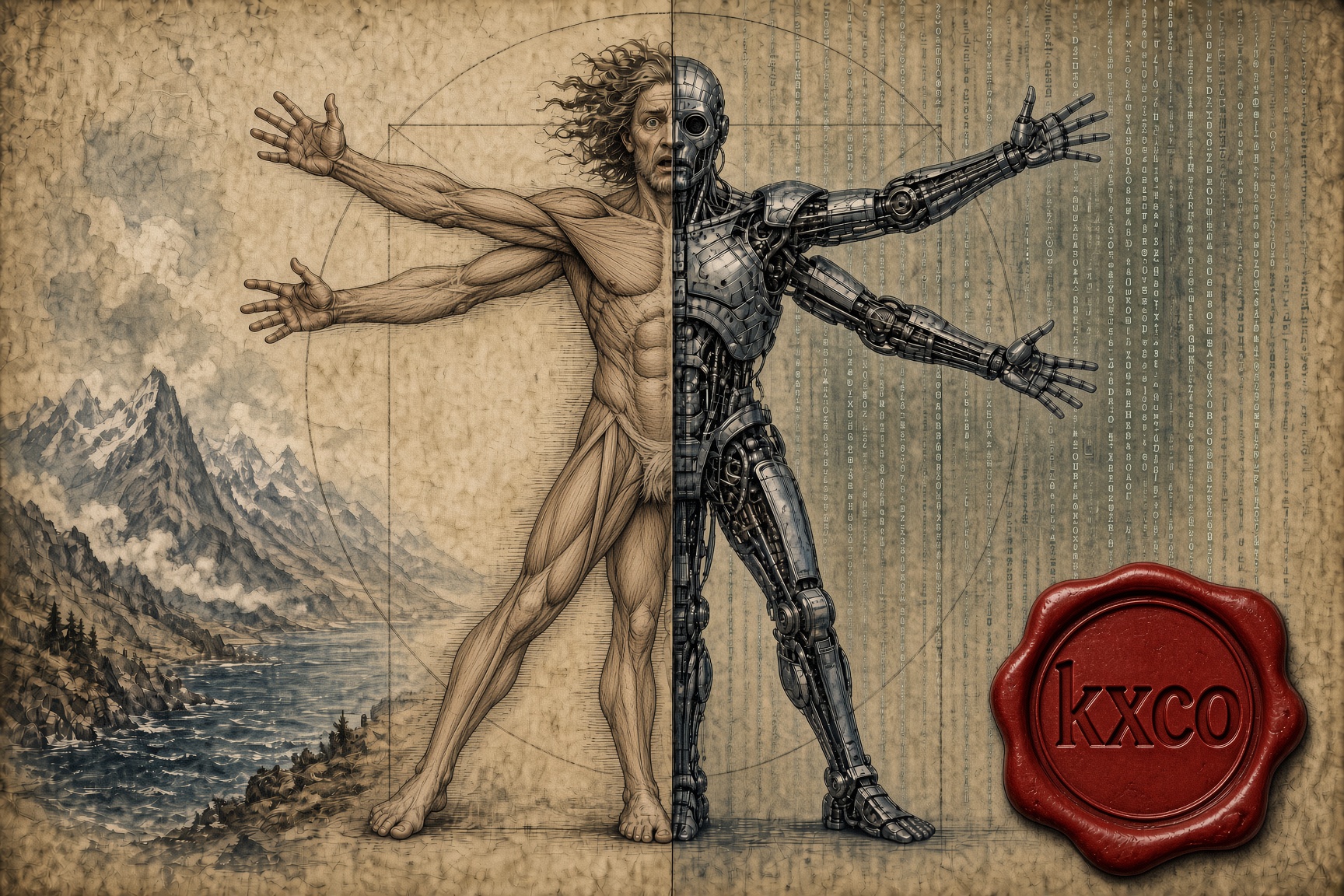
Don't Be the Best, Be the Only: Winning in an AI World
AI is repricing competence downward. What it cannot reproduce is a life. The case for remaining non-fungible, why friction still produces the best ideas, and what it means to build AI systems that keep the human intellect in them.
Every story, signed and delivered.
Subscribe to the kxco channel and get the headline, the AI-written key takeaways, and the chain-anchor link the moment we publish. Audio versions and per-ticker subscriptions arrive in the next iteration.