
Gary Gensler and The SEC are Failing America $BTC
Gary Gensler, the chairman of the Securities and Exchange Commission (SEC), has been criticized for his stalling on the approval of Bitcoin ETFs. Some critics argue that this shows that the SEC is failing to protect investors and stifle innovation.
Bitcoin ETFs are investment vehicles that track the price of Bitcoin. They are seen by some as a way to make Bitcoin more accessible to investors, including retail investors. However, the SEC has rejected several Bitcoin ETF applications, citing concerns about market manipulation and fraud.
Gensler has said that he is open to approving Bitcoin ETFs, but that he needs to see more evidence that they are in the best interests of investors. He has also said that he wants to see more regulation of the cryptocurrency market before approving any Bitcoin ETFs.
Some critics argue that Gensler is stalling on Bitcoin ETFs because he is biased against cryptocurrencies. They point to the fact that Gensler has repeatedly warned about the risks of investing in cryptocurrencies.
Other critics argue that Gensler is being cautious because he does not want to make a mistake that could damage the SEC's reputation. They point to the fact that the SEC has been criticized in the past for approving products that turned out to be fraudulent.
Regardless of the reasons for Gensler's stalling, there is no doubt that it is causing frustration among many investors. Bitcoin ETFs are seen by some as a way to make Bitcoin more legitimate and mainstream. The SEC's continued rejection of Bitcoin ETF applications is seen by some as a sign that the SEC is out of touch with the market and is not doing enough to protect investors.
It is important to note that the SEC is not the only regulatory body that is grappling with the issue of Bitcoin ETFs. The SEC's approval is required for Bitcoin ETFs to be listed on US exchanges, but other countries, such as Canada, have already approved Bitcoin ETFs.
It remains to be seen when or if the SEC will approve Bitcoin ETFs. However, the continued demand for Bitcoin ETFs suggests that it is only a matter of time before they are approved.
Bitcoin and blockchain are two of the most important technologies of our time. Bitcoin is a decentralized digital currency that is not subject to the control of any government or financial institution. Blockchain is the underlying technology that powers Bitcoin, and it has the potential to revolutionize many industries, including finance, healthcare, and supply chain management.
Here are some of the ways that Bitcoin and blockchain could impact future economies:
Financial inclusion: Bitcoin and blockchain could make it easier for people in developing countries to access financial services. For example, people without bank accounts could use Bitcoin to send and receive money, and blockchain could be used to create new financial products and services that are tailored to the needs of the poor.
Reduced corruption: Bitcoin and blockchain could help to reduce corruption by making financial transactions more transparent and traceable. For example, governments could use blockchain to track the flow of money and prevent it from being stolen or used for illegal purposes.
Increased efficiency: Bitcoin and blockchain could help to make businesses more efficient by reducing the need for intermediaries and paperwork. For example, companies could use blockchain to track the movement of goods through their supply chains, or to make payments to suppliers and contractors.
New economic opportunities: Bitcoin and blockchain could create new economic opportunities for individuals and businesses. For example, people could use Bitcoin to start their own businesses without having to go through a bank, or they could use blockchain to create new products and services that were not possible before.
It remains to be seen when or if the SEC will approve Bitcoin ETFs, or whether Gensler will embrace Bitcoin and blockchain technology more broadly. However, it is clear that Bitcoin and blockchain have the potential to have a major impact on the future economy. The US government should be working to ensure that the US is well-positioned to benefit from these technologies.
AI is the Neat Handwriting of the Illiterate
A model in the hands of someone who has read the filing and walked the plant is a clerk. The same model, speaking for someone who has done neither, is a disguise. On AI slop, phantom citations and factslop, why finish stopped being evidence of work, and the containment layer KXCO built so a machine cannot speak as the institution until a source is attached.
Worthship: Do Not Conform to the Age
Worthship is the older English word for worship, and it means to ascribe worth. Bishop Robert Barron preached Romans 12 on 30 August. This essay follows the text into the prison letters, and puts two questions to a graph: do the four readings of that Sunday agree, and was Paul free or in chains when he wrote about despair?
The Truth in All Its Ugliness Must Survive
A majority vote does not determine the truth. Consensus is a mood, gossip is a sport, and a model will write the pretty version for free. Why the ugly number has to survive, why a record beats a dashboard, and what KXCO was built to keep standing when the room changes its mind.
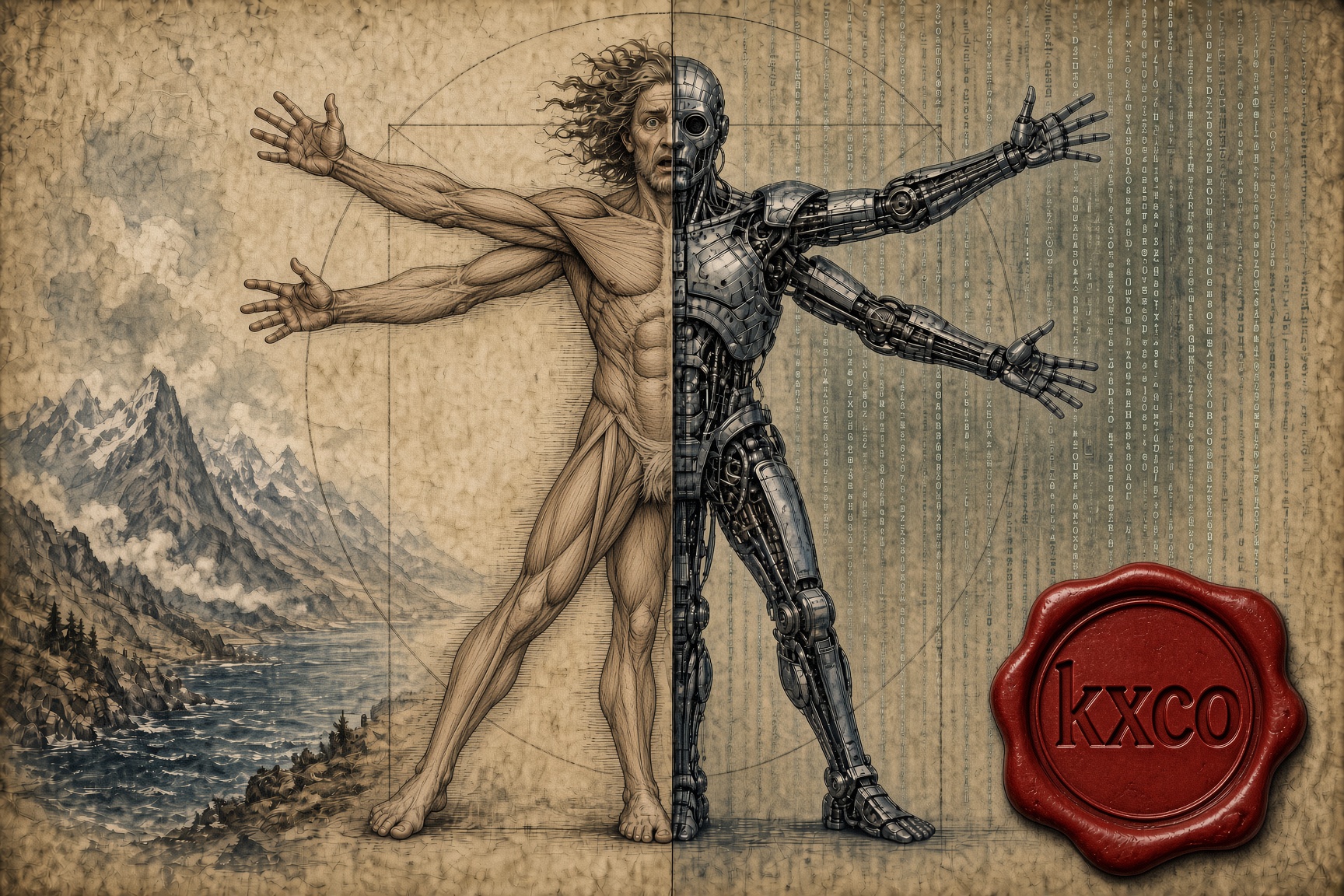
Don't Be the Best, Be the Only: Winning in an AI World
AI is repricing competence downward. What it cannot reproduce is a life. The case for remaining non-fungible, why friction still produces the best ideas, and what it means to build AI systems that keep the human intellect in them.
Every story, signed and delivered.
Subscribe to the kxco channel and get the headline, the AI-written key takeaways, and the chain-anchor link the moment we publish. Audio versions and per-ticker subscriptions arrive in the next iteration.