
FTX Stole from Ukraine Gave to Democrats
FTX launched crypto donation platform Aid for Ukraine in March, setting itself up as the central clearing house for all cryptocurrency donations to Kiev’s war effort. While the exchange was supposed to route those donations to the National Bank of Ukraine, the report suggests it funneled at least some of the money back to the US through political donations.
Sam Bankman-Fried was the second-largest donor to the Democratic Party for the midterms, pouring some $38 million into candidates’ coffers in 2022 alone.
The Ukrainian government had already received only $60 million in crypto donations as of March. FTX did not publish the amounts subsequently taken in, but other fundraising campaigns on Kiev’s behalf have been hugely successful - Star Wars actor Mark Hammill raised enough funds to buy 500 drones in a single month, for example.
Samuel Bankman-Fried, the founder of failed cryptocurrency exchange FTX, allegedly laundered billions of dollars through Ukraine by setting up his company as the central clearinghouse for all crypto donations to Kiev’s war effort, according to the Gateway Pundit. Democratic politicians sending aid to Ukraine would see their money come back in the form of donations through FTX, the outlet claimed.
Whatever funds the exchange had under management have presumably evaporated with the rest of its assets due to an alleged hack last week, and the exchange filed for bankruptcy on Friday. The resulting chaos has sent crypto markets spiraling.
In addition to bankrolling political campaigns, Bankman-Fried spent millions lobbying to shape cryptocurrency regulations. Democrats responsible for overseeing the Commodity Futures Trading Commission were particular targets for his largesse, and he is now under investigation by that same agency for moving $10 billion in client assets off FTX to his hedge fund Alameda Research.
While Bankman-Fried’s private jet has been tracked to Argentina, the disgraced billionaire insisted on Saturday that he was still in the Bahamas.
AI is the Neat Handwriting of the Illiterate
A model in the hands of someone who has read the filing and walked the plant is a clerk. The same model, speaking for someone who has done neither, is a disguise. On AI slop, phantom citations and factslop, why finish stopped being evidence of work, and the containment layer KXCO built so a machine cannot speak as the institution until a source is attached.
Worthship: Do Not Conform to the Age
Worthship is the older English word for worship, and it means to ascribe worth. Bishop Robert Barron preached Romans 12 on 30 August. This essay follows the text into the prison letters, and puts two questions to a graph: do the four readings of that Sunday agree, and was Paul free or in chains when he wrote about despair?
The Truth in All Its Ugliness Must Survive
A majority vote does not determine the truth. Consensus is a mood, gossip is a sport, and a model will write the pretty version for free. Why the ugly number has to survive, why a record beats a dashboard, and what KXCO was built to keep standing when the room changes its mind.
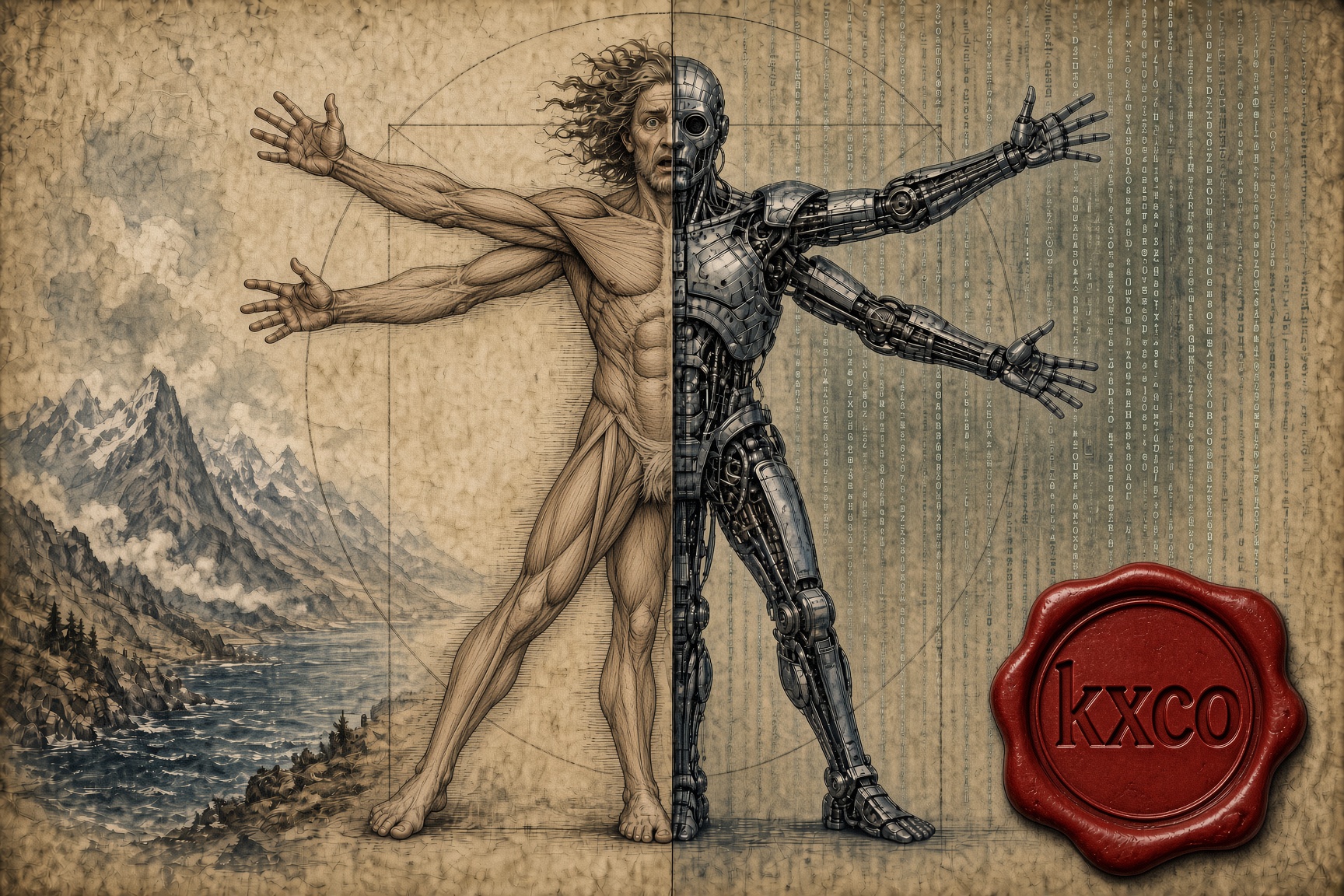
Don't Be the Best, Be the Only: Winning in an AI World
AI is repricing competence downward. What it cannot reproduce is a life. The case for remaining non-fungible, why friction still produces the best ideas, and what it means to build AI systems that keep the human intellect in them.
Every story, signed and delivered.
Subscribe to the kxco channel and get the headline, the AI-written key takeaways, and the chain-anchor link the moment we publish. Audio versions and per-ticker subscriptions arrive in the next iteration.