
FOMO: Crypto-asset Expansion and Cryptocurrency Rally Has the Big Banks Struggling to Get In!
#fomo #bitcoin #knights #cryptocurrency #crypto #digital #assets #NFTs #DeFi #art
"The stories of crypto millionaires and billionaires bidding inconceivable amounts of money for digital artwork and minting fortunes beyond the dreams of avarice from tokens have become so prevalent that they are now impossible to ignore"-- Paul Ebeling
Away from the spotlight, some traders the world’s Top financial institutions have been lobbying to gain access to cryptocurrency trading.
Many took matters into their own hands, discreetly trading cryptocurrencies on the side without the knowledge of their employers.
Yet ever since cryptocurrencies soared in interest and value, the pressure from clients has forced even the most conservative compliance departments at financial institutions to reconsider their blanket ban on the digital asset class.
It is not just compliance officers and governance boards who stand in the way of a wider embrace of cryptocurrencies at financial institutions, many face genuine infrastructural challenges adapting to the new technology.
At some Top financial institutions, the coding language for internal settlement is still Fortran, a programming language originally developed by IBM in the 1950s for scientific and engineering applications and while still used in specific applications, does not appeal to a wide coder base.
Trying to adapt trading desks to cryptocurrencies would be akin to strapping a Ferrari engine to a lawnmower, legacy financial institutions are just not ready yet from a technology perspective.
Plus, the substantial compliance burden laid on financial institutions means that change, when it comes, comes at a glacial pace.
But financial institutions are increasingly realizing that they cannot afford to ignore cryptocurrencies indefinitely, especially when the total market cap for digital assets has soared to some $2.6-T.
In a recent research note dedicated entirely to cryptocurrencies, Bank of America wrote, “The digital asset universe is too large to ignore, We believe crypto-based digital assets could form an entirely new asset class.”
And some of the largest US and European banks have made announcements revealing their involvement in cryptocurrencies all this while, or said they are planning to start exploring the space.
Even some of the most staid and conservative financial institutions have caved under mounting pressure both from clients and internally, to give cryptocurrencies a more serious look.
Last February, the research team of German lender Commerzbank sent out a note to explain why its analysts did not cover bitcoin, noting, “Commerzbank does not consider it to be its responsibility to comment on the price development of purely speculative investments or to predict it.”
But by September, the German lender had established its own digital asset team.
Financial institutions have always been a bit duplicitous when it comes to cryptocurrencies, with many being forced to publicly deride the nascent asset class, while in private, pursuing the development of opportunities around them. JPM's Jamie Dimon is a prime example.
For financial institutions, cryptocurrencies represent both an irresistible opportunity and an existential threat.
Advancements like DeFi threaten to undermine the role of banks in economic life, but the inefficient price discovery mechanism and decentralised nature of cryptocurrency markets also provide a potentially lucrative source of revenue for trading desks.
But for the Masters of Planet Finance, deciding how to get involved in cryptocurrencies is anything but a straight path.
For starters, storing cryptocurrencies for institutional custody is technologically complex and risky, and insurance, where available, is costly.
There is no guarantee that those financial institutions will win at trading either because they can only buy and sell cryptocurrency futures now, which makes it difficult to generate the sort of returns that firms native to cryptocurrencies can.
For financial institutions, the Key problem has been they have been slow to innovate for decades, and cryptocurrencies present a prickly predicament in that they develop and evolve extremely quickly.
Yrs of under and over-regulation, consolidation and mergers, has meant that few financial institutions have kept abreast of technological developments.
Today, the technology that underpins some of the biggest banks in the world is creaky, fragmented, and antiquated.
Now, financial institutions which have been reluctant to embrace cryptocurrencies feel that they no longer have any choice but to at least tread and trade cautiously in the nascent sector.
And with the crypto-savvy Gary Gensler at the helm of the SEC, the prospect of more comprehensive regulation of the digital asset space is becoming probable.
Regulation will work out well for financial institutions because that is the area where they have an advantage over crypto-native firms which have spent yrs trying to avoid regulation.
As more institutional-grade products become available not just for retail investors, but for institutional investors as well, that increase in flow will provide the backdrop for crypto-asset expansion and cryptocurrency rally.
Have a prosperous Christmas week, Keep the Faith!

Economic Calendar and Trading Strategies for the Week Ahead: July 20–24, 2026
A pivotal week for markets: Iran's closure of the Strait of Hormuz sends crude above $86 and gasoline over $5, while Alphabet, Tesla and Intel earnings test the AI trade. Full economic calendar plus trading strategies across oil, gold, Bitcoin, FX and AI chip stocks.
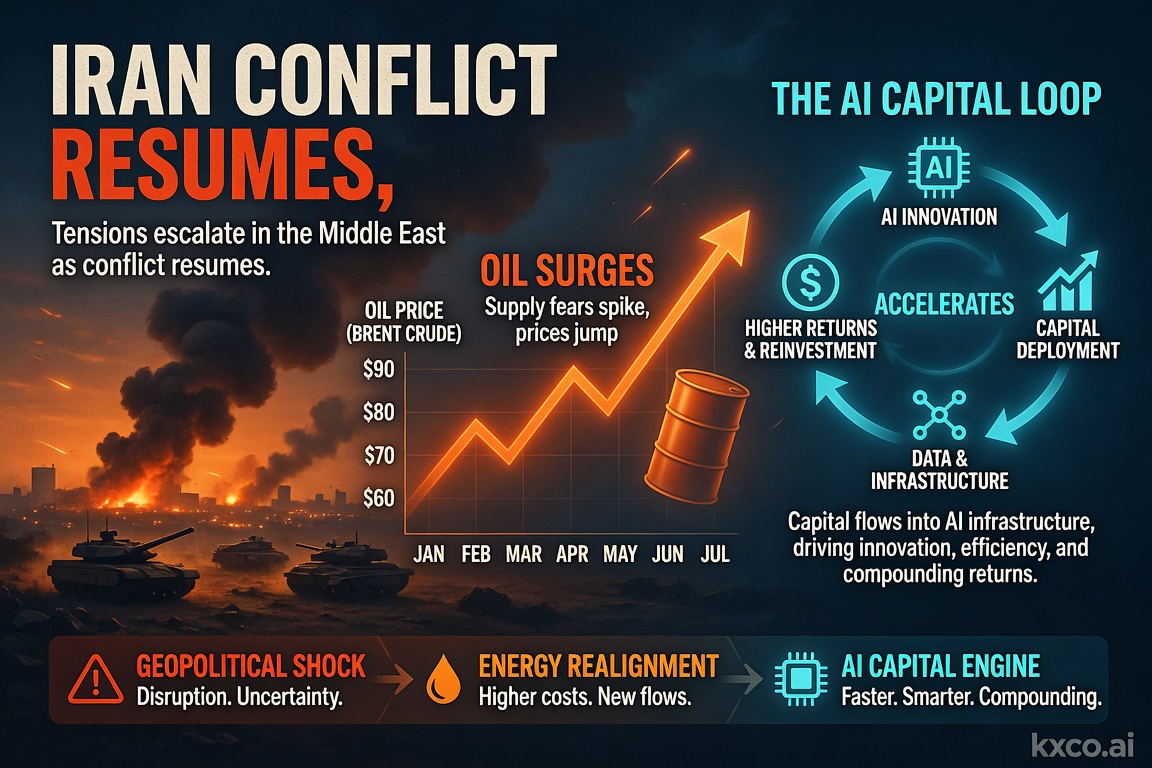
Economic Calendar and Trading Strategies for the Week Ahead: July 14–18, 2026
A pivotal week for markets: US strikes on Iran reignite the oil risk premium, June CPI and retail sales test the Fed's rate-cut path, and the $1 trillion AI capital loop keeps driving the tech trade. Full economic calendar plus trading strategies across oil, gold, Bitcoin, FX and AI stocks.
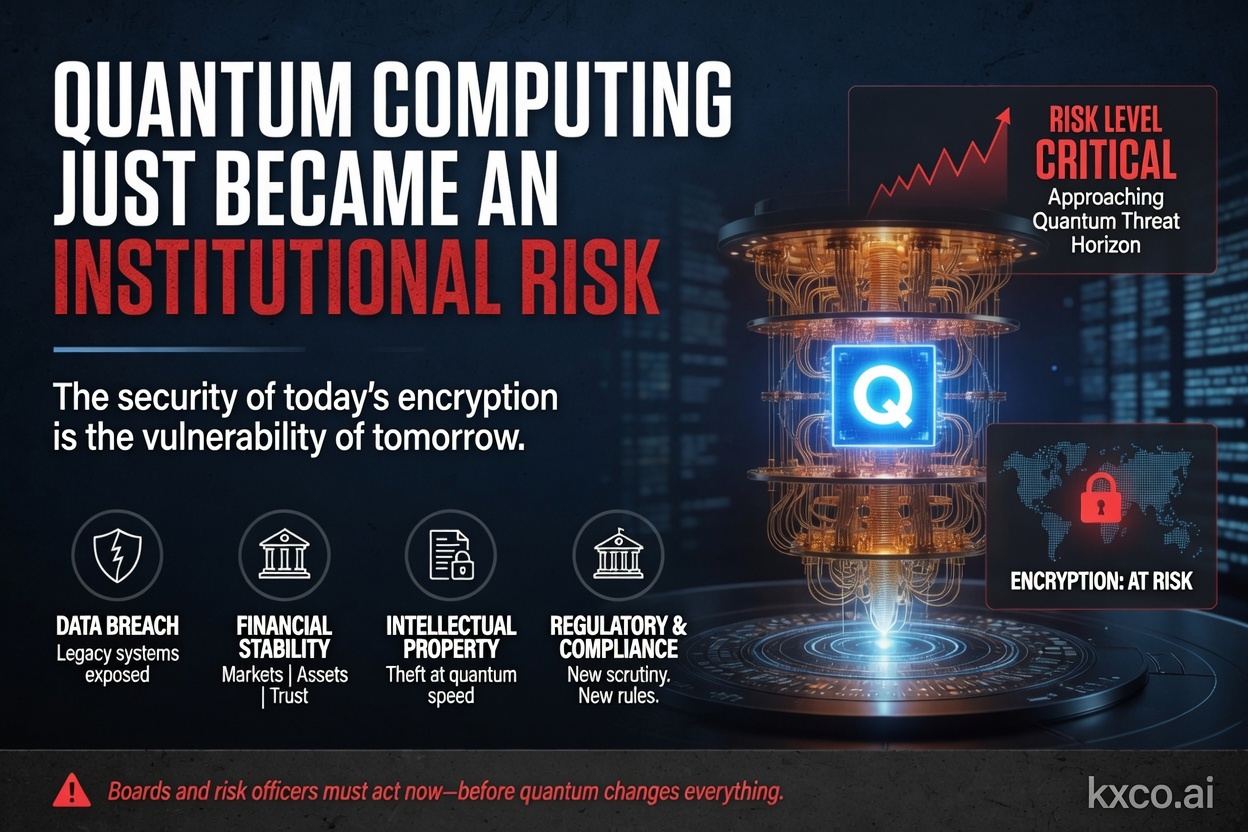
Quantum Computing Just Became an Institutional Risk
Shayne Heffernan on BlackRock's quantum-computing warning for Bitcoin and Ethereum, Google's cryptanalysis research, the two on-chain risk vectors, and how KXCO's Armature L1 — post-quantum from genesis, coordinated by its ontology — answers a threat that just went institutional.
Economic Calendar and Trading Strategies for July 7–11, 2026
A trader's guide to the week of July 7–11, 2026: the US and China economic calendar, the Fed-pivot test after a soft jobs report, and how to trade Nvidia, SpaceX, Bitcoin, the dollar, gold, silver, AI and quantum. Track every release on Live Trading News.
Every story, signed and delivered.
Subscribe to the kxco channel and get the headline, the AI-written key takeaways, and the chain-anchor link the moment we publish. Audio versions and per-ticker subscriptions arrive in the next iteration.