
Excess Money Printing Survival Guide
Excess money printing is when a government or central bank prints too much money. This can lead to a number of problems, including inflation, asset bubbles, financial instability, currency depreciation, and inequality.
If you are concerned about the effects of excess money printing, there are a few things you can do to protect yourself:
Invest in hard assets: Hard assets, such as real estate, gold, and silver, can be a good hedge against inflation.
Diversify your portfolio: Don't put all your eggs in one basket. Spread your money across a variety of asset classes, such as stocks, bonds, and real estate.
Pay down debt: The less debt you have, the less vulnerable you will be to rising interest rates.
Live below your means: This will give you more financial flexibility in case of a recession or other economic downturn.
Here are some additional tips:
Invest in yourself: Education and skills are the best assets you can have. Invest in yourself so that you can be more adaptable to changes in the economy.
Build a community: Having a strong support network of friends and family can help you through difficult times.
Be prepared for the unexpected: Always have a financial cushion in case of an emergency.
It is important to note that there is no one-size-fits-all solution to protecting yourself from the effects of excess money printing. The best approach will vary depending on your individual circumstances. It is always important to consult with a financial advisor before making any investment decisions.
Excess money printing can cause a number of special problems, including:
Inflation: When the supply of money increases faster than the supply of goods and services, inflation occurs. This means that prices for goods and services go up, and the purchasing power of money goes down. Inflation can be especially harmful to low-income households, who have a harder time affording basic necessities.
Asset bubbles: Asset bubbles occur when the prices of assets, such as stocks, real estate, and cryptocurrencies, rise to unsustainable levels. Asset bubbles can be caused by a number of factors, including excess money printing. When asset bubbles burst, it can lead to a sharp decline in asset prices and a financial crisis.
Financial instability: Excess money printing can also lead to financial instability. This is because it can encourage banks and other financial institutions to take on more risk. When financial institutions take on too much risk, it can lead to a financial crisis.
Currency depreciation: Excess money printing can lead to currency depreciation. When the supply of a currency increases, the value of that currency decreases. Currency depreciation can make it more difficult for businesses to export goods and services, and it can also make it more expensive for consumers to buy imported goods and services.
Inequality: Excess money printing can also lead to inequality. This is because it tends to benefit the wealthy more than the poor. When the supply of money increases, the value of assets, such as stocks and real estate, also increases. This benefits the wealthy, who own more assets than the poor.
It is important to note that excess money printing is not the only cause of these problems. Other factors, such as government spending and central bank policy, can also play a role. However, excess money printing can exacerbate these problems.
Governments and central banks should be careful about printing too much money. Excess money printing can have a number of negative consequences for the economy.
AI is the Neat Handwriting of the Illiterate
A model in the hands of someone who has read the filing and walked the plant is a clerk. The same model, speaking for someone who has done neither, is a disguise. On AI slop, phantom citations and factslop, why finish stopped being evidence of work, and the containment layer KXCO built so a machine cannot speak as the institution until a source is attached.
Worthship: Do Not Conform to the Age
Worthship is the older English word for worship, and it means to ascribe worth. Bishop Robert Barron preached Romans 12 on 30 August. This essay follows the text into the prison letters, and puts two questions to a graph: do the four readings of that Sunday agree, and was Paul free or in chains when he wrote about despair?
The Truth in All Its Ugliness Must Survive
A majority vote does not determine the truth. Consensus is a mood, gossip is a sport, and a model will write the pretty version for free. Why the ugly number has to survive, why a record beats a dashboard, and what KXCO was built to keep standing when the room changes its mind.
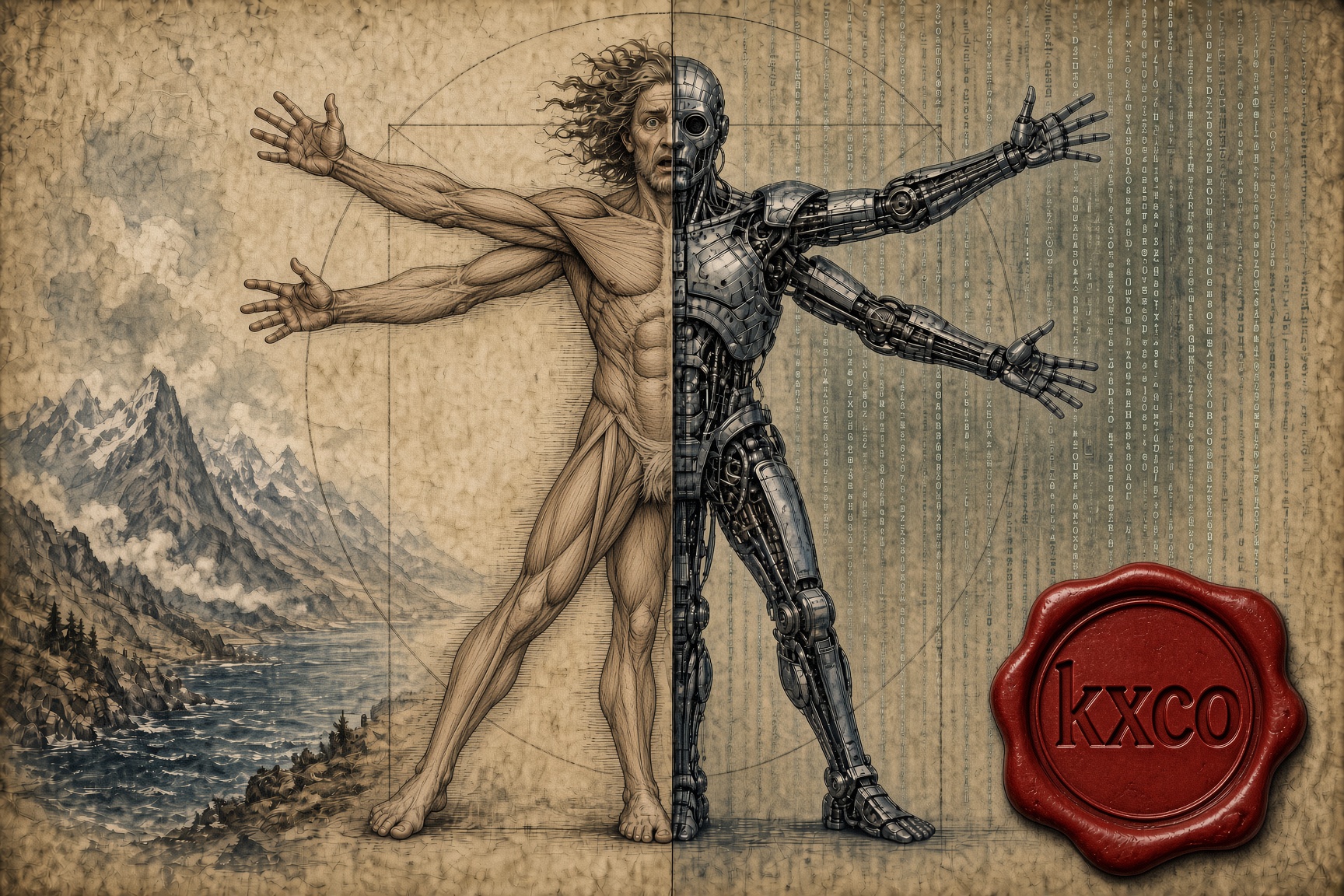
Don't Be the Best, Be the Only: Winning in an AI World
AI is repricing competence downward. What it cannot reproduce is a life. The case for remaining non-fungible, why friction still produces the best ideas, and what it means to build AI systems that keep the human intellect in them.
Every story, signed and delivered.
Subscribe to the kxco channel and get the headline, the AI-written key takeaways, and the chain-anchor link the moment we publish. Audio versions and per-ticker subscriptions arrive in the next iteration.