
Examining the US's Position in a Multipolar World
The long-held status of the United States as the world's dominant superpower is facing significant challenges in the 21st century. While the US still maintains considerable economic and military might, a complex interplay of factors is contributing to a shift towards a more multipolar world order.
Multiple Factors at Play:
Several key factors are driving this evolution:
1. Rise of Emerging Economies: The economic power of countries like China, India, and Brazil is rapidly growing, challenging the US's dominance in global trade and finance.
2. Technological Advancements: Technological innovation is increasingly diffused across different nations, eroding the US's technological edge in various sectors.
3. Geopolitical Shifts: The rise of regional powers, coupled with the emergence of new alliances and blocs, is altering the global political landscape and challenging US leadership.
4. Domestic Challenges: Internal political and social divisions within the US, as well as economic inequality, are impacting its ability to project power and influence abroad.
The New Multipolar World:
This confluence of factors is leading to the emergence of a multipolar world order, characterized by:
1. Shared Power: No single nation holds undisputed global dominance.
2. Regionalization: Power and influence are increasingly concentrated within regional blocs.
3. Interconnectedness: Global issues require collaboration and cooperation between various nations for effective solutions.
4. Uncertainty and Volatility: The multipolar world is inherently more dynamic and unpredictable, with potential for both conflict and cooperation.
US Adaptation and Response:
The US is faced with the challenge of adapting to this changing global landscape. Key strategies include:
1. Strengthening Domestic Resilience: Addressing internal challenges to enhance national competitiveness and global standing.
2. Building Strategic Partnerships: Collaborating with allies and partners to address shared concerns and maintain influence.
3. Embracing Multilateralism: Engaging in international institutions and seeking cooperative solutions to global challenges.
4. Investing in Innovation: Prioritizing research and development to maintain a technological edge in key areas.
The Future of Global Power:
The future of global power remains uncertain. The US will continue to play a significant role in the international arena, but its dominance is likely to diminish as other nations rise. The success of the US in adapting to the multipolar world will depend on its ability to address internal challenges, build strategic alliances, and embrace multilateralism.
It is crucial to remember that the concept of "dominant superpower" is inherently subjective and multifaceted. While the US may no longer hold exclusive global dominance, its influence and impact across various spheres remain significant. The world is entering a new era of shared power and interconnectedness, requiring collaboration and cooperation to address global challenges and ensure a stable and prosperous future for all.
AI is the Neat Handwriting of the Illiterate
A model in the hands of someone who has read the filing and walked the plant is a clerk. The same model, speaking for someone who has done neither, is a disguise. On AI slop, phantom citations and factslop, why finish stopped being evidence of work, and the containment layer KXCO built so a machine cannot speak as the institution until a source is attached.
Worthship: Do Not Conform to the Age
Worthship is the older English word for worship, and it means to ascribe worth. Bishop Robert Barron preached Romans 12 on 30 August. This essay follows the text into the prison letters, and puts two questions to a graph: do the four readings of that Sunday agree, and was Paul free or in chains when he wrote about despair?
The Truth in All Its Ugliness Must Survive
A majority vote does not determine the truth. Consensus is a mood, gossip is a sport, and a model will write the pretty version for free. Why the ugly number has to survive, why a record beats a dashboard, and what KXCO was built to keep standing when the room changes its mind.
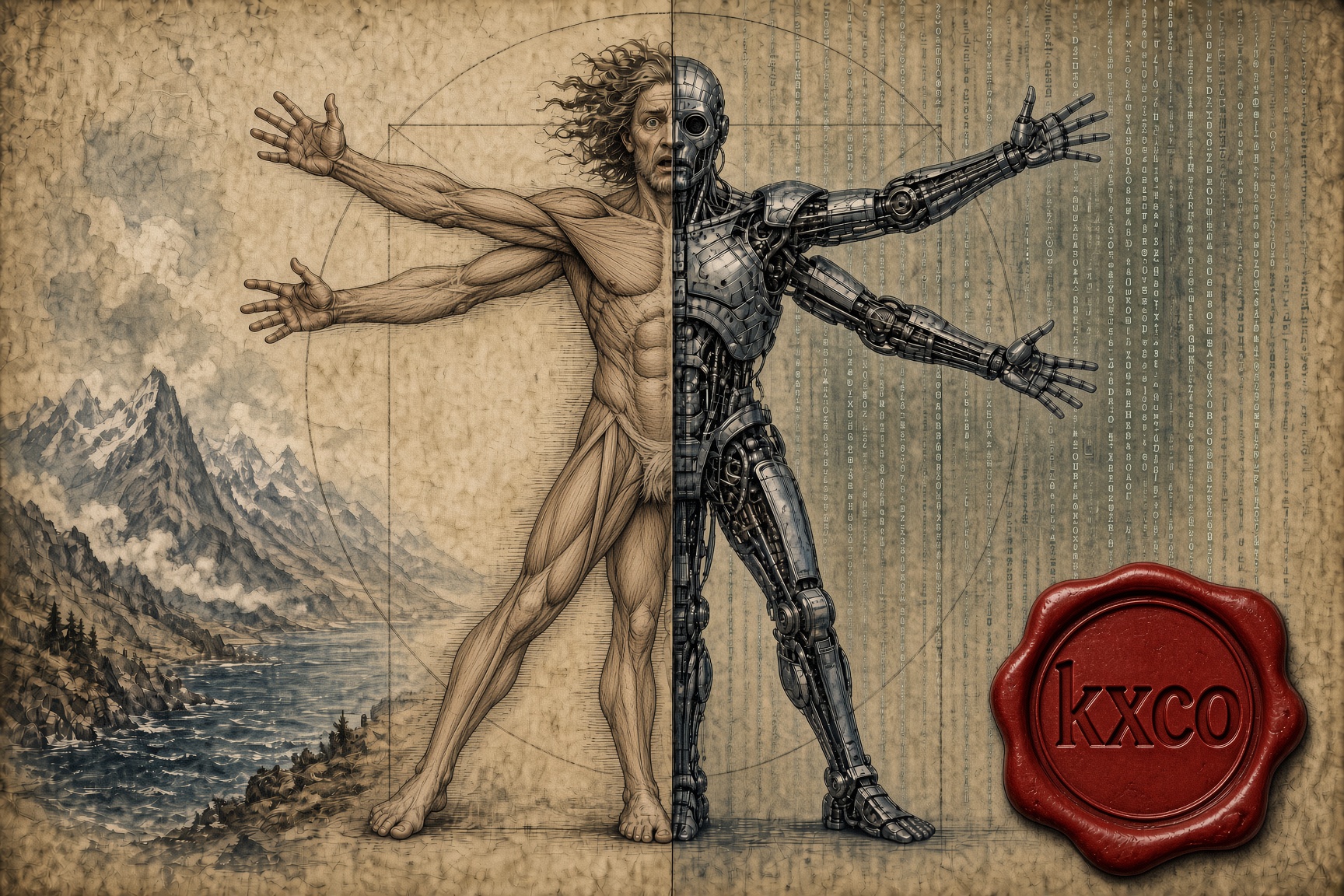
Don't Be the Best, Be the Only: Winning in an AI World
AI is repricing competence downward. What it cannot reproduce is a life. The case for remaining non-fungible, why friction still produces the best ideas, and what it means to build AI systems that keep the human intellect in them.
Every story, signed and delivered.
Subscribe to the kxco channel and get the headline, the AI-written key takeaways, and the chain-anchor link the moment we publish. Audio versions and per-ticker subscriptions arrive in the next iteration.