
Elon Musk on AI
Elon Musk, the owner of X, shared his vision for the future of AI during a conversation with British Prime Minister Rishi Sunak at a groundbreaking AI summit held at Bletchley Park in the UK. Musk predicted that the AI era would usher in an "age of abundance," leading to a "universal high income" instead of a universal basic income.
During the discussion in London, Musk emphasized that there would come a time when traditional jobs would no longer be necessary, and employment would be pursued solely for personal satisfaction. He compared AI to a "magic genie" capable of fulfilling any wishes, but he also cautioned that such fairy tales often have unforeseen consequences.
Musk raised concerns about the development of humanoid robots that could potentially track and pursue humans. He stressed the importance of incorporating a physical "off switch" for these robots to ensure human safety.
"A humanoid robot can basically chase you anywhere," Musk warned. "It's something we should be quite concerned about. If a robot can follow you anywhere, what if they receive a software update one day, and their intentions are no longer friendly?"
In response, Prime Minister Sunak acknowledged the prevalence of movies depicting robots that are deactivated to prevent harm.
The two-day AI summit at Bletchley Park concluded with a significant agreement among Western governments and companies involved in "frontier" AI to establish a new safety testing regime. This development aims to address the potential challenges and risks associated with advanced AI technologies.
The idea that AI could lead to an age of abundance is based on the potential of artificial intelligence to revolutionize various aspects of our society and economy. Here are some ways in which AI could contribute to an age of abundance:
Automation of Labor: AI has the capability to automate repetitive and labor-intensive tasks across various industries. This can lead to increased efficiency, reduced labor costs, and higher productivity. As a result, businesses can produce more with fewer resources, potentially lowering the cost of goods and services.
Enhanced Productivity: AI-powered tools and systems can assist workers in making better decisions, optimizing processes, and improving overall productivity. This can lead to higher output and economic growth.
Healthcare Advancements: AI can significantly improve healthcare through early disease detection, personalized treatment plans, and drug discovery. Better healthcare can lead to longer, healthier lives, and a more productive workforce.
Resource Optimization: AI can help optimize resource allocation in areas like energy, transportation, and agriculture. This can lead to reduced waste, lower costs, and a more sustainable use of resources.
Innovation Acceleration: AI can accelerate the pace of innovation in various fields, leading to the development of new products, services, and industries. These innovations can create economic opportunities and drive growth.
Cost Reduction: AI-driven technologies can reduce the cost of access to information, education, and services. This can improve the standard of living and accessibility to resources.
Customization and Personalization: AI enables businesses to offer more personalized products and services, meeting the unique needs and preferences of individuals. This can lead to higher customer satisfaction and economic growth.
Predictive Analytics: AI can improve decision-making by providing insights and predictions based on large datasets. This can help organizations make more informed choices and avoid costly mistakes.
Greater Connectivity: AI can enhance connectivity between people, devices, and systems, improving communication, collaboration, and access to information.
Education and Training: AI-driven education and training platforms can make learning more accessible and affordable, empowering individuals with new skills and knowledge.
While these advancements have the potential to create an age of abundance, it's important to note that AI also raises concerns related to privacy, security, and the potential for job displacement.
China has indeed been a prominent player in the global push for artificial intelligence (AI). The Chinese government, along with many tech companies, has been actively investing in AI research, development, and applications. Here are some key reasons why China is leading the AI push:
Government Support: The Chinese government has recognized the strategic importance of AI and has made it a national priority. They have outlined AI development plans and provided significant funding and support to boost research and innovation in AI.
Large Talent Pool: China has a vast pool of talented engineers, data scientists, and researchers, which is essential for AI development. Chinese universities are also producing a significant number of graduates in AI-related fields.
Robust Tech Ecosystem: China is home to some of the world's largest and most innovative tech companies, such as Alibaba, Tencent, Baidu, and Huawei. These companies have made substantial investments in AI and have the resources to drive AI research and development.
Data Availability: China's massive population provides a wealth of data that is crucial for training AI algorithms. This data advantage allows Chinese companies to develop AI systems that are highly tailored to the Chinese market.
AI Applications: China is actively applying AI in various sectors, including healthcare, finance, e-commerce, and manufacturing. AI-powered technologies, like facial recognition and autonomous vehicles, are being rapidly deployed in the country.
Global Collaboration: Chinese AI researchers and companies collaborate with international counterparts, fostering a global exchange of ideas and knowledge in the AI field.
AI Regulations: China has established regulations and standards for AI, which can provide clarity and consistency for companies developing AI technologies.
However, it's important to note that the rapid development of AI in China has raised concerns about data privacy, surveillance, and ethical considerations. As AI continues to advance, these concerns will need to be addressed to ensure responsible and ethical AI development.
While China is a leader in AI, other countries, including the United States, are also actively engaged in AI research and development. The global AI landscape is dynamic, and cooperation and competition between countries will shape the future of AI technology.

AI is the Neat Handwriting of the Illiterate
A model in the hands of someone who has read the filing and walked the plant is a clerk. The same model, speaking for someone who has done neither, is a disguise. On AI slop, phantom citations and factslop, why finish stopped being evidence of work, and the containment layer KXCO built so a machine cannot speak as the institution until a source is attached.

Worthship: Do Not Conform to the Age
Worthship is the older English word for worship, and it means to ascribe worth. Bishop Robert Barron preached Romans 12 on 30 August. This essay follows the text into the prison letters, and puts two questions to a graph: do the four readings of that Sunday agree, and was Paul free or in chains when he wrote about despair?

The Truth in All Its Ugliness Must Survive
A majority vote does not determine the truth. Consensus is a mood, gossip is a sport, and a model will write the pretty version for free. Why the ugly number has to survive, why a record beats a dashboard, and what KXCO was built to keep standing when the room changes its mind.
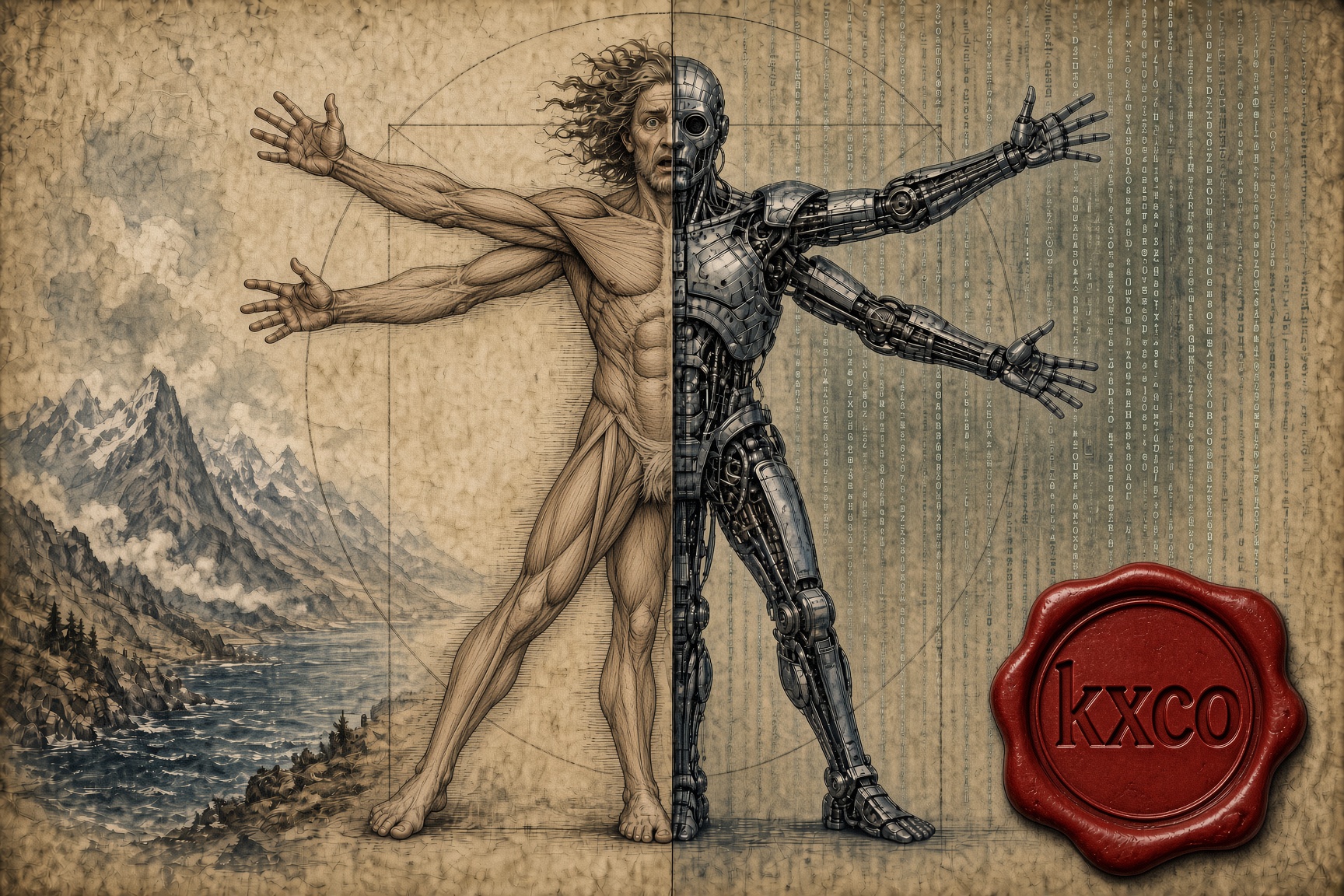
Don't Be the Best, Be the Only: Winning in an AI World
AI is repricing competence downward. What it cannot reproduce is a life. The case for remaining non-fungible, why friction still produces the best ideas, and what it means to build AI systems that keep the human intellect in them.
Every story, signed and delivered.
Subscribe to the kxco channel and get the headline, the AI-written key takeaways, and the chain-anchor link the moment we publish. Audio versions and per-ticker subscriptions arrive in the next iteration.