
Edgar Degas and the Art of Horse Racing
Edgar Degas was a French artist who is best known for his paintings, sculptures, and drawings of dancers. However, he also produced a number of paintings of horse racing, which were inspired by his love of the sport and his fascination with the movement of horses.
Degas first became interested in horse racing in the early 1860s. He would often attend races at the Longchamp Hippodrome in Paris, and he would sketch the horses and jockeys in his sketchbooks. In 1866, he painted his first major work on the subject, Race Horses in Front of the Stands. This painting shows a group of horses and jockeys at the start of a race, and it captures the excitement and anticipation of the moment.

Degas continued to paint horse racing scenes throughout his career. He was particularly interested in the way that horses move, and he often used photography to study their anatomy and movement. He also experimented with different techniques, such as using pastels and oil paint, to capture the movement of the horses.
Degas's paintings of horse racing are some of his most famous works. They are not only beautiful and evocative, but they also provide a unique perspective on the sport of horse racing. Degas's paintings show the beauty and power of horses, as well as the excitement and anticipation of a race. They are a testament to his skill as an artist, and they offer a glimpse into his passion for horse racing.
Here are some of Degas's most famous paintings of horse racing:
Race Horses in Front of the Stands (1866)
Jockeys Before the Start (1878-79)
The Parade (1866-68)
After the Race (1873)
The Bell Tower (1878)
These paintings are on display in museums around the world, and they continue to be admired by art lovers for their beauty, skill, and insight into the world of horse racing.
Conclusion
Degas's paintings of horse racing are a testament to his skill as an artist and his passion for the sport. They are beautiful, evocative, and offer a unique perspective on horse racing. Degas's paintings are a valuable addition to any art collection, and they continue to be admired by art lovers around the world.
AI is the Neat Handwriting of the Illiterate
A model in the hands of someone who has read the filing and walked the plant is a clerk. The same model, speaking for someone who has done neither, is a disguise. On AI slop, phantom citations and factslop, why finish stopped being evidence of work, and the containment layer KXCO built so a machine cannot speak as the institution until a source is attached.
Worthship: Do Not Conform to the Age
Worthship is the older English word for worship, and it means to ascribe worth. Bishop Robert Barron preached Romans 12 on 30 August. This essay follows the text into the prison letters, and puts two questions to a graph: do the four readings of that Sunday agree, and was Paul free or in chains when he wrote about despair?
The Truth in All Its Ugliness Must Survive
A majority vote does not determine the truth. Consensus is a mood, gossip is a sport, and a model will write the pretty version for free. Why the ugly number has to survive, why a record beats a dashboard, and what KXCO was built to keep standing when the room changes its mind.
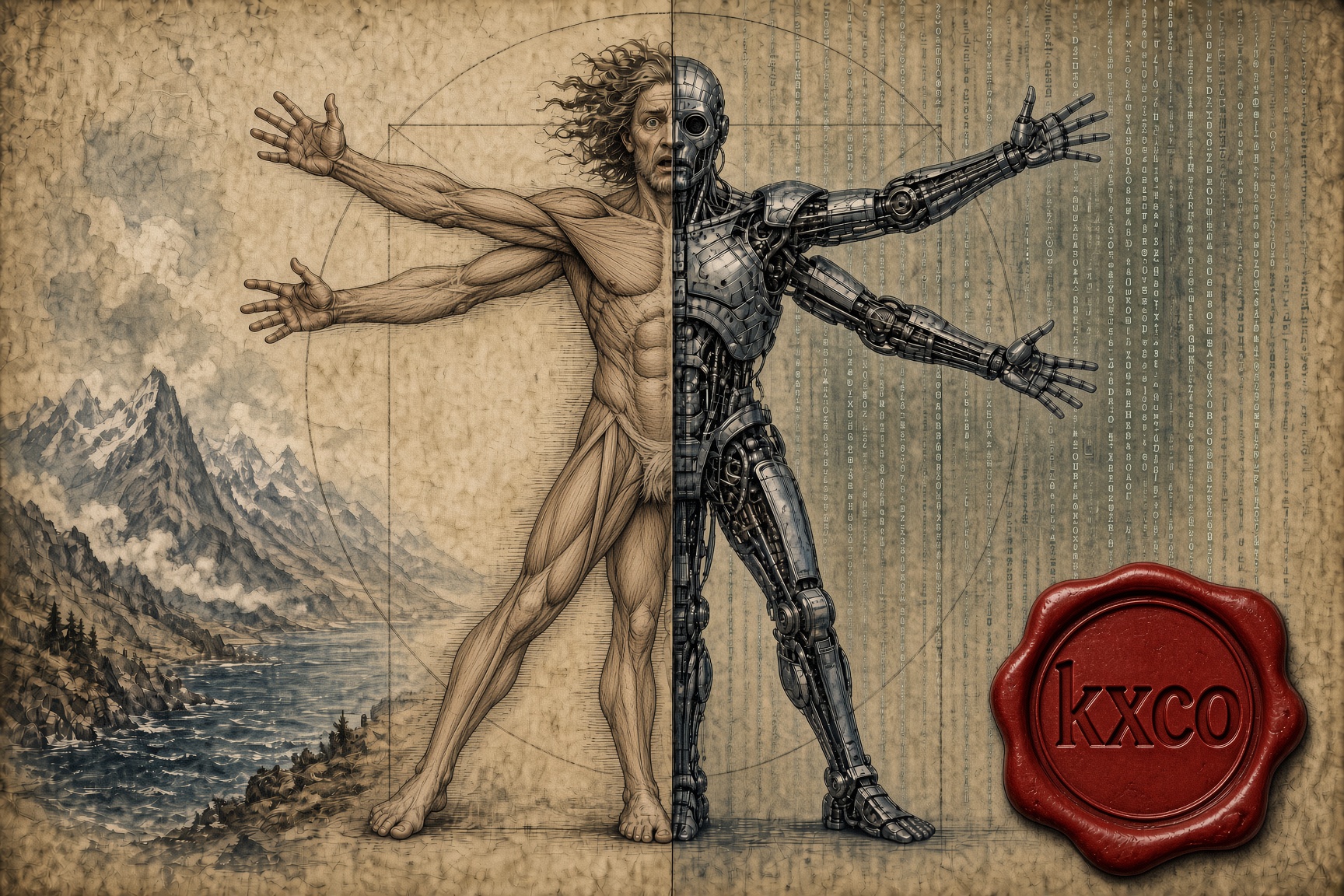
Don't Be the Best, Be the Only: Winning in an AI World
AI is repricing competence downward. What it cannot reproduce is a life. The case for remaining non-fungible, why friction still produces the best ideas, and what it means to build AI systems that keep the human intellect in them.
Every story, signed and delivered.
Subscribe to the kxco channel and get the headline, the AI-written key takeaways, and the chain-anchor link the moment we publish. Audio versions and per-ticker subscriptions arrive in the next iteration.