
Dubai the NFT and Crypto Hub
Art Dubai, the Middle East's largest annual contemporary art fair, has featured for the first time digital works, as the wealthy Gulf emirate seeks to position itself as a crypto-assets hub.
This year, in its 15th edition, the four-day fair is hosting more than 100 local and foreign art dealers, with an entire wing of 17 galleries and platforms dedicated to showcasing and selling NFTs (non-fungible tokens).
NFT sales platforms use the blockchain technology behind cryptocurrencies, and transform anything from illustrations to memes into virtual collectors' items that cannot be duplicated.
Benedetta Ghione, Art Dubai's executive director, said NFTs, which burst into the mainstream last year and are now traded at major auction houses, have drawn a lot of attention in the United Arab Emirates, already a leisure and trading hub.
The increased interest, along with Dubai's "unique position" as "a growing crypto hub", prompted fair organisers to dedicate a new digital section, she told AFP at the launch on Friday.
"We thought this was the perfect time, and the perfect place," she said.
After signing an agreement in December with Binance, the world's largest cryptocurrency exchange by trading volume, Dubai -- one of the seven emirates that make up the UAE -- introduced last week a new virtual assets law and a regulatory authority to oversee the sector.
- 'Growing exponentially' -
Dubai's ruler Sheikh Mohammed bin Rashid Al-Maktoum tweeted that such a step "establishes the UAE's position in this sector" and aims "to ensure maximum transparency and security for investors".
Local NFT platforms have welcomed the move as good for business, with crypto holders increasingly interested in digital art as a form of investment.
"The crypto community is growing exponentially," said Jennifer Stelco of NFT curatorial platform Morrow Collective which exhibited about 20 digital artworks at the show, nearly all of them by UAE-based artists.
Among them is a piece by Vesa, a renowned Finnish mixed media artist based in Dubai, whose artwork combining painting and digitally-retouched images went on offer for 50 ethereum (cryptocurrency), or about $127,000 at Sunday's prices.
Stelco said that one piece, by Lebanese artist Magda Malkoun whose main work depicted her hometown Beirut as a strong female, was sold for three ethereum.
The global NFT boom, with US artist Beeple selling an artwork at a record-breaking $69 million last year, has encouraged the Middle East's first online platform, Emergeast, to turn to digital art.
Established in 2014 and dedicated to emerging artists from the region, Emergeast sees NFTs as an opportunity for artists to "really expand" their audiences, reaching both collectors and non-collectors, co-founder Nikki Meftah told AFP.
"The benefit also is that all the artists get royalties for every sale," she added.
Faced with the NFT hype, Emirati sculptor and painter Aisha Juma started reworking some sketches on a tablet a few months ago, although she stresses the importance of the art's message over its medium.
"There is complexity because now people are interested in the medium... in the technology," she said.
"The technology is extremely valuable. It gives me a platform to express more and to use more tools, I am not denying that, but I would also love people to look at the art, at what I am saying."
AI is the Neat Handwriting of the Illiterate
A model in the hands of someone who has read the filing and walked the plant is a clerk. The same model, speaking for someone who has done neither, is a disguise. On AI slop, phantom citations and factslop, why finish stopped being evidence of work, and the containment layer KXCO built so a machine cannot speak as the institution until a source is attached.
Worthship: Do Not Conform to the Age
Worthship is the older English word for worship, and it means to ascribe worth. Bishop Robert Barron preached Romans 12 on 30 August. This essay follows the text into the prison letters, and puts two questions to a graph: do the four readings of that Sunday agree, and was Paul free or in chains when he wrote about despair?
The Truth in All Its Ugliness Must Survive
A majority vote does not determine the truth. Consensus is a mood, gossip is a sport, and a model will write the pretty version for free. Why the ugly number has to survive, why a record beats a dashboard, and what KXCO was built to keep standing when the room changes its mind.
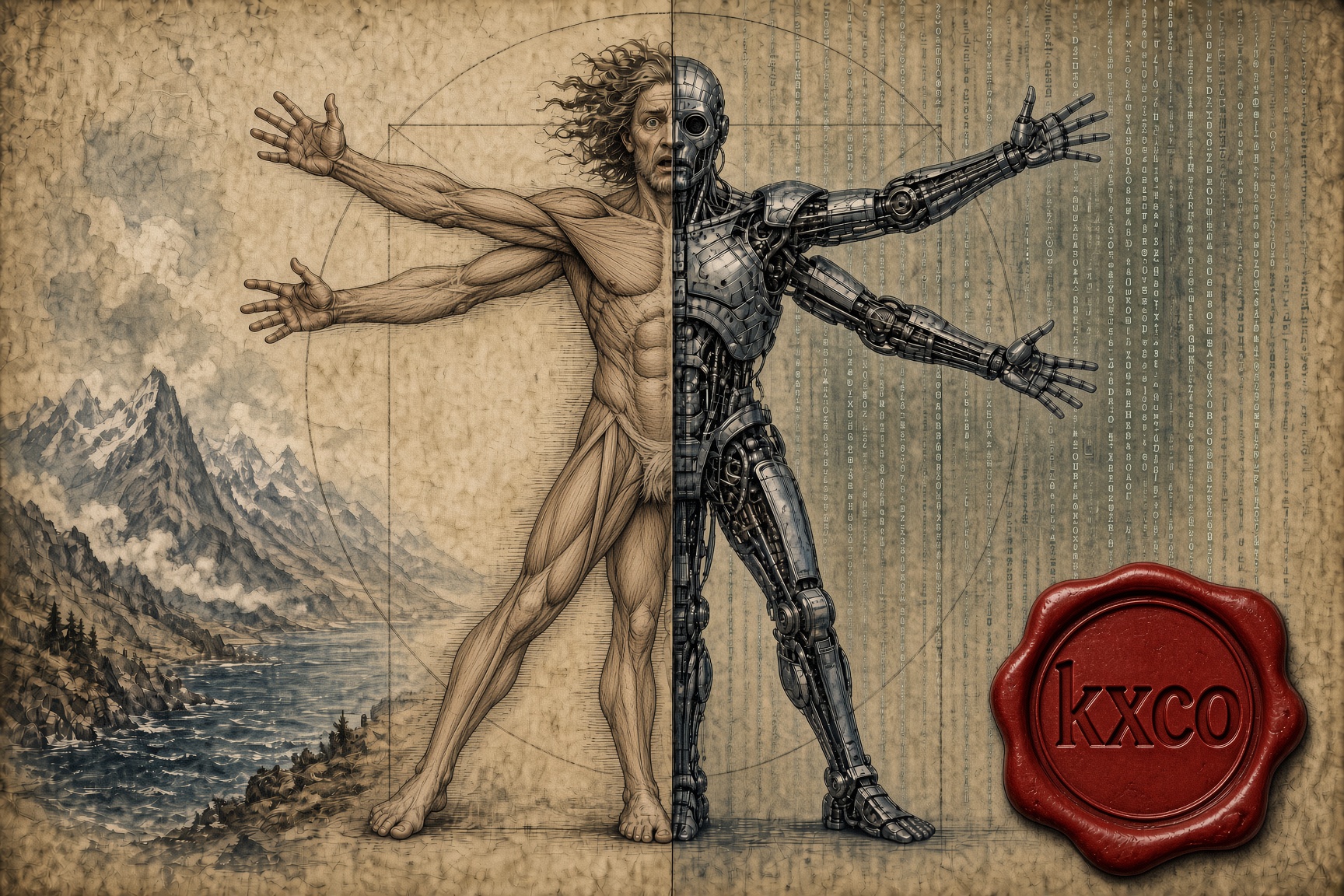
Don't Be the Best, Be the Only: Winning in an AI World
AI is repricing competence downward. What it cannot reproduce is a life. The case for remaining non-fungible, why friction still produces the best ideas, and what it means to build AI systems that keep the human intellect in them.
Every story, signed and delivered.
Subscribe to the kxco channel and get the headline, the AI-written key takeaways, and the chain-anchor link the moment we publish. Audio versions and per-ticker subscriptions arrive in the next iteration.