
Debt Ceiling Update
A default by the US on its sovereign debt would be disastrous for the economy and would undermine the country’s ability to provide international leadership, Treasury Secretary Janet Yellen has warned.
Speaking at a press conference ahead of the G7 gathering in Japan on Thursday, Yellen cautioned that a default by Washington on its $31.4 trillion debt would trigger a global economic downturn.
“[It] would also risk undermining US global economic leadership and raise questions about our ability to defend our national security interests,” the official told reporters. “A default is frankly unthinkable. America should never default. It would rank as a catastrophe.”
The debt ceiling is a limit on the amount of money that the US government can borrow to fund its operations and pay its bills.
The current debt ceiling is set at $28.4 trillion as of September 2021.
Congress sets the debt ceiling, which is usually done through a vote in both the House of Representatives and the Senate.
The debt ceiling has been raised over 100 times since it was first established in 1917.
The debt ceiling is often a contentious issue in Congress, with some lawmakers arguing that the government should not be allowed to borrow more money and others arguing that defaulting on the debt would have disastrous consequences for the economy.
In the past, the US government has used "extraordinary measures" to avoid defaulting on its debt when the debt ceiling has been reached. These measures include temporarily suspending contributions to federal employee retirement funds and using cash balances from other government accounts.
If the debt ceiling is not raised, the US government could default on its debt, which would have serious consequences for the US economy and financial markets. A default could cause interest rates to rise, lead to a downgrade of the US credit rating, and create a global financial crisis.
Yellen has voiced alarm over a potential default since January, when the US hit its debt ceiling. The Treasury Department has since been using special accounting measures to make cash available. Yellen told Congress those actions could run out as soon as June 1, putting payments to US bond investors, benefits recipients, federal contractors, and others in jeopardy.
A meeting this week between President Joe Biden and Republican lawmakers in Washington failed to yield progress. Biden and congressional Republicans are at an impasse over raising the $31.4 trillion borrowing limit, with GOP leaders demanding government spending cuts before they approve a higher ceiling.
Biden has insisted on a “clean” increase, arguing that the two issues should not be linked. Another meeting between the president and congressional leaders is set for Friday.
Former US President Donald Trump, the frontrunner for the GOP nomination in the 2024 election, suggested on Wednesday that Republicans should refuse to raise the debt limit if the White House does not agree to “massive” spending cuts.
In a report published last week, White House economists warned that a protracted US default would wipe out more than 8 million jobs and cut the value of the stock market in half.
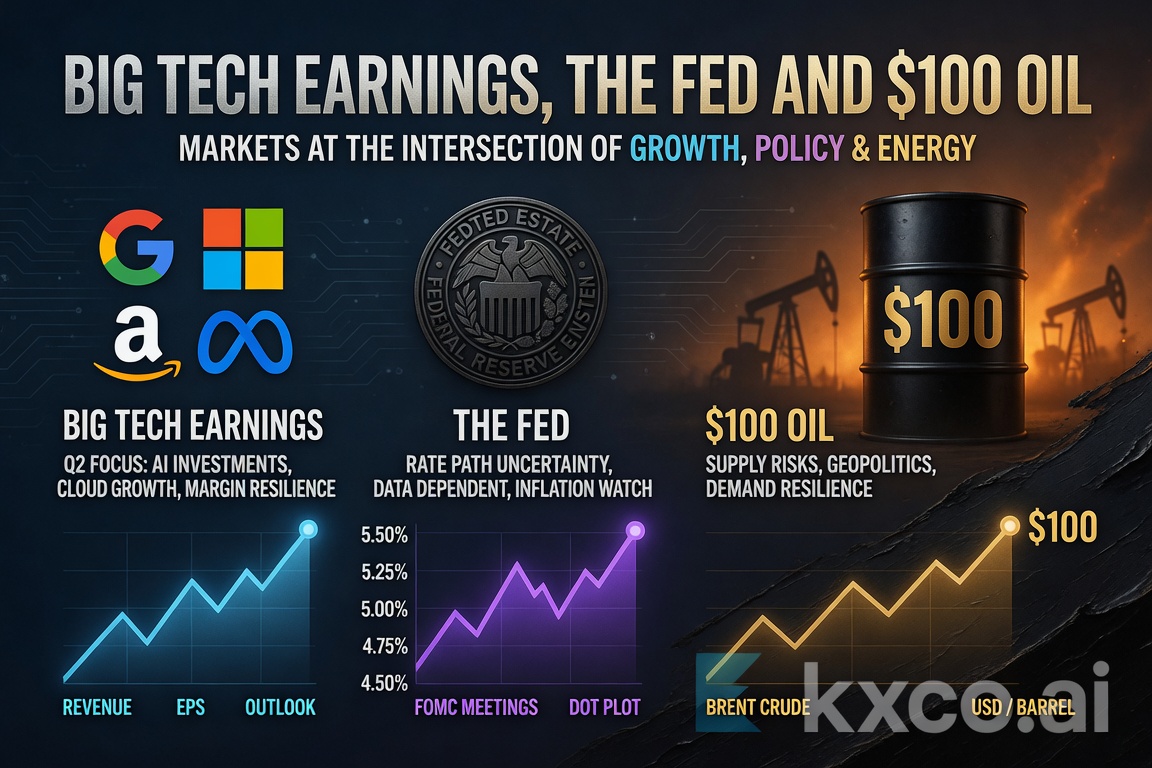
Big Tech Earnings, the Fed and $100 Oil. Trading Strategies for Every Sector
Microsoft, Meta, Apple and Amazon report, the Fed decides, and oil sits above $100. Shayne Heffernan on the week ahead, with the full economic calendar and a trading strategy for big tech, AI, quantum, gold, silver, FX and Bitcoin.

Economic Calendar and Trading Strategies for the Week Ahead: July 20–24, 2026
A pivotal week for markets: Iran's closure of the Strait of Hormuz sends crude above $86 and gasoline over $5, while Alphabet, Tesla and Intel earnings test the AI trade. Full economic calendar plus trading strategies across oil, gold, Bitcoin, FX and AI chip stocks.
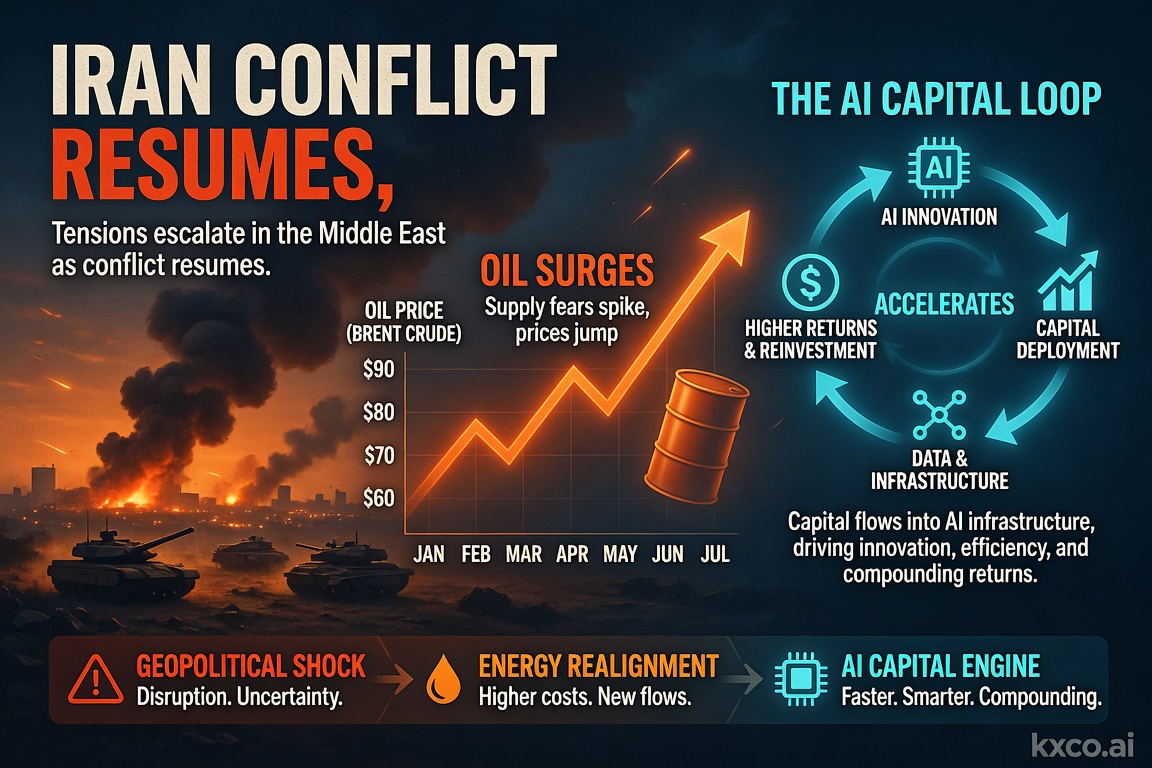
Economic Calendar and Trading Strategies for the Week Ahead: July 14–18, 2026
A pivotal week for markets: US strikes on Iran reignite the oil risk premium, June CPI and retail sales test the Fed's rate-cut path, and the $1 trillion AI capital loop keeps driving the tech trade. Full economic calendar plus trading strategies across oil, gold, Bitcoin, FX and AI stocks.

Economic Calendar and Trading Strategies for July 7–11, 2026
A trader's guide to the week of July 7–11, 2026: the US and China economic calendar, the Fed-pivot test after a soft jobs report, and how to trade Nvidia, SpaceX, Bitcoin, the dollar, gold, silver, AI and quantum. Track every release on Live Trading News.
Every story, signed and delivered.
Subscribe to the kxco channel and get the headline, the AI-written key takeaways, and the chain-anchor link the moment we publish. Audio versions and per-ticker subscriptions arrive in the next iteration.