
Crypto: Blockchains, There are 4 Types, All Different
#crypto #blookchain #application #bitcoin #mining
"Knowing the types of blockchain is the 1st step to learning more about its applications"--Paul Ebeling
The blockchain’s application is to conduct and exchange information securely over a network. It was introduced via Bitcoin.
The digital currency ran on a platform where anyone could become a node. As a result, they could easily verify other nodes and trade the currency. This made the platform public where everyone had access.
This function cannot work for every organization.
For instance, a financial institution cannot expose all transactions and allow third parties to interfere with their business. The institution needs more privacy. So, they need a private platform to protect confidential information.
In the same vein, some organizations would want to hide some information and reveal others. A public technology would be too open, and a private 1, too restricted. Thus, a hybrid blockchain is the best.
Working with these technologies is becoming an integral part of the life of a blockchain developer, but the most important thing is that it makes it possible to pay for the work of many other freelancers located around the world. Now it is much easier to find crypto jobs for any specialist and get paid in crypto timely through smart contracts.
With these examples, it is easy to understand why there should be different types of blockchain. Hence, varied technology is necessary to satisfy different needs.
The following are the 4 types of blockchain.
Public
Private
Hybrid
Consortium
A Public blockchain is a digital ledger with no restrictions and requires no access permissions. In other words, anyone with a strong internet connection can create an account on the platform, becoming a node.
Members of the public digital network are allowed to view current and historical records. They can also mine, confirm incoming transactions or perform proof-of-work on an incoming block.
The most fundamental use of the public platform network is for cryptocurrency mining and exchange. As a result, Bitcoin is 1 of the most commonly utilized blockchain platforms currently in existence.
A Private blockchain operates within a closed network. The technology demands permission before a random individual can access the platform.
Private networks are ideal private organizations that wish to use the blockchain for business. And, it allows the organization to configure many network characteristics like authorization and accessibility.
The distinction between public and private platforms is the means of access. Aside from this, both operate in the same manner, providing members with security and honest transactions. Records preserved on this platform also remain safe and untouchable by 3rd parties.
Another significant distinction is that private networks are somewhat centralized. This is because only 1 authority controls how other members access the platform. There are different applications of this private technology but each has unique characteristics.
A Hybrid digital platform combines private and public blockchains. This technology allows a closed permission-based and an open permissionless system.
Users can manage who has access to which data is stored on the blockchain using a hybrid network. Only some of the data or records can be public, while the remainder remains private on the network.
The hybrid technology is adaptable, allowing users to connect a private to numerous public blockchains quickly. As a result, a blockchain job within a private network of a hybrid blockchain is validated by private users. These users can also publish it to the public to have it confirmed.
A Consortium blockchain is a semi-decentralized blockchain in which multiple organizations control the network. This contrasts with a private blockchain administered by a single entity. Multiple organizations can operate as nodes in this type of blockchain, exchanging data and performing mining.
Consortium blockchains are frequently utilized by banks, government agencies and large organizations.
Editor's Overview
Blockchain is a decentralized, immutable, and transparent distributed ledger that maintains a list of transaction records arranged in blocks in order.
Blockchain technology is considered to be the most attention-seeking technological innovation since the invention of the Internet.
Blockchain technology is a technical solution that does not rely on a 3rd party and uses its own distributed nodes to store, verify, transmit and communicate network data.
Have a happy, healthy, prosperous weekend, Keep the Faith!

Economic Calendar and Trading Strategies for the Week Ahead: July 20–24, 2026
A pivotal week for markets: Iran's closure of the Strait of Hormuz sends crude above $86 and gasoline over $5, while Alphabet, Tesla and Intel earnings test the AI trade. Full economic calendar plus trading strategies across oil, gold, Bitcoin, FX and AI chip stocks.
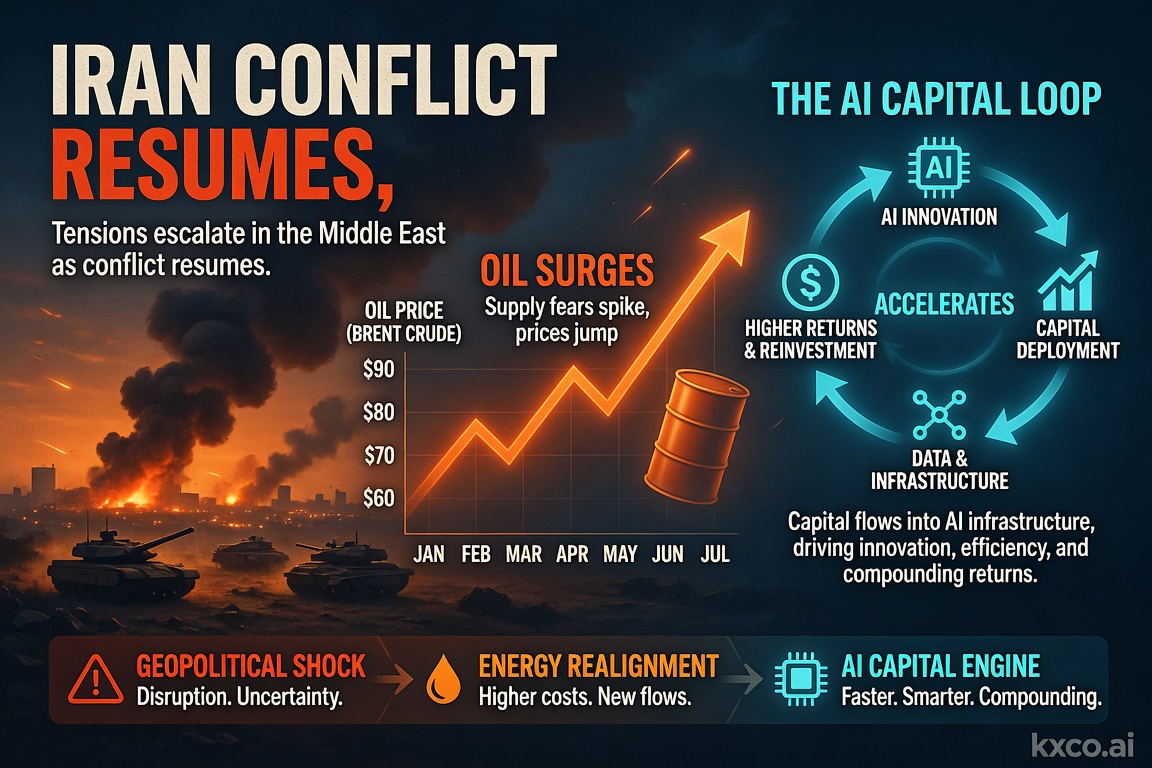
Economic Calendar and Trading Strategies for the Week Ahead: July 14–18, 2026
A pivotal week for markets: US strikes on Iran reignite the oil risk premium, June CPI and retail sales test the Fed's rate-cut path, and the $1 trillion AI capital loop keeps driving the tech trade. Full economic calendar plus trading strategies across oil, gold, Bitcoin, FX and AI stocks.
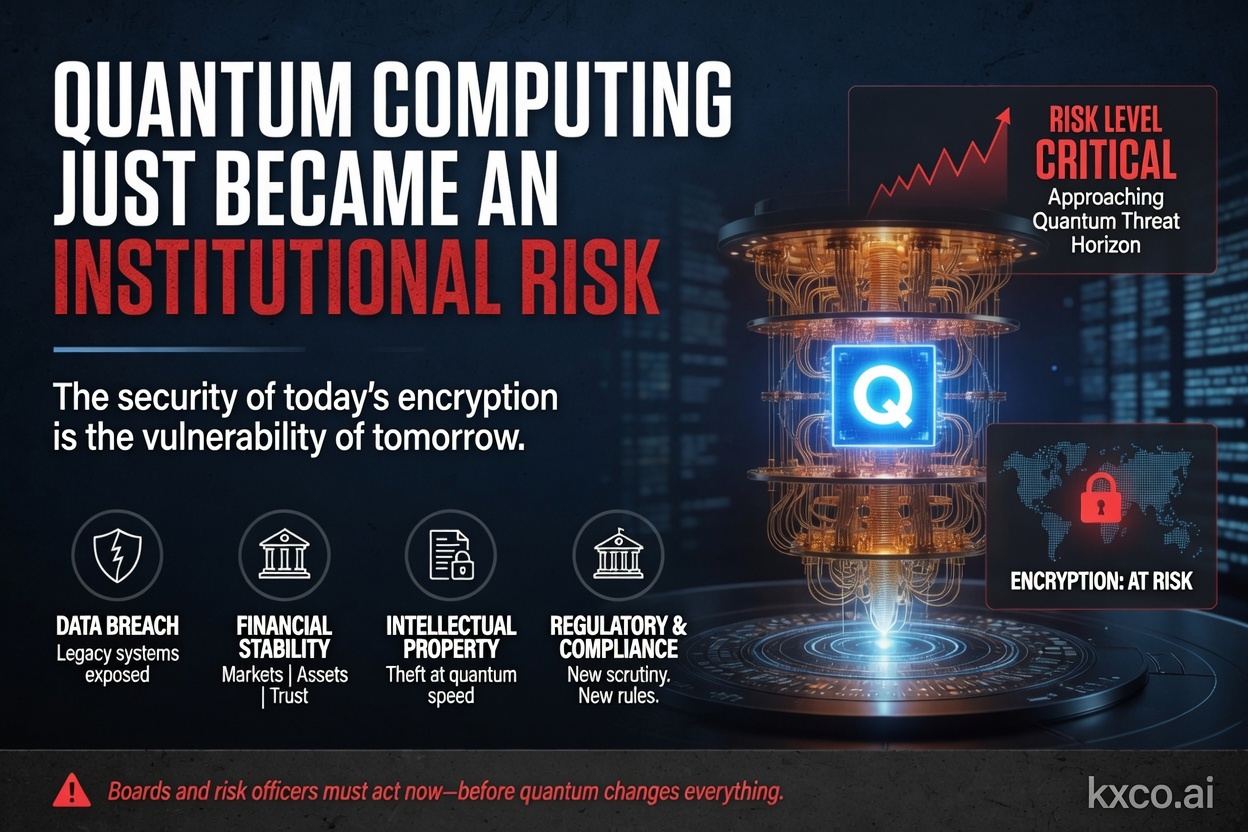
Quantum Computing Just Became an Institutional Risk
Shayne Heffernan on BlackRock's quantum-computing warning for Bitcoin and Ethereum, Google's cryptanalysis research, the two on-chain risk vectors, and how KXCO's Armature L1 — post-quantum from genesis, coordinated by its ontology — answers a threat that just went institutional.
Quantum, AI and the Trust Problem Markets Aren't Pricing
Quantum computing and AI agents are usually traded as separate stories. They are one story, and it is about trust. Shayne Heffernan on why the financial system needs verifiable infrastructure before the volume of machine transactions makes retrofitting impossible.
Every story, signed and delivered.
Subscribe to the kxco channel and get the headline, the AI-written key takeaways, and the chain-anchor link the moment we publish. Audio versions and per-ticker subscriptions arrive in the next iteration.