
COVID-19 Increased Investment in Digital Transformation
- 45% of US business leaders are planning a deal in the next 12 months amid a significant deal market comeback.
- US business leaders say COVID-19 increased investment in digital transformation (76%), workforce management (74%) and customer engagement (73%).
The year 2020 not only tested a decade's worth of tech-fueled investment and deal-making but also stressed business models, value chains and portfolio holdings.
With most businesses adopting a digital-first mindset, many executives thought they were in fifth gear and innovating to meet customer demand — now they realize there's a sixth gear driving transformation. These findings are reflected in the 23rd Ernst & Young LLP (EY US) US Global Capital Confidence Barometer (CCB), which indicates US business leaders' need for resiliency and growth in 2021.
COVID-19 accelerated digitization. Where there was some fatigue prior to the emergence of the pandemic, 76% of US business leaders now plan to increase digital investments as a part of their 2021 strategy. In addition, 73% are increasing spend on customer engagement and 74% plan to invest in workforce management.
Interestingly, most US companies appeared confident that their pandemic response outperformed competitors, specifically around digital transformation (79%). Meanwhile, leaders compared themselves less favorably in terms of operational stability (67%) and workforce management (22%).
"US business leaders are consistently shifting from damage control to ambitious, forward-looking growth," said Bill Casey, EY Americas Vice Chair, Strategy and Transactions. "Everyone is grappling with what changes are permanent and which are temporary, but it's clear that digital investment is a necessity. Executives are doubling down on their ability to connect revenue sources more tightly to business, employees to employees, and customers to customers. And many will test the waters of M&A to achieve those digital ambitions."
He added, "Much has been made about looking upstream at supply chains. What we really need to do is also look downstream to comprehend the entire value chain, to get close to the customer and prepare for the next crisis preemptively."
M&A remains a popular mechanism for business transformation
Companies continue to view M&A as an accelerant to strategic transformation, even in an uncertain environment. The CCB found that 45% of US business leaders expect to pursue M&A in the next 12 months. Though that figure is slightly below the Barometer's historical average, it remains relevant given the precipitous drop in M&A in 2020 and the turmoil of the last deal market cycles. More than half of respondents (55%) accelerated portfolio reviews in the wake of the pandemic, which will likely produce more investment and divestment. This suggests a busy 2021 for corporate strategy, as businesses apply the lessons learned in 2020 to both organic and inorganic growth.
"There has never been a better time to have access to investor capital," Casey observed.
Looking ahead, transformative and bolt-on deals (both 31%) will likely underpin M&A activity in the near term, as well as those that improve operational capabilities (30%). Among US business leaders, 29% say the main strategic driver for M&A is sector convergence or growth into adjacent business activity.
In terms of geography, US business leaders are primarily looking at North America, with 42% anticipating the most growth and opportunities coming from the region in the next three years. With a focus on established markets, the US remains the preferred M&A investment destination among leaders, followed by Canada and the United Kingdom.
AI is the Neat Handwriting of the Illiterate
A model in the hands of someone who has read the filing and walked the plant is a clerk. The same model, speaking for someone who has done neither, is a disguise. On AI slop, phantom citations and factslop, why finish stopped being evidence of work, and the containment layer KXCO built so a machine cannot speak as the institution until a source is attached.
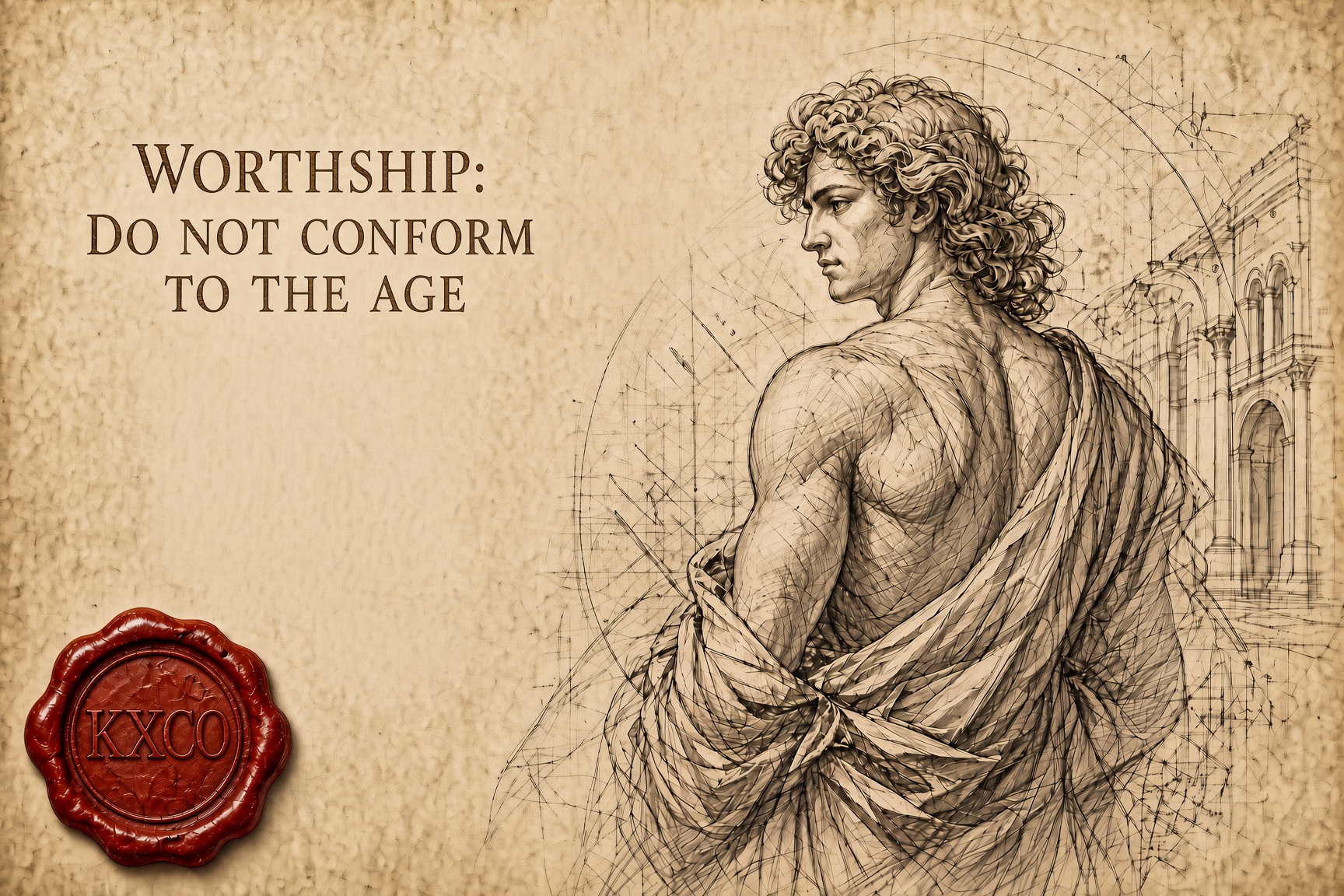
Worthship: Do Not Conform to the Age
Worthship is the older English word for worship, and it means to ascribe worth. Bishop Robert Barron preached Romans 12 on 30 August. This essay follows the text into the prison letters, and puts two questions to a graph: do the four readings of that Sunday agree, and was Paul free or in chains when he wrote about despair?
The Truth in All Its Ugliness Must Survive
A majority vote does not determine the truth. Consensus is a mood, gossip is a sport, and a model will write the pretty version for free. Why the ugly number has to survive, why a record beats a dashboard, and what KXCO was built to keep standing when the room changes its mind.

Don't Be the Best, Be the Only: Winning in an AI World
AI is repricing competence downward. What it cannot reproduce is a life. The case for remaining non-fungible, why friction still produces the best ideas, and what it means to build AI systems that keep the human intellect in them.
Every story, signed and delivered.
Subscribe to the kxco channel and get the headline, the AI-written key takeaways, and the chain-anchor link the moment we publish. Audio versions and per-ticker subscriptions arrive in the next iteration.