
China-U.S. Relations: A Path Forward for Mutual Prosperity $AAPL $TSLA $JPM $PFE
Chinese President Xi Jinping recently emphasized the pivotal role of collective efforts between China and the United States in fostering improved relations. These sentiments were expressed in response to a letter from Sarah Lande, an American friend from Iowa, highlighting the transformative journey of the bilateral relationship over the past 45 years.
A Blossoming Relationship
President Xi Jinping underscored the resilience and growth of China-U.S. ties, comparing them to a "towering tree" that has weathered numerous challenges to produce fruits of cooperation. He accentuated that the evolution and future trajectory of this relationship hinge significantly on the collaboration and understanding between the people of both nations.
Xi Jinping's emphasis on youth engagement signifies a strategic move to bolster understanding and friendship between the two countries. By inviting 50,000 young Americans for exchange and study programs over the next five years, China aims to foster firsthand experiences and build bridges of affinity. This initiative aligns with the Chinese proverb, "Read 10,000 books and travel 10,000 miles," emphasizing experiential learning and cultural immersion.
Mutual Benefits and Global Stability
Recognizing the contrasting developmental stages of China and the U.S.—with China being the largest developing nation and the U.S. the largest developed nation—Xi Jinping emphasized the global significance of stable and improved bilateral relations. He reiterated China's commitment to collaborating with the U.S. to ensure steady, sound, and sustainable development. Such collaboration aims to benefit both nations while contributing positively to the international community's welfare and fostering a world characterized by peace, security, prosperity, openness, and inclusiveness.
Stocks Poised to Benefit from Improved China-U.S. Relations
Improved relations between China and the U.S. could have ripple effects across various sectors. Here's a table highlighting some stocks that stand to benefit:
Sector
U.S. Stocks
Chinese Stocks
Technology
Apple Inc. (AAPL)
Alibaba Group (BABA)
Renewable Energy
Tesla Inc. (TSLA)
CATL (300750.SZ)
Financials
JPMorgan Chase (JPM)
Industrial & Commercial Bank of China (ICBC)
Healthcare
Pfizer Inc. (PFE)
Jiangsu Hengrui Medicine (600276.SS)
Conclusion
President Xi Jinping's remarks underscore the mutual benefits and global implications of a strengthened China-U.S. relationship. As both nations collaborate and foster understanding, various sectors, from technology to healthcare, stand to benefit. While challenges remain, the shared commitment to mutual prosperity offers hope for a harmonious future characterized by cooperation and shared growth.
AI is the Neat Handwriting of the Illiterate
A model in the hands of someone who has read the filing and walked the plant is a clerk. The same model, speaking for someone who has done neither, is a disguise. On AI slop, phantom citations and factslop, why finish stopped being evidence of work, and the containment layer KXCO built so a machine cannot speak as the institution until a source is attached.
Worthship: Do Not Conform to the Age
Worthship is the older English word for worship, and it means to ascribe worth. Bishop Robert Barron preached Romans 12 on 30 August. This essay follows the text into the prison letters, and puts two questions to a graph: do the four readings of that Sunday agree, and was Paul free or in chains when he wrote about despair?
The Truth in All Its Ugliness Must Survive
A majority vote does not determine the truth. Consensus is a mood, gossip is a sport, and a model will write the pretty version for free. Why the ugly number has to survive, why a record beats a dashboard, and what KXCO was built to keep standing when the room changes its mind.
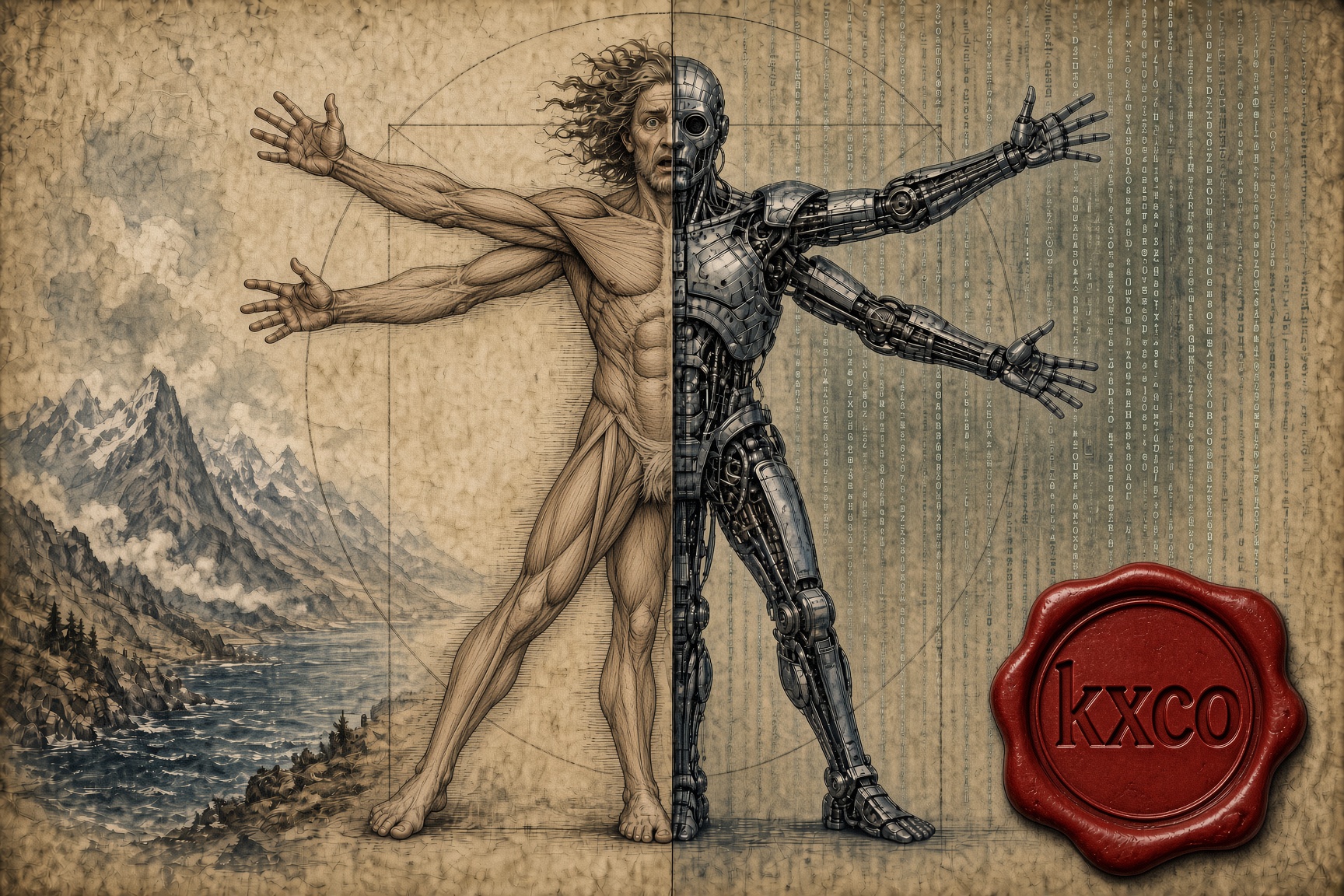
Don't Be the Best, Be the Only: Winning in an AI World
AI is repricing competence downward. What it cannot reproduce is a life. The case for remaining non-fungible, why friction still produces the best ideas, and what it means to build AI systems that keep the human intellect in them.
Every story, signed and delivered.
Subscribe to the kxco channel and get the headline, the AI-written key takeaways, and the chain-anchor link the moment we publish. Audio versions and per-ticker subscriptions arrive in the next iteration.