
China Telecom, China Mobile and China Unicom Rally as Expected
The New York Stock Exchange abandoned plans to delist three state-owned Chinese telecom companies on Monday, reversing a decision that further dented already strained relations between the world's two superpowers.
In a brief statement, the stock exchange said it "no longer intends to move forward with the delisting action" for China Telecom, China Mobile and China Unicom.
No detailed reason was given for the sudden reversal but the exchange said it came after "further consultation with relevant regulatory authorities".
Shares in the three state-owned telecoms firms jumped on the news.
In Hong Kong trading on Tuesday morning, China Unicom lept eight percent, while China Mobile and China Telecom each rose more than six percent.
The reversal comes just four days after the NYSE said it was ending trading in the companies to comply with an order by the Trump administration barring investment in firms with ties to the Chinese military.
Donald Trump signed an executive order in November banning Americans from investing in Chinese companies deemed to be supplying or supporting the country's military and security apparatus, earning a sharp rebuke from Beijing.
The order listed 31 companies it said China was using for the "increasing exploitation" of US investment capital to fund military and intelligence services, including the development and deployment of weapons of mass destruction.
It was one of a series of executive orders and regulatory actions that have targeted China's economic and military expansion in recent months.
Trump's order prohibits US companies and individuals from owning shares in any of the companies, which also include video surveillance firm Hikvision and China Railway Construction Corp.
National Security Advisor Robert O'Brien said at the time the order would prevent Americans from unknowingly providing passive capital to Chinese companies -- listed on exchanges around the world -- that support the improvement of Beijing's army and spy agencies.
Under his "America First" banner, Trump has portrayed China as the greatest threat to the United States and global democracy, pursued a trade war with it, harangued Chinese tech firms, and laid all the blame for the coronavirus pandemic at Beijing's door.
China had criticised the moves to delist its companies and threatened countermeasures.
AI is the Neat Handwriting of the Illiterate
A model in the hands of someone who has read the filing and walked the plant is a clerk. The same model, speaking for someone who has done neither, is a disguise. On AI slop, phantom citations and factslop, why finish stopped being evidence of work, and the containment layer KXCO built so a machine cannot speak as the institution until a source is attached.
Worthship: Do Not Conform to the Age
Worthship is the older English word for worship, and it means to ascribe worth. Bishop Robert Barron preached Romans 12 on 30 August. This essay follows the text into the prison letters, and puts two questions to a graph: do the four readings of that Sunday agree, and was Paul free or in chains when he wrote about despair?
The Truth in All Its Ugliness Must Survive
A majority vote does not determine the truth. Consensus is a mood, gossip is a sport, and a model will write the pretty version for free. Why the ugly number has to survive, why a record beats a dashboard, and what KXCO was built to keep standing when the room changes its mind.
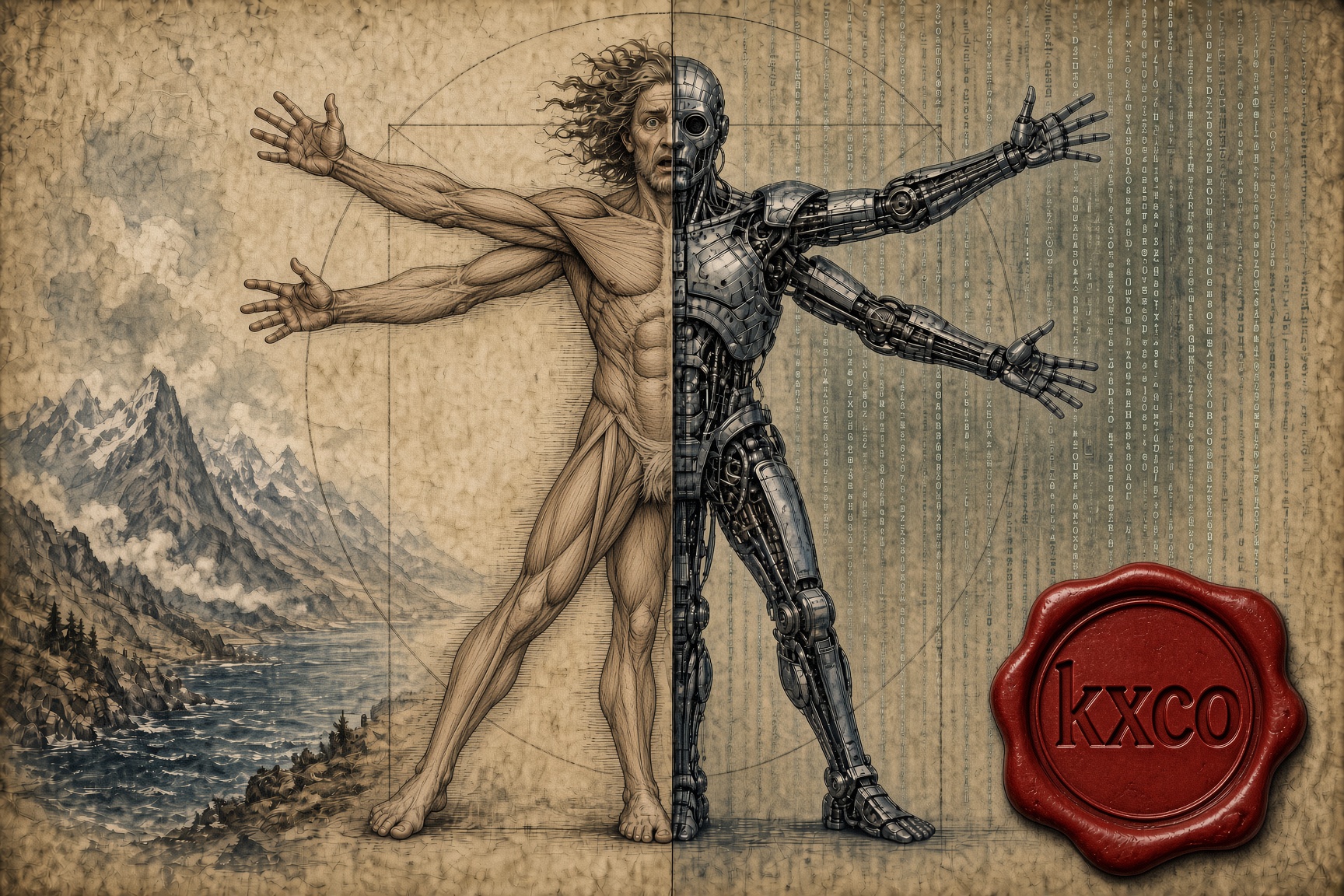
Don't Be the Best, Be the Only: Winning in an AI World
AI is repricing competence downward. What it cannot reproduce is a life. The case for remaining non-fungible, why friction still produces the best ideas, and what it means to build AI systems that keep the human intellect in them.
Every story, signed and delivered.
Subscribe to the kxco channel and get the headline, the AI-written key takeaways, and the chain-anchor link the moment we publish. Audio versions and per-ticker subscriptions arrive in the next iteration.