
China Protests Victory
Cities across China further unwound Covid restrictions Friday, loosening testing and quarantine rules in the wake of nationwide protests calling for an end to lockdowns and greater political freedoms.
Anger and frustration with China's hardline pandemic response spilled out onto the streets last weekend in widespread demonstrations not seen in decades.
In the wake of the unrest across China, a number of cities have begun loosening Covid restrictions, such as moving away from daily mass testing requirements, a tedious mainstay of life under Beijing's stringent zero-Covid policy.
At the same time, authorities are continuing to seek to contain protests with heavy security on the streets, online censorship in full force, and surveillance of the population heightened.
As of Friday, the southwestern metropolis of Chengdu will no longer require a recent negative test result to enter public places or ride the metro, instead only requiring a green health code confirming they have not travelled to a "high risk" area.
In Beijing, health authorities called on Thursday on hospitals not to deny treatment to people without a negative PCR test taken within 48 hours.
In January, a pregnant woman in the city of Xi'an miscarried after being refused hospital entry for not having a PCR test result.
China has seen a string of deaths after treatment was delayed by Covid restrictions, including the recent death of a four-month-old baby who was stuck in quarantine with her father.
Those cases became a rallying cry during the protests, with a viral post listing the names of those who died because of alleged negligence linked to the pandemic response.
Many other cities with virus outbreaks are allowing restaurants, shopping malls and even schools to reopen, in a clear departure from previous tough lockdown rules.
In northwestern Urumqi, where a fire that killed ten people was the spark for the anti-lockdown protests, authorities announced Friday that supermarkets, hotels, restaurants, and ski resorts would gradually be opened.
The city of over four million residents endured one of China's longest lockdowns, with some areas shut in early August.
- Home quarantine -
An analysis by state-run newspaper People's Daily on Friday quoted a number of health experts supporting local government moves to allow positive cases to quarantine at home.
The shift would be a marked departure from current rules, which require that they be held in government facilities.
The southern factory hub of Dongguan Thursday said that those who meet "specific conditions" should be allowed to quarantine at home. It did not specify what those conditions would be.
The southern tech hub Shenzhen rolled out a similar policy Wednesday.
Central government officials have also signalled that a broader relaxation of zero-Covid policy could be in the works.
Speaking at the National Health Commission Wednesday, Vice Premier Sun Chunlan said the Omicron variant was weakening and vaccination rates were improving, according to the state-run Xinhua news agency.
A central figure behind Beijing's pandemic response, Sun said this "new situation" required "new tasks".
She made no mention of zero-Covid in those remarks or in another meeting on Thursday, suggesting the approach, that has disrupted the economy and daily life, might soon be relaxed.
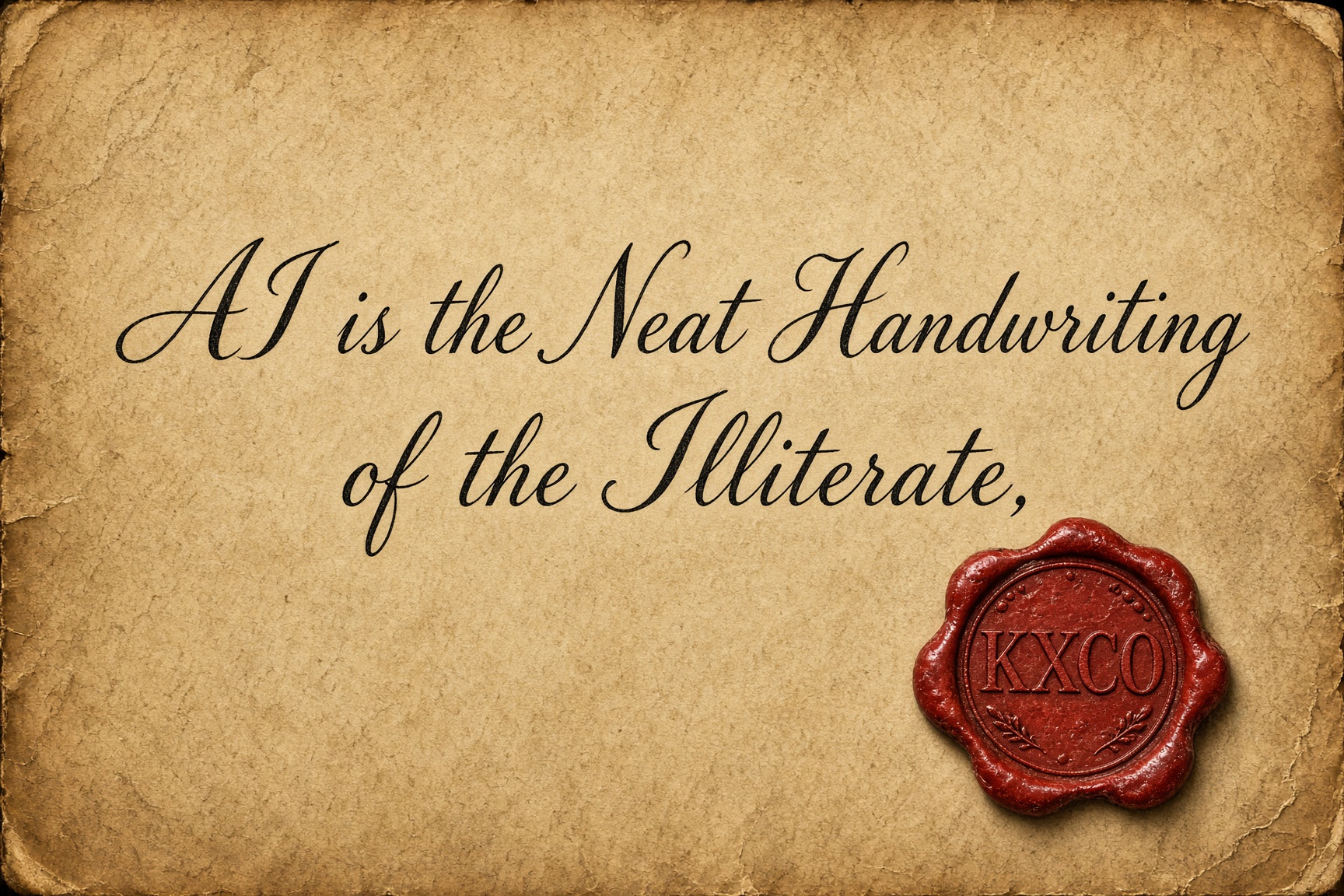
AI is the Neat Handwriting of the Illiterate
A model in the hands of someone who has read the filing and walked the plant is a clerk. The same model, speaking for someone who has done neither, is a disguise. On AI slop, phantom citations and factslop, why finish stopped being evidence of work, and the containment layer KXCO built so a machine cannot speak as the institution until a source is attached.
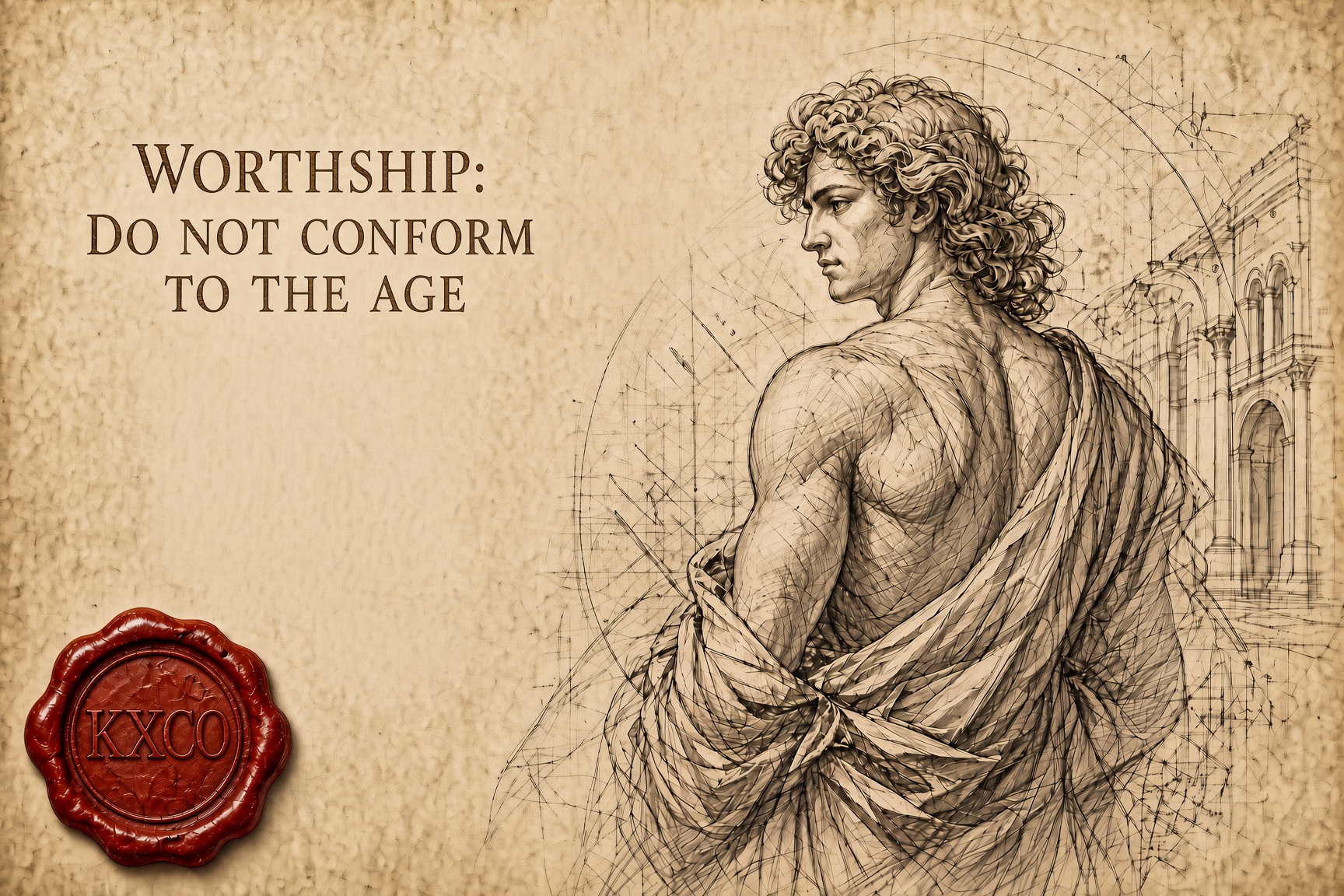
Worthship: Do Not Conform to the Age
Worthship is the older English word for worship, and it means to ascribe worth. Bishop Robert Barron preached Romans 12 on 30 August. This essay follows the text into the prison letters, and puts two questions to a graph: do the four readings of that Sunday agree, and was Paul free or in chains when he wrote about despair?
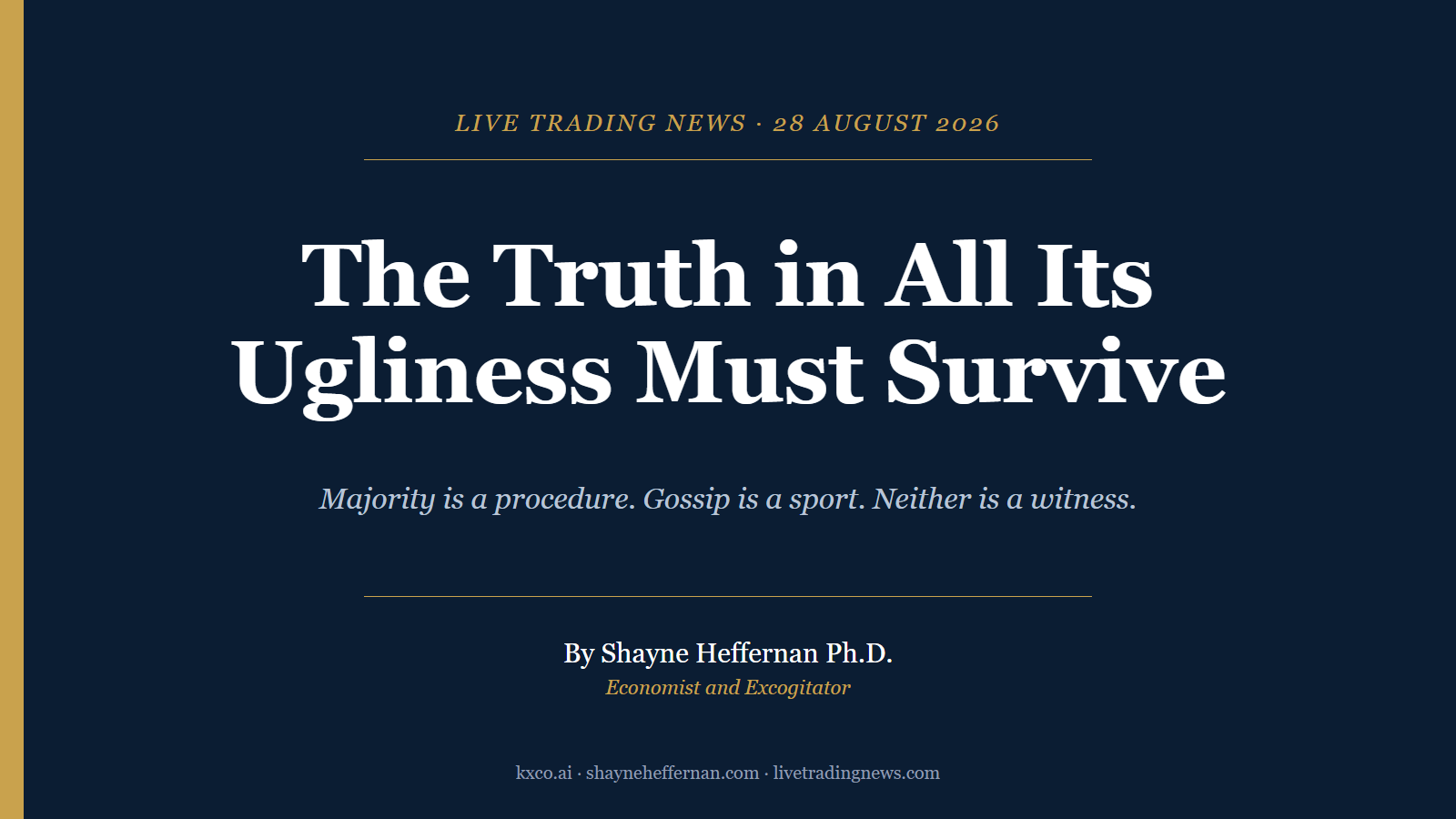
The Truth in All Its Ugliness Must Survive
A majority vote does not determine the truth. Consensus is a mood, gossip is a sport, and a model will write the pretty version for free. Why the ugly number has to survive, why a record beats a dashboard, and what KXCO was built to keep standing when the room changes its mind.

Don't Be the Best, Be the Only: Winning in an AI World
AI is repricing competence downward. What it cannot reproduce is a life. The case for remaining non-fungible, why friction still produces the best ideas, and what it means to build AI systems that keep the human intellect in them.
Every story, signed and delivered.
Subscribe to the kxco channel and get the headline, the AI-written key takeaways, and the chain-anchor link the moment we publish. Audio versions and per-ticker subscriptions arrive in the next iteration.