
China downgrades COVID-19
China put its downgraded COVID-19 measures into force on Sunday as the nation began to resume normal life after three years of strict pandemic management.
The nation reopened its border ports for cargo transportation as well as inbound and outbound visitors. It also resumed services for Chinese citizens to apply for passports and visas for business and recreation.
Quarantine and on-site COVID-19 tests for the inbound visitors were scrapped, as well as preventative disinfection on imported goods and sampling inspection on cold-chain food.
The country will no longer enforce quarantine measures or mass COVID-19 tests. Practices of identifying close contacts or designating high- and low-risk areas have also discontinued.

Policy changes
China downgraded management of COVID-19 from Class A to Class B and removed it from quarantinable infectious disease management following an array of recent policy shifts regarding the virus, as the nation hit a full vaccination rate of over 90 percent and the COVID-19 virus exhibited less severity.
During the pandemic, COVID-19 was classified as a Class-B infectious disease but was subject to the preventive and control measures for a Class-A infectious disease in China, coming with stringent policies such as quarantine and frequent epidemiological surveys.
China has categorized 40 notifiable infectious diseases in three classes (Class A, Class B and Class C). Plague and cholera are listed as Class A infectious diseases. SARS, AIDS and tuberculosis are among the Class B infectious diseases. Class C infectious diseases include influenza and mumps.
An infectious disease is categorized based on a comprehensive assessment of multiple factors including pathogen characteristics, symptoms, how far and fast it can spread, how much it harms health, its social and economic influence, as well as group immunity and health system capability, according to Liang Wannian, head of the COVID-19 response expert panel under China's National Health Commission (NHC).
"At the outbreak of the pandemic, we categorized COVID-19 as a Class B disease but applied Class A management because of its rapid spread," said Liang, adding that they didn't know much about the disease at the beginning, and such management was needed to protect people.
Liang explained some key conditions have changed recently including the less deadly virus mutation, high vaccination rate and the country's growing epidemic response support, all of which built a great foundation to make new adjustments.
"We are ready to downgrade it to Class B management to respond to the infections in a more precise, scientific manner," said Liang.
The expert also stressed that the downgraded management doesn't mean the country has no control on or has stopped all preventative measures against the virus.
"It means we are stepping up our health services and epidemic response capability," said Liang.
China renamed the Chinese term for COVID-19 in December from "novel coronavirus pneumonia" to "novel coronavirus infection" to more accurately describe the disease.
Stepped-up COVID-19 response
The NHC released its 10th edition of the guidelines for COVID-19 infection prevention and control on Saturday, emphasizing the importance of boosting vaccination among high risk groups such as the elderly.
It reinforced monitoring and early warning capabilities, including regular monitoring on virus mutation, unknown pneumonia, urban wastewater, hospitals and extra steps in emergency such as monitoring among key groups.
Communities will no longer go through mass COVID-19 tests, which will be provided for those who require them.
"For now, medical treatment for severe cases is our priority," said Liang. He said further boosting vaccination, virus monitoring and suburb healthcare capability are of great importance.
"For any contagious disease like this, it's not enough to only depend on the government," Liang said, "it depends on the synergy coming from the government, society, all the organizations and each one of us."
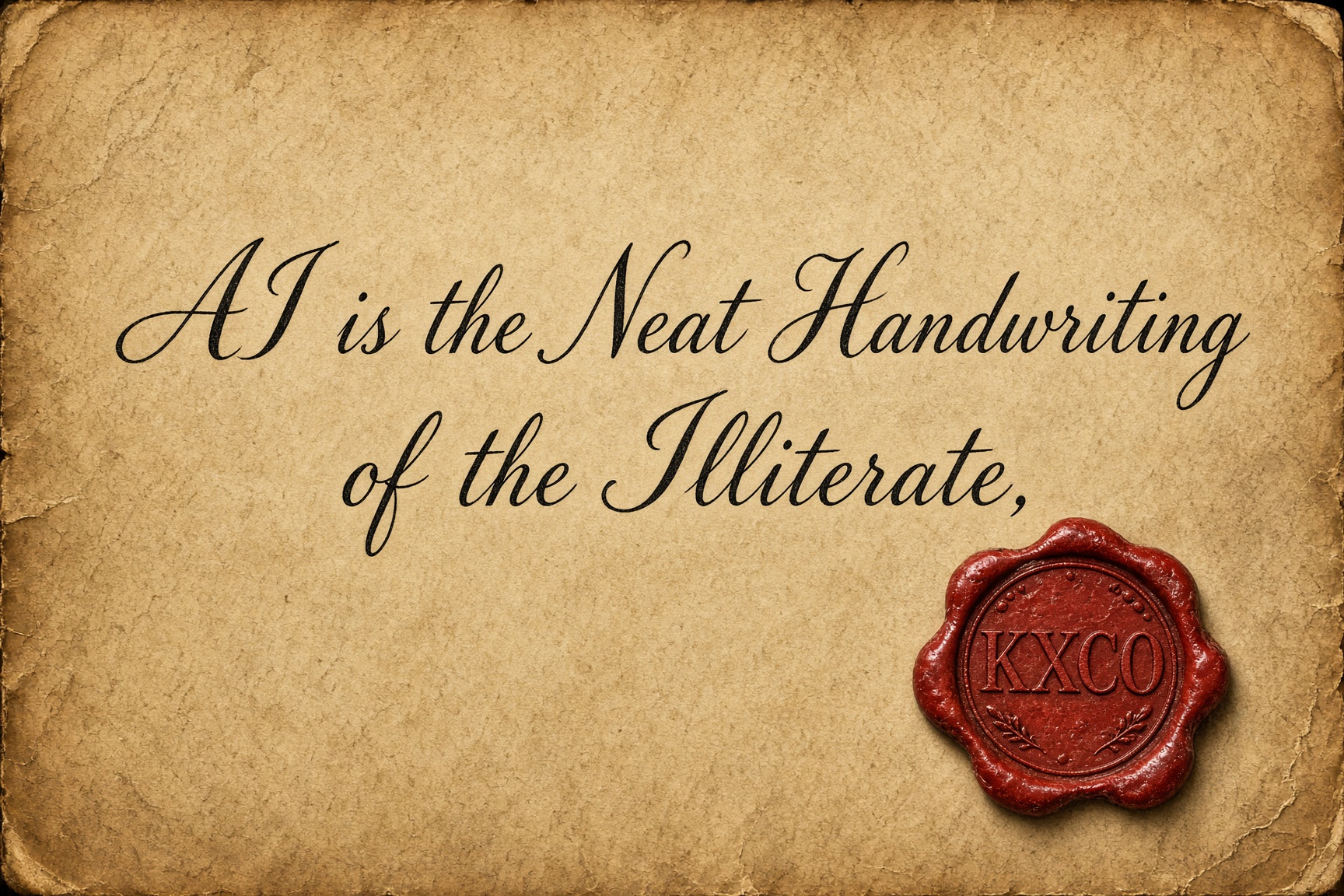
AI is the Neat Handwriting of the Illiterate
A model in the hands of someone who has read the filing and walked the plant is a clerk. The same model, speaking for someone who has done neither, is a disguise. On AI slop, phantom citations and factslop, why finish stopped being evidence of work, and the containment layer KXCO built so a machine cannot speak as the institution until a source is attached.

Worthship: Do Not Conform to the Age
Worthship is the older English word for worship, and it means to ascribe worth. Bishop Robert Barron preached Romans 12 on 30 August. This essay follows the text into the prison letters, and puts two questions to a graph: do the four readings of that Sunday agree, and was Paul free or in chains when he wrote about despair?
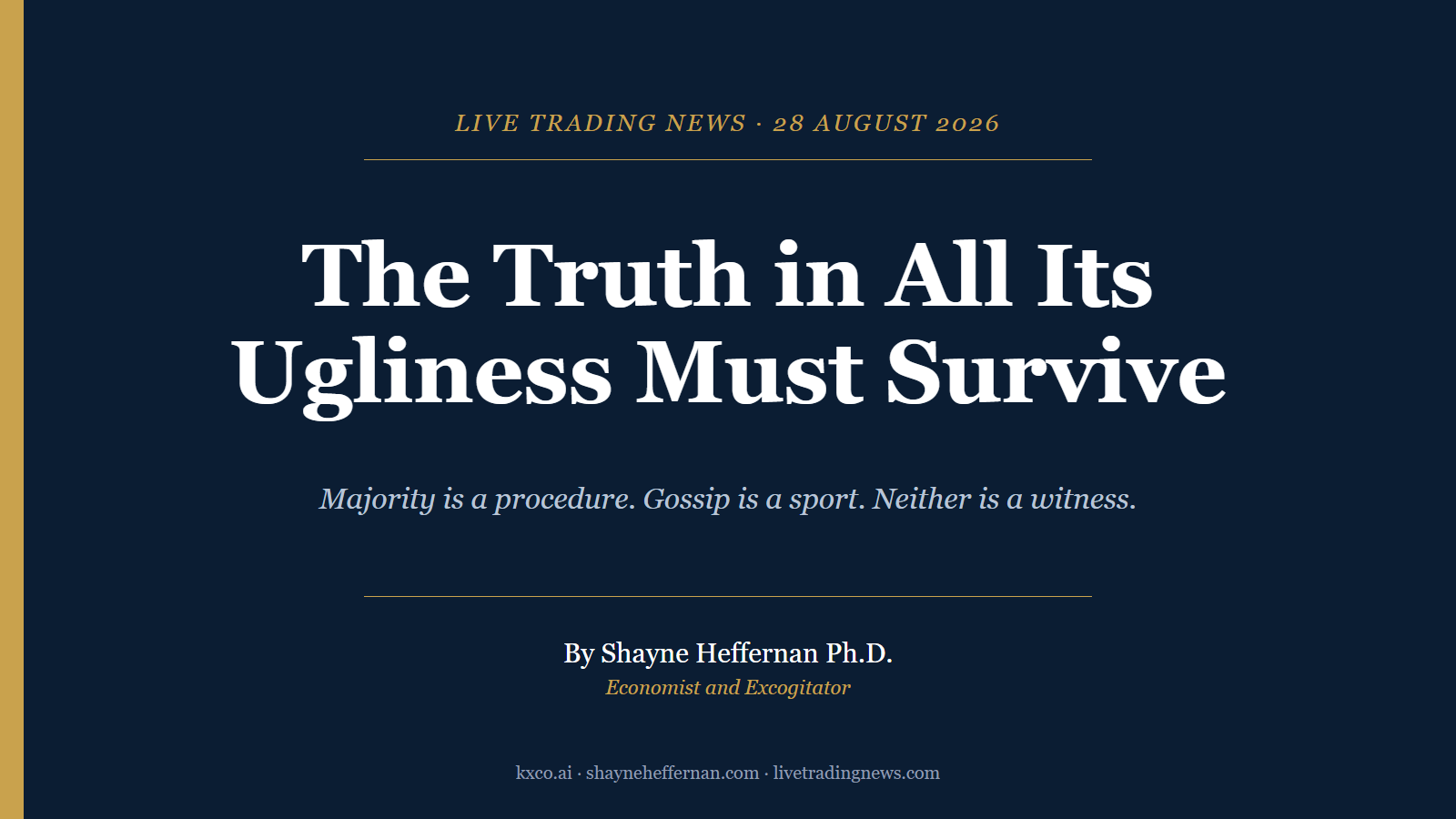
The Truth in All Its Ugliness Must Survive
A majority vote does not determine the truth. Consensus is a mood, gossip is a sport, and a model will write the pretty version for free. Why the ugly number has to survive, why a record beats a dashboard, and what KXCO was built to keep standing when the room changes its mind.

Don't Be the Best, Be the Only: Winning in an AI World
AI is repricing competence downward. What it cannot reproduce is a life. The case for remaining non-fungible, why friction still produces the best ideas, and what it means to build AI systems that keep the human intellect in them.
Every story, signed and delivered.
Subscribe to the kxco channel and get the headline, the AI-written key takeaways, and the chain-anchor link the moment we publish. Audio versions and per-ticker subscriptions arrive in the next iteration.