
China Continues to Grow
With the conviction that openness is the way to growth and wealth, Chinese President Xi Jinping has called on China and the rest of the world to expand cooperation and build a community with a shared future for mankind.
While attending the APEC CEO Summit in Bali, Indonesia back in November 2013, the Chinese president quoted a time-honored saying to express the country's firm determination to reform and open up its economy and enhance cooperation with the rest of the world.
"China will commit itself to building a cross-Pacific regional cooperation framework that benefits all parties. The vast Pacific is free of natural barriers, and we should not erect any man-made ones. 'Boundless is the ocean where we sail with the wind,'" Xi said, quoting a line from a Chinese poem written 1,000 years ago.
The remarkable changes that resulted from China's 1978 reform and opening-up policy testify to the great value of the conviction that openness is the way to growth and wealth.
Guided by the policy, the country has been transformed from a largely agricultural nation to the second largest economy in the world.
China's total imports and exports of goods expanded 1.9 percent year on year to 32.16 trillion yuan (about 4.97 trillion U.S. dollars) in 2020.
China also joined the ranks of the world's top 10 most improved economies for ease of doing business for the second year in a row thanks to a robust reform agenda, according to a World Bank study report for 2020.
Meanwhile, China has signed cooperation agreements with 140 countries and 31 international organizations under the Belt and Road Initiative (BRI), since it was initiated in 2013.
As China embarks on a new journey toward socialist modernization via the 14th Five-Year Plan (2021-2025), opening up remains crucial to the country's new roadmap.
China now has 21 pilot free trade zones (FTZs), after unveiling three new FTZs last year. It also signed the Regional Comprehensive Economic Partnership agreement, which is set to be the world's biggest free trade bloc.
President Xi has previously pledged that "China's door of opening-up will not be closed and will only open even wider," signaling the clear intent for greater global cooperation.
AI is the Neat Handwriting of the Illiterate
A model in the hands of someone who has read the filing and walked the plant is a clerk. The same model, speaking for someone who has done neither, is a disguise. On AI slop, phantom citations and factslop, why finish stopped being evidence of work, and the containment layer KXCO built so a machine cannot speak as the institution until a source is attached.
Worthship: Do Not Conform to the Age
Worthship is the older English word for worship, and it means to ascribe worth. Bishop Robert Barron preached Romans 12 on 30 August. This essay follows the text into the prison letters, and puts two questions to a graph: do the four readings of that Sunday agree, and was Paul free or in chains when he wrote about despair?
The Truth in All Its Ugliness Must Survive
A majority vote does not determine the truth. Consensus is a mood, gossip is a sport, and a model will write the pretty version for free. Why the ugly number has to survive, why a record beats a dashboard, and what KXCO was built to keep standing when the room changes its mind.
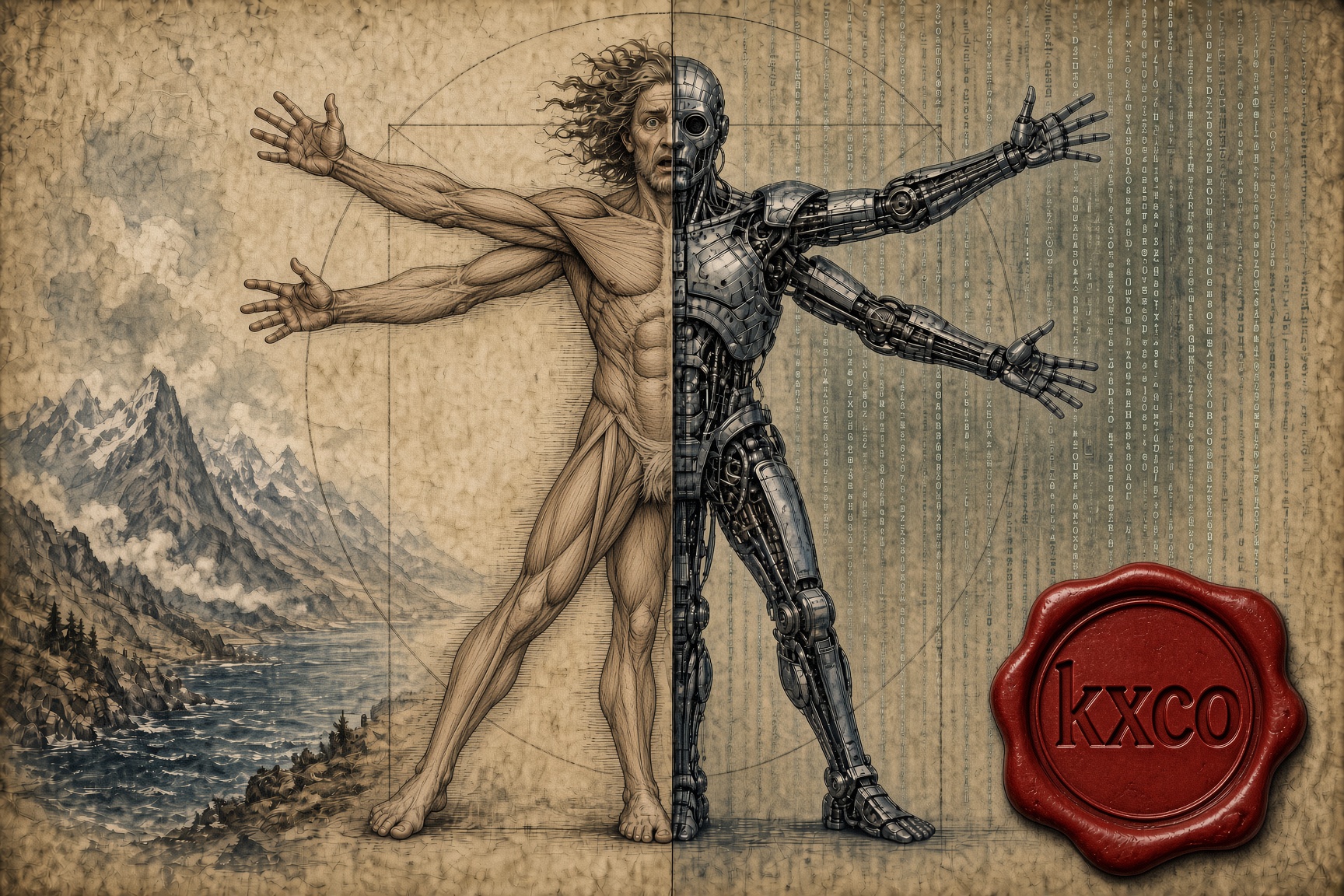
Don't Be the Best, Be the Only: Winning in an AI World
AI is repricing competence downward. What it cannot reproduce is a life. The case for remaining non-fungible, why friction still produces the best ideas, and what it means to build AI systems that keep the human intellect in them.
Every story, signed and delivered.
Subscribe to the kxco channel and get the headline, the AI-written key takeaways, and the chain-anchor link the moment we publish. Audio versions and per-ticker subscriptions arrive in the next iteration.