
China Continues Economic Rebound
China's consumer inflation eased while factory-gate prices rebounded in January, official data showed Wednesday.
The country's consumer price index (CPI), a main gauge of inflation, declined 0.3 percent year on year in January, compared with a 0.2-percent increase in December last year, the National Bureau of Statistics (NBS) said.
Food prices increased 1.6 percent year on year last month, up 0.4 percentage points from December and contributing about 0.3 percentage points to the CPI increase, said Dong Lijuan, a senior statistician with the NBS.
China saw a CPI hike in January 2020, which was mainly driven by the effect of the Spring Festival holiday.
Dong said the relatively high base was the main factor that dragged the country's CPI into negative territory last month.
In breakdown, prices of vegetables climbed 10.9 percent in January from a year earlier, while those of pork, chicken and duck declined 3.9 percent, 10.7 percent and 6.8 percent year on year, respectively.
Excluding food and energy, the core CPI declined 0.3 percent year on year, which was mainly due to a decrease in service prices.
On a monthly basis, the CPI edged up 1 percent, expanding 0.3 percentage points from a month earlier.
Dong attributed the increase to the coming Spring Festival, local epidemic situation and low temperatures, among other factors.
Wen Bin, a chief analyst at China Minsheng Bank, said in a co-authored research note that there is no need to read too much into the negative growth of January's CPI.
As the impact of the COVID-19 epidemic fades out and domestic demand rebounds, tourism, catering and accommodation sectors will recover and prices in those sectors will rise, said Wen.
Wednesday's data also showed China's producer prices, which measure costs for goods at the factory gate, rose 0.3 percent year on year in January amid a steady recovery in domestic demand.
AI is the Neat Handwriting of the Illiterate
A model in the hands of someone who has read the filing and walked the plant is a clerk. The same model, speaking for someone who has done neither, is a disguise. On AI slop, phantom citations and factslop, why finish stopped being evidence of work, and the containment layer KXCO built so a machine cannot speak as the institution until a source is attached.
Worthship: Do Not Conform to the Age
Worthship is the older English word for worship, and it means to ascribe worth. Bishop Robert Barron preached Romans 12 on 30 August. This essay follows the text into the prison letters, and puts two questions to a graph: do the four readings of that Sunday agree, and was Paul free or in chains when he wrote about despair?
The Truth in All Its Ugliness Must Survive
A majority vote does not determine the truth. Consensus is a mood, gossip is a sport, and a model will write the pretty version for free. Why the ugly number has to survive, why a record beats a dashboard, and what KXCO was built to keep standing when the room changes its mind.
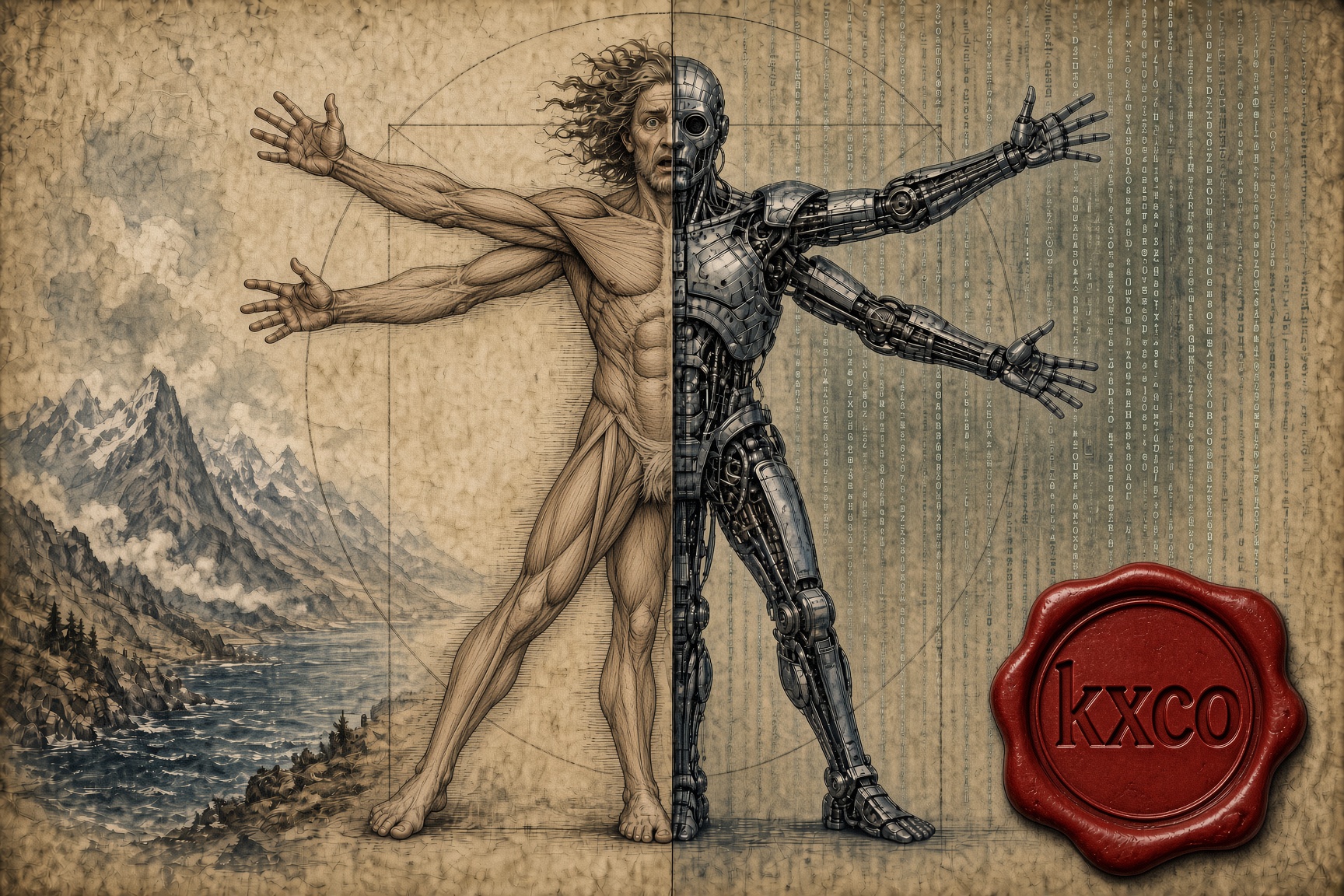
Don't Be the Best, Be the Only: Winning in an AI World
AI is repricing competence downward. What it cannot reproduce is a life. The case for remaining non-fungible, why friction still produces the best ideas, and what it means to build AI systems that keep the human intellect in them.
Every story, signed and delivered.
Subscribe to the kxco channel and get the headline, the AI-written key takeaways, and the chain-anchor link the moment we publish. Audio versions and per-ticker subscriptions arrive in the next iteration.