
China Addresses the Biden Administration
Chinese State Councilor and Foreign Minister Wang Yi on Monday called on U.S. policymakers to abandon biases, give up unwarranted suspicions, and move to bring the China policy back to reason to ensure a healthy and steady development of China-U.S. relations.
Wang made the remarks when delivering a speech at the opening of the Lanting Forum in Beijing, with the theme of "Promoting Dialogue and Cooperation and Managing Differences: Bringing China-U.S. Relations Back to the Right Track."
Fifty years ago, Dr. Henry Kissinger made the ice-breaking visit to China, and with extraordinary political resolve, leaders of China and the United States jointly reopened the door of interaction which had been closed for decades, Wang said.
However, in the past few years, China-U.S. relations deviated from the normal track, and ran into the biggest difficulties since the establishment of diplomatic ties, he said, adding that the root cause was that the previous U.S. administration, out of its own political needs, seriously distorted China's future path and policy, and on that basis, took various measures to suppress and contain China, which inflicted immeasurable damage to bilateral relations.
"Fifty years later today, we must, with the sense of responsibility for the two countries and the world, make once again the sensible and right decision," he said.
Noting that the presidents of the two countries had their first telephone call on the Lunar New Year's eve, Wang said the very important phone call has oriented China-U.S. relations that had been struggling to ascertain its bearings at a crossroads and sent out the first encouraging news of this spring for the two countries and the whole world.
Saying that the new U.S. administration is reviewing and assessing its foreign policy, he called on the U.S. side to abandon biases, give up unwarranted suspicions, and move to bring the China policy back to reason to ensure a healthy and steady development of China-U.S. relations.
The foreign minister said that it is important to respect each other and not to interfere in each other's internal affairs, saying that this is a basic norm governing international relations. Noting that China has all along respected the choices made by the American people, Wang said China has no intention to challenge or replace the United States and stands ready to have peaceful coexistence and seek common development with the United States.
"We hope the United States will respect China's core interests, national dignity, and rights to development. We urge the United States to stop smearing the Communist Party of China and China's political system, stop conniving at or even supporting the erroneous words and actions of separatist forces seeking 'Taiwan independence,' and stop undermining China's sovereignty and security through internal affairs concerning Hong Kong, Xinjiang and Tibet," he added.
He stressed the importance of stepping up dialogue and properly managing differences, saying that at present, both sides should follow up on the phone call between the two presidents on the eve of the Chinese New Year, act in the fundamental interests of the two peoples, take a forward-looking, open-minded and inclusive attitude and reactivate or establish dialogue mechanisms in various areas and at various levels.
"China is, as always, open to dialogue. We stand ready to have candid communication with the U.S. side, and engage in dialogue aimed at solving problems," Wang said.
He called on efforts to move in the same direction to restart mutually beneficial cooperation, saying that with regional hotspot issues and global challenges emerging one after another, areas for China-U.S. cooperation are expanding rather than shrinking, and the prospects for interaction are broadening rather than narrowing.
"We hope that the U.S. side will adjust its policies as soon as possible, among others, remove unreasonable tariffs on Chinese goods, lift its unilateral sanctions on Chinese companies and research and educational institutes, and abandon irrational suppression of China's technological progress, so as to create necessary conditions for China-U.S. cooperation," he said, adding that China is ready to coordinate policies and work with the United States in the three areas of COVID-19, climate change and world economic recovery.
Wang pointed out that it is important to clear the path for the resumption of bilateral exchanges in all areas, noting that China hopes the U.S. side will act as early as possible to lift its restrictions on Chinese educational and cultural groups, media outlets and institutions for overseas Chinese affairs in the United States, remove its barriers for U.S. subnational governments and social sectors to engage with China, and encourage and support the resumption of normal exchange programs between universities and research institutes.
"China is ready to work with the United States with an open mind to build a good environment for people-to-people exchanges," he said.
AI is the Neat Handwriting of the Illiterate
A model in the hands of someone who has read the filing and walked the plant is a clerk. The same model, speaking for someone who has done neither, is a disguise. On AI slop, phantom citations and factslop, why finish stopped being evidence of work, and the containment layer KXCO built so a machine cannot speak as the institution until a source is attached.
Worthship: Do Not Conform to the Age
Worthship is the older English word for worship, and it means to ascribe worth. Bishop Robert Barron preached Romans 12 on 30 August. This essay follows the text into the prison letters, and puts two questions to a graph: do the four readings of that Sunday agree, and was Paul free or in chains when he wrote about despair?
The Truth in All Its Ugliness Must Survive
A majority vote does not determine the truth. Consensus is a mood, gossip is a sport, and a model will write the pretty version for free. Why the ugly number has to survive, why a record beats a dashboard, and what KXCO was built to keep standing when the room changes its mind.
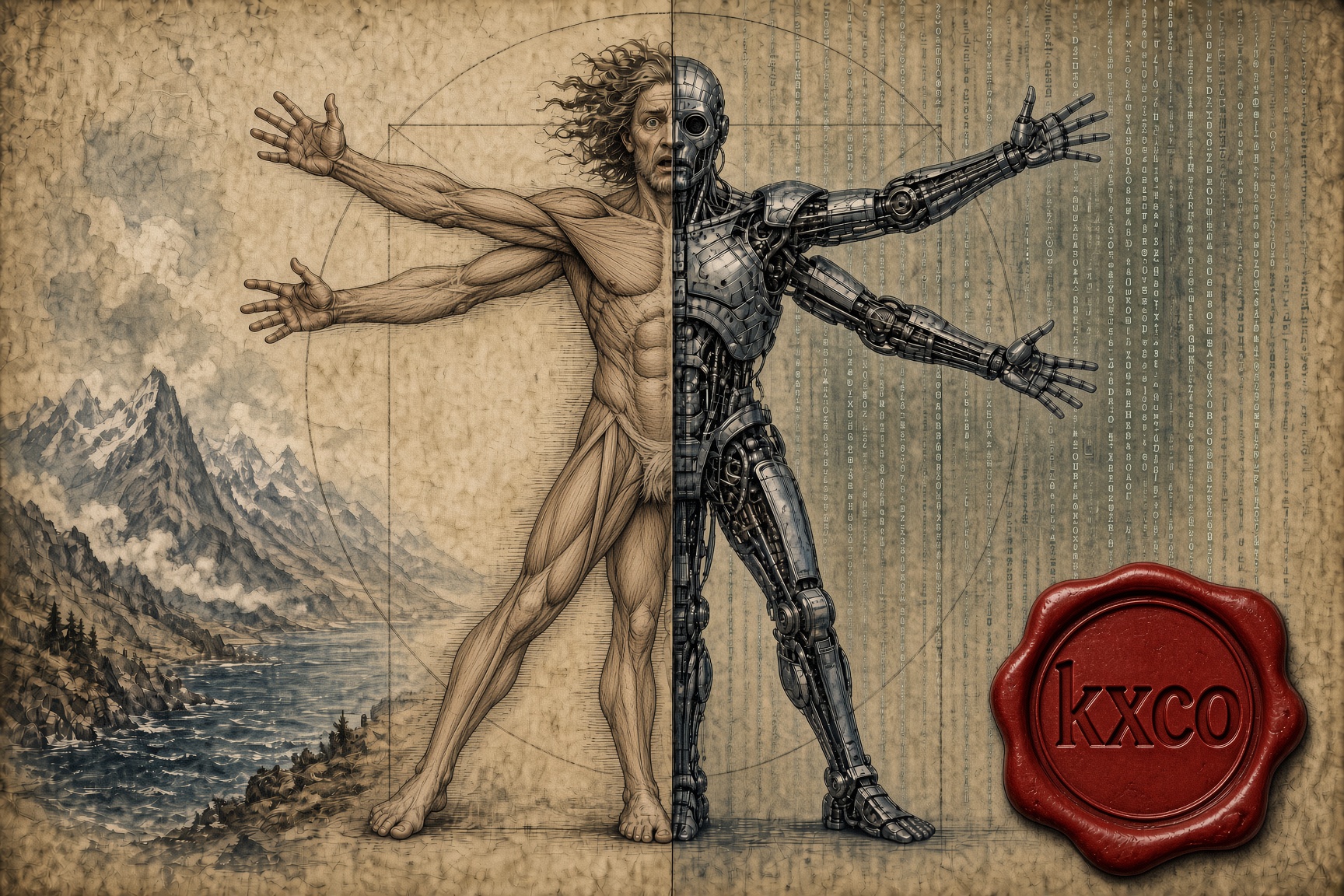
Don't Be the Best, Be the Only: Winning in an AI World
AI is repricing competence downward. What it cannot reproduce is a life. The case for remaining non-fungible, why friction still produces the best ideas, and what it means to build AI systems that keep the human intellect in them.
Every story, signed and delivered.
Subscribe to the kxco channel and get the headline, the AI-written key takeaways, and the chain-anchor link the moment we publish. Audio versions and per-ticker subscriptions arrive in the next iteration.