
Charles I of England: A Monarch's Magnificent Art Collection
Charles I of England, the ill-fated Stuart monarch whose reign witnessed civil unrest, political upheaval, and ultimately his own execution, is perhaps equally renowned for his exceptional art collection. His patronage of the arts transformed the royal collection into one of the most significant and extensive in European history. This article delves into the captivating world of Charles I's art collection, exploring its origins, key masterpieces, and enduring legacy.
The Origins of a Royal Passion
Charles I's passion for art was cultivated from a young age, influenced by his mother, Anne of Denmark, and his travels across Europe. Upon ascending to the throne in 1625, he embarked on an ambitious mission to assemble a world-class art collection that would rival those of his European counterparts. Collaborating with renowned artists, collectors, and dealers, Charles I's collection grew exponentially, encompassing masterpieces by revered artists such as Titian, Raphael, and Hans Holbein the Younger.
Highlights of the Collection
Van Dyck's Portraits
One of the most iconic aspects of Charles I's art collection is the series of portraits painted by Anthony van Dyck, the leading court painter of the era. Van Dyck's masterful portraits immortalized the Stuart court, capturing the regal splendor and grandeur of Charles I and his family. Notable works include the equestrian portrait of Charles I, showcasing the monarch in full armor, exuding authority and majesty.

Renaissance Masterpieces
Charles I's collection boasted an impressive array of Renaissance masterpieces, including works by Titian, Raphael, and Leonardo da Vinci. These exquisite paintings exemplified the Renaissance ideals of beauty, harmony, and humanism, reflecting Charles I's discerning taste and appreciation for classical art. The inclusion of such masterpieces further elevated the prestige and cultural significance of the royal collection.
The Mantegna Series
Among the crown jewels of Charles I's collection was a series of nine monumental paintings by the Italian Renaissance artist Andrea Mantegna, depicting the Triumph of Caesar. These awe-inspiring works, renowned for their intricate detail, innovative composition, and narrative richness, exemplified Charles I's penchant for grandiose and ambitious artworks. The Mantegna series remains a testament to the monarch's commitment to fostering artistic excellence and innovation.
The Sale of the Century: The Enduring Legacy
Following Charles I's execution in 1649 and the subsequent abolition of the monarchy, his magnificent art collection faced dispersal and sale, marking the end of an era in British art history. The sale of Charles I's collection, often referred to as the "sale of the century," attracted collectors, dealers, and connoisseurs from across Europe, dispersing many masterpieces to foreign shores.
The Commonwealth Sale
Under the Commonwealth period, Charles I's art collection was systematically sold to generate revenue and disperse the remnants of the Stuart dynasty's legacy. Despite the dispersal, many artworks found their way into prominent European collections, contributing to the broader dissemination of Renaissance art and culture.
The Restoration and Legacy
With the restoration of the monarchy in 1660, Charles II endeavored to reclaim and reassemble his father's dispersed art collection, commissioning replicas and acquiring new artworks to restore the royal collection's former glory. While many masterpieces remain scattered across the globe, Charles I's legacy endures, inspiring subsequent generations of collectors, scholars, and art enthusiasts.
Conclusion
Charles I of England's art collection stands as a testament to his enduring legacy as a patron of the arts and a connoisseur of unparalleled taste. Despite the dispersal and sale of many masterpieces, the enduring allure and significance of Charles I's collection resonate with art lovers worldwide. From Van Dyck's majestic portraits to Renaissance masterpieces, the art collection of Charles I remains a pivotal chapter in British art history, reflecting the monarch's passion, vision, and indelible impact on the cultural landscape of Europe.
AI is the Neat Handwriting of the Illiterate
A model in the hands of someone who has read the filing and walked the plant is a clerk. The same model, speaking for someone who has done neither, is a disguise. On AI slop, phantom citations and factslop, why finish stopped being evidence of work, and the containment layer KXCO built so a machine cannot speak as the institution until a source is attached.
Worthship: Do Not Conform to the Age
Worthship is the older English word for worship, and it means to ascribe worth. Bishop Robert Barron preached Romans 12 on 30 August. This essay follows the text into the prison letters, and puts two questions to a graph: do the four readings of that Sunday agree, and was Paul free or in chains when he wrote about despair?
The Truth in All Its Ugliness Must Survive
A majority vote does not determine the truth. Consensus is a mood, gossip is a sport, and a model will write the pretty version for free. Why the ugly number has to survive, why a record beats a dashboard, and what KXCO was built to keep standing when the room changes its mind.
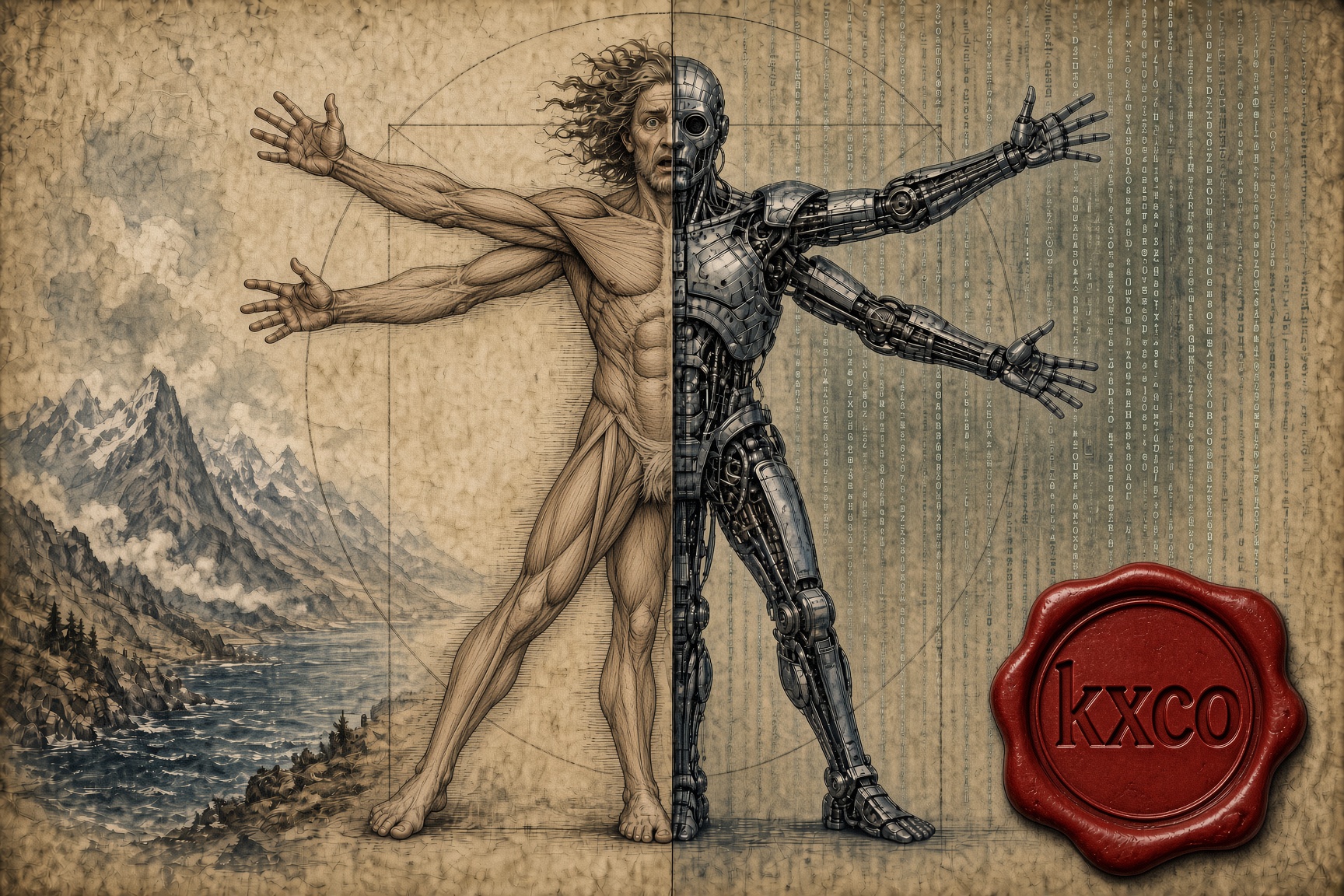
Don't Be the Best, Be the Only: Winning in an AI World
AI is repricing competence downward. What it cannot reproduce is a life. The case for remaining non-fungible, why friction still produces the best ideas, and what it means to build AI systems that keep the human intellect in them.
Every story, signed and delivered.
Subscribe to the kxco channel and get the headline, the AI-written key takeaways, and the chain-anchor link the moment we publish. Audio versions and per-ticker subscriptions arrive in the next iteration.