
BlackRock's Bitcoin ETF: What Changes Will It Bring to the Market?
BlackRock, the world's largest asset manager, filed an application with the Securities and Exchange Commission (SEC) in June 2023 for a spot Bitcoin ETF. If approved, this would be the first spot Bitcoin ETF to trade on a major U.S. exchange.
A spot Bitcoin ETF would allow investors to buy and sell Bitcoin directly on the stock market, just like they would any other stock. This would make Bitcoin more accessible to a wider range of investors, including institutional investors.
There are a number of potential changes that could occur in the Bitcoin market as a result of BlackRock's ETF.
Increased liquidity: A spot Bitcoin ETF would likely increase the liquidity of the Bitcoin market. This means that it would be easier to buy and sell Bitcoin, and that prices would be more stable.
Increased institutional investment: Institutional investors, such as pension funds and hedge funds, have been reluctant to invest in Bitcoin due to its volatility and lack of regulation. However, a spot Bitcoin ETF would make it easier for these investors to access Bitcoin, and could lead to increased investment in the cryptocurrency.
Increased price volatility: Some experts believe that a spot Bitcoin ETF could lead to increased price volatility in the cryptocurrency market. This is because institutional investors tend to trade in larger volumes than retail investors, and their trading activity could cause prices to fluctuate more significantly.
Legitimization of Bitcoin: A spot Bitcoin ETF could help to legitimize Bitcoin as an investment asset. This could lead to more people investing in the cryptocurrency, and could also make it easier for businesses to accept Bitcoin as payment.
Overall, the potential changes that could occur in the Bitcoin market as a result of BlackRock's ETF are significant. It is still too early to say what the exact impact of the ETF will be, but it is likely to have a major impact on the cryptocurrency market.
Here are some additional thoughts on the potential changes that could occur in the Bitcoin market as a result of BlackRock's ETF:
The ETF could lead to a more mainstream acceptance of Bitcoin. If institutional investors start to invest in Bitcoin through the ETF, it could signal to other investors that Bitcoin is a legitimate investment asset. This could lead to more people investing in Bitcoin, and could also make it easier for businesses to accept Bitcoin as payment.
The ETF could lead to increased price volatility. If institutional investors start to trade Bitcoin in large volumes, it could cause prices to fluctuate more significantly. This could be a challenge for some investors, but it could also create opportunities for others.
The ETF could lead to increased regulation of Bitcoin. The SEC has been hesitant to approve a spot Bitcoin ETF, and it is possible that the ETF could lead to increased regulation of the cryptocurrency market. This could be a positive development for Bitcoin, as it could help to make the market more reliable and transparent.
Only time will tell what the exact impact of BlackRock's ETF will be on the Bitcoin market. However, it is clear that the ETF has the potential to bring about significant changes to the cryptocurrency market.

AI is the Neat Handwriting of the Illiterate
A model in the hands of someone who has read the filing and walked the plant is a clerk. The same model, speaking for someone who has done neither, is a disguise. On AI slop, phantom citations and factslop, why finish stopped being evidence of work, and the containment layer KXCO built so a machine cannot speak as the institution until a source is attached.
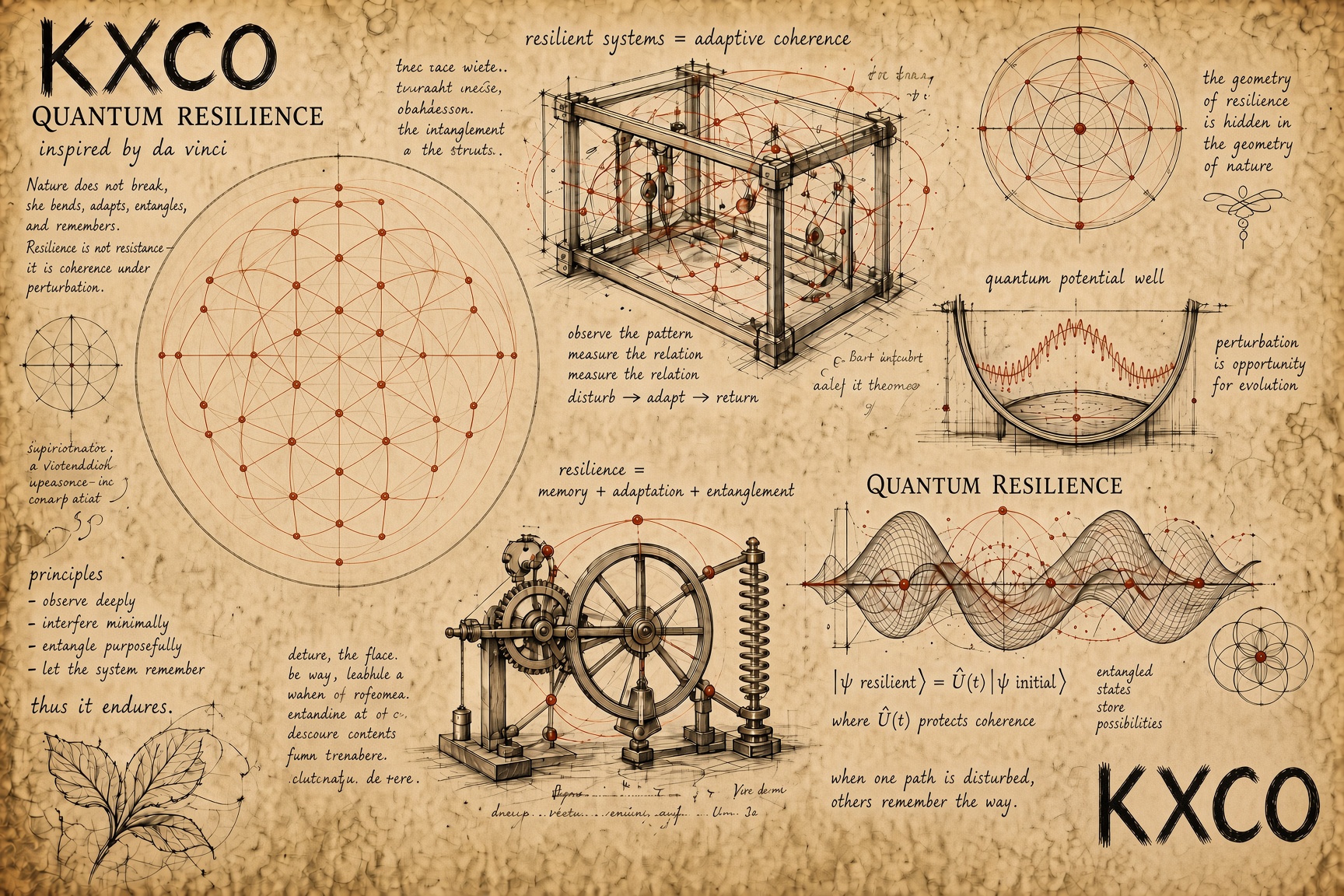
KXCO Put Its Quantum Cryptography in Public, With the Receipts Attached
KXCO has published the cryptography under its entire platform as fourteen open packages, and attached the evidence: NIST conformance, interoperability with three independent implementations, build provenance and reproducible releases. Every claim is checkable by a stranger.
Worthship: Do Not Conform to the Age
Worthship is the older English word for worship, and it means to ascribe worth. Bishop Robert Barron preached Romans 12 on 30 August. This essay follows the text into the prison letters, and puts two questions to a graph: do the four readings of that Sunday agree, and was Paul free or in chains when he wrote about despair?
The Truth in All Its Ugliness Must Survive
A majority vote does not determine the truth. Consensus is a mood, gossip is a sport, and a model will write the pretty version for free. Why the ugly number has to survive, why a record beats a dashboard, and what KXCO was built to keep standing when the room changes its mind.
Every story, signed and delivered.
Subscribe to the kxco channel and get the headline, the AI-written key takeaways, and the chain-anchor link the moment we publish. Audio versions and per-ticker subscriptions arrive in the next iteration.