
Bitcoin is the Central Bank Killer
#bitcoin
"Lord Rothchild said that he will make a new cryptocurrency which will be on the governments side and will kill the enemy: Bitcoin. Sorry not likely!" -- Paul Ebeling
Role of Central Banks in an Economy: it is important to understand the role that central banks play in an economy. Central bank policymaking underpins the global financial system. Between countries, the mandates for central banks varies.
Central banks use monetary policy, to achieve their mandates. In the main they manipulate money supply and interest rates.
For example, a central bank might increase or decrease the quantity of money circulating in an economy. More money in an economy equals more spending by consumers and, consequently, economic growth. The opposite situation i.e., less money in an economy translates to 1 in which consumers spend less and a recession ensues.
A central bank's actions also have an effect on imports, exports, and overseas investment. For example, high interest rates can deter investment by foreign entities in real estate, while low interest rates can promote investment.
The case for Bitcoin as an alternative to central banks is based both on economics and technology. Satoshi Nakamoto, Bitcoin's inventor, defined the cryptocurrency as a "peer-to-peer version of electronic cash" that allows "online payments to be sent directly from one party to another without going through a financial institution."
Within the context of a financial infrastructure system dominated by central banks, Bitcoin solves 3 problems.
1st, it eliminates the problem of double-spending. Each Bitcoin is unique and cryptographically secured, meaning it cannot be hacked or replicated. Therefore, you cannot spend Bitcoin twice or counterfeit it.
2nd, even though it is decentralized, Bitcoin's network is still a trustworthy system. In this case, trust is an algorithmic construct. Transactions on Bitcoin's network have to be approved by nodes spread out across the world to be included in its ledger. Even a single disagreement by a node can make the transaction ineligible for inclusion in Bitcoin's ledger.
3rd, Bitcoin's network eliminates the need for a centralized infrastructure by streamlining the process to produce and distribute the currency. Anyone with a full node can generate Bitcoin at home. Intermediaries are not required for peer-to-peer transfer between 2 addresses on Bitcoin's blockchain.
So, a network of banks chartered by a central authority is not necessary to distribute the cryptocurrency.
Central banks are at the helm of the modern global financial infrastructure in the current economic system. An about 122 countries around the world use central banks to manage their economies. While it offers several advantages, this form of centralized structure vests far too much power on a single authority and has resulted in severe economic recessions.
Bitcoin's technology relies on algorithmic trust, and its decentralized system offers an alternative to the current system. Meanwhile, central banks have co-opted elements of Bitcoin's design and tech to explore the case of a digital currency issued by central banks.
The Big Q: Did you know BTC beat the 2020 returns of gold and the S&P 500?
The Big A: Coins and altcoins are investments too!
Have a prosperous day, Keep the Faith!

Economic Calendar and Trading Strategies for the Week Ahead: July 20–24, 2026
A pivotal week for markets: Iran's closure of the Strait of Hormuz sends crude above $86 and gasoline over $5, while Alphabet, Tesla and Intel earnings test the AI trade. Full economic calendar plus trading strategies across oil, gold, Bitcoin, FX and AI chip stocks.
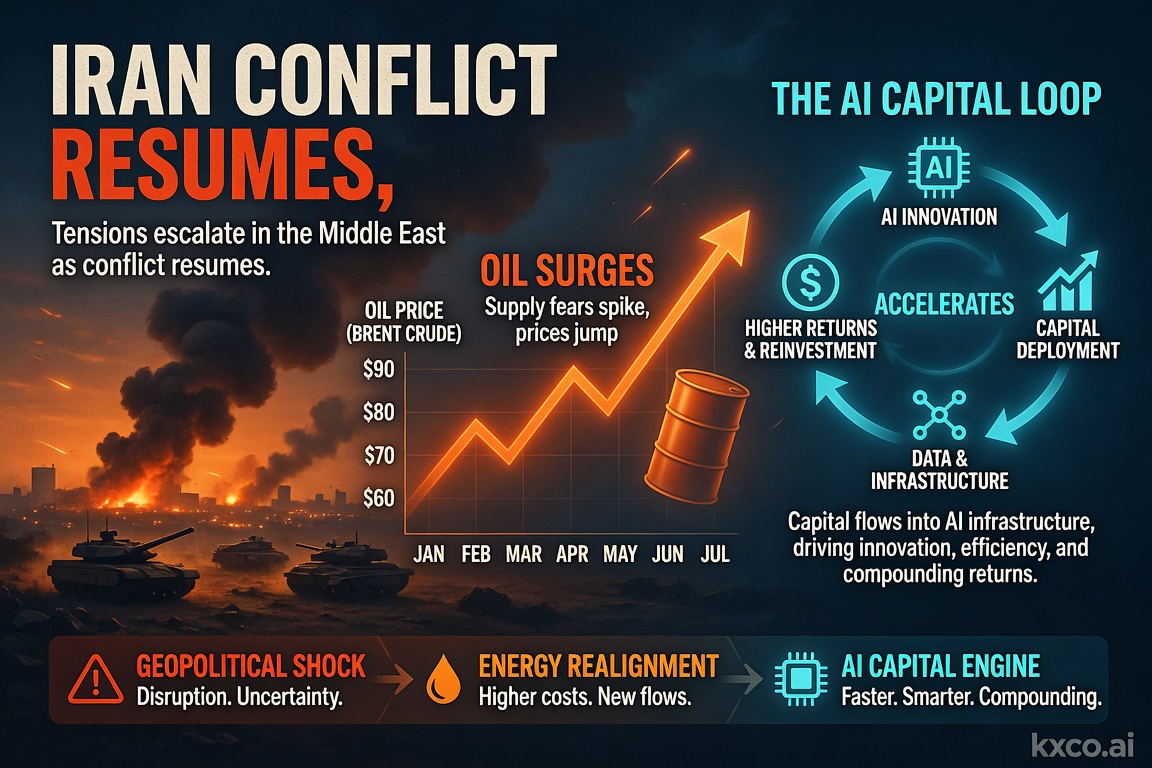
Economic Calendar and Trading Strategies for the Week Ahead: July 14–18, 2026
A pivotal week for markets: US strikes on Iran reignite the oil risk premium, June CPI and retail sales test the Fed's rate-cut path, and the $1 trillion AI capital loop keeps driving the tech trade. Full economic calendar plus trading strategies across oil, gold, Bitcoin, FX and AI stocks.
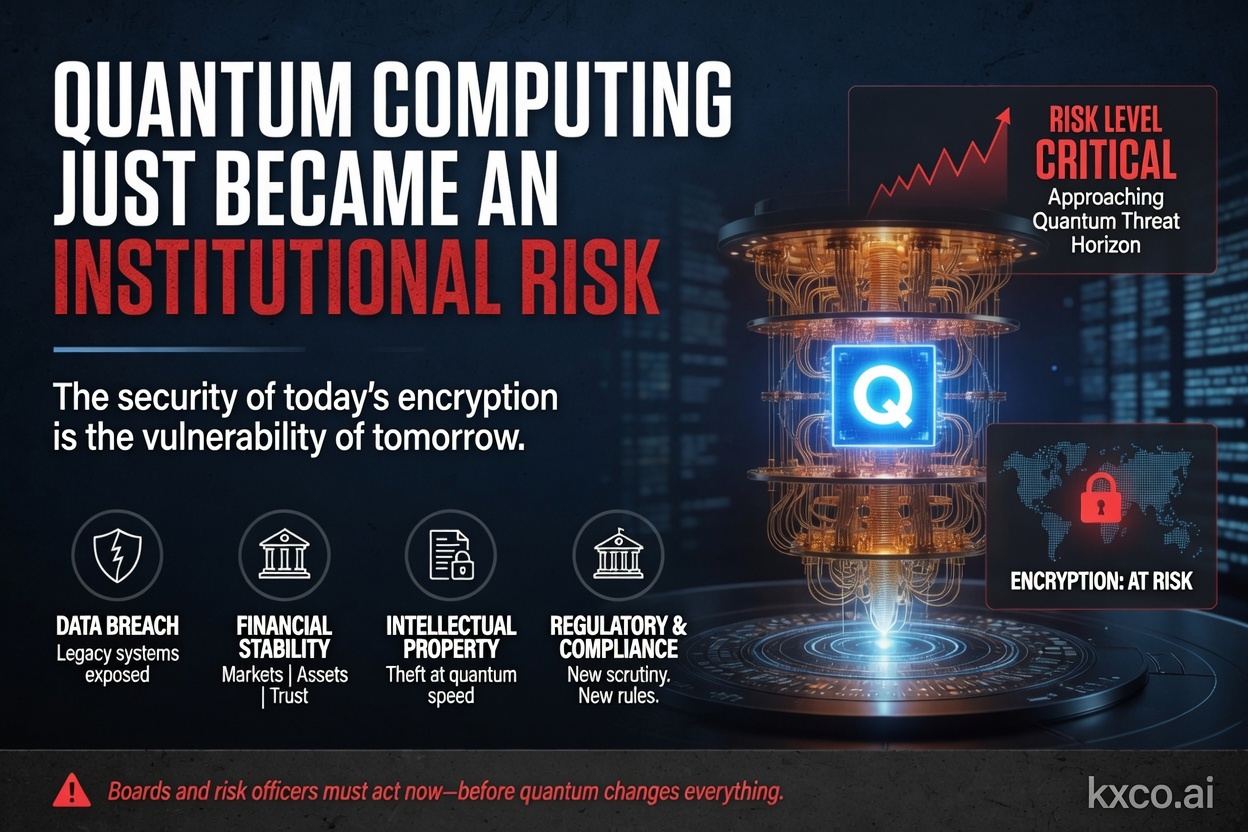
Quantum Computing Just Became an Institutional Risk
Shayne Heffernan on BlackRock's quantum-computing warning for Bitcoin and Ethereum, Google's cryptanalysis research, the two on-chain risk vectors, and how KXCO's Armature L1 — post-quantum from genesis, coordinated by its ontology — answers a threat that just went institutional.

Quantum, AI and the Trust Problem Markets Aren't Pricing
Quantum computing and AI agents are usually traded as separate stories. They are one story, and it is about trust. Shayne Heffernan on why the financial system needs verifiable infrastructure before the volume of machine transactions makes retrofitting impossible.
Every story, signed and delivered.
Subscribe to the kxco channel and get the headline, the AI-written key takeaways, and the chain-anchor link the moment we publish. Audio versions and per-ticker subscriptions arrive in the next iteration.