
Bitcoin is a Long Term Buy
Bitcoin is a Long Term Buy
Short Term: Overbought
Intermediate Term: Bullish
Long Term: Bullish
The next big news for crypto currency will be sovereign wealth funds and governments. Will they be ready to make a public investment into crypto next year?
It’s actually technically already happened, albeit not directly. The Norwegian Government Pension Fund, also known as the Oil Fund, now owns almost 600 Bitcoin (BTC) indirectly through its 1.51% stake in Micro Strategy.

Bitcoin is a Long Term Buy
An open and public investment by such an entity would be a show of trust that could set off a frenzy of government activity. If institutional investment brought mainstream respectability to Bitcoin and other cryptocurrencies, imagine what the backing of a sovereign wealth fund or government would do?
The recent Bull Run has certainly started people talking, but compare the media attention in 2017 to this time around. It’s been limited, to say the least.
If the bitcoin price continues to rise – as many suspect it will – this may drive another wave of headlines and again cement cryptocurrency firmly on the front pages. This puts cryptocurrency firmly back in the public consciousness, potentially lighting a fire under consumer demand.
There are a number of reasons why this could be, but chief among them is that this bull run has been driven fundamentally by institutional demand rather than retail.
An increase in media attention would certainly change this, but perhaps even more important is that it’s now easier than ever to buy crypto currency, with the success of Luno and Coinbase, supporting customers around the world, but also the likes of PayPal and Square are seeing huge success in the US. They’re currently buying the equivalent of 100% of newly minted bitcoin just to cover the demand they’re getting from US customers.
There is another element. This latest bull run for the crypto ecosystem as a whole is proving that there is an appetite for tokens that do more than just act as a store of value (i.e., bitcoins) and now tokens with more specific and sophisticated use cases are becoming more popular.
The Lucky Club
The Lucky Club is a fun way to start a very serious project.
Cryptocurrencies, Decentralized processes and the ever widening impact of Blockchain are going to have a major impact on the way things are done, who does them and who makes the money.
Where there were once huge barriers to entry, the door is now open.
Individuals can now access income from the type of business once reserved for Institutions, Governments and High Net-Worth Individuals. They can through Blockchain, DeFi and P2P protocols became bankers participating in income from trading, brokerage, settlements, fees, mortgages, finance, margin lending and a host of other financial services.
To start our build out we have decided to run a Beta program, “The Lucky Club” and there we are implementing technology we have already developed and building out new technology over the next 12 months.
Right now we have a seamless electronic interface between the platform and the trade desk allowing people to access an income stream from brokerage, margin lending, fees and commissions, and that is what we call TLC.
Hope and REET are the next 2 projects.
Hope is a Cryptobased online casino/sportsbook expected to be in full operation by 2021
REET is Blockchain based 1st Mortgage Business in South East Asia and operating in Thailand allowing P2P participation in Mortgage lending in the fastest growing region of the world, also expected to be operating in 2021.
Once we have sufficient momentum and have ironed out all the bugs, we will “rehome” to KEPRIA.
KEPRIA is a private economic and political research institute based in Asia that is steering the direction of model in terms of business, demand and political challenges.
Once homed in KEPRIA sometime in 2022 we will push out in to more markets, our push will be one based on building a better model through the Beta program and those members will participate in the upside of our success, hence they are the lucky ones.
AI is the Neat Handwriting of the Illiterate
A model in the hands of someone who has read the filing and walked the plant is a clerk. The same model, speaking for someone who has done neither, is a disguise. On AI slop, phantom citations and factslop, why finish stopped being evidence of work, and the containment layer KXCO built so a machine cannot speak as the institution until a source is attached.
Worthship: Do Not Conform to the Age
Worthship is the older English word for worship, and it means to ascribe worth. Bishop Robert Barron preached Romans 12 on 30 August. This essay follows the text into the prison letters, and puts two questions to a graph: do the four readings of that Sunday agree, and was Paul free or in chains when he wrote about despair?
The Truth in All Its Ugliness Must Survive
A majority vote does not determine the truth. Consensus is a mood, gossip is a sport, and a model will write the pretty version for free. Why the ugly number has to survive, why a record beats a dashboard, and what KXCO was built to keep standing when the room changes its mind.
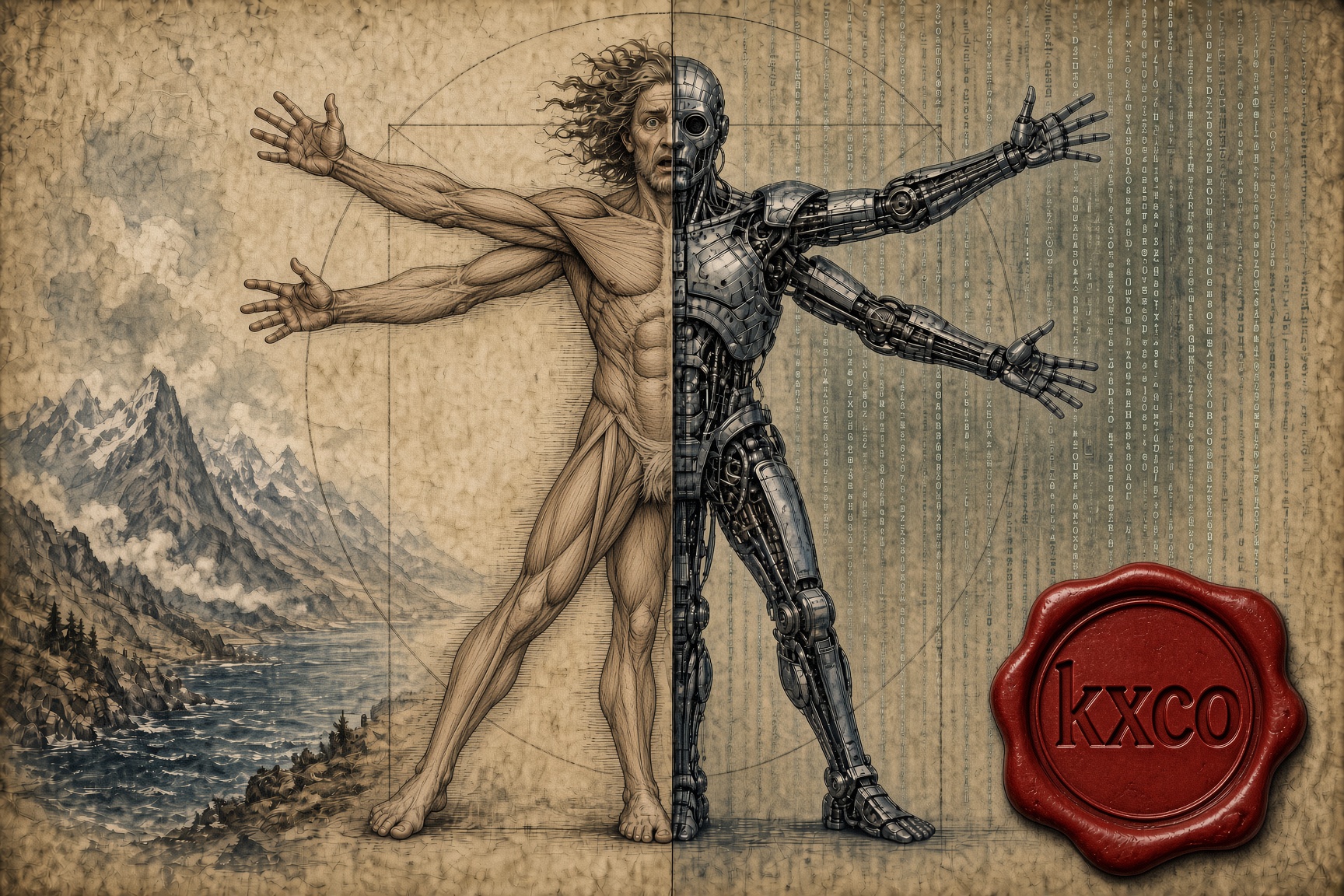
Don't Be the Best, Be the Only: Winning in an AI World
AI is repricing competence downward. What it cannot reproduce is a life. The case for remaining non-fungible, why friction still produces the best ideas, and what it means to build AI systems that keep the human intellect in them.
Every story, signed and delivered.
Subscribe to the kxco channel and get the headline, the AI-written key takeaways, and the chain-anchor link the moment we publish. Audio versions and per-ticker subscriptions arrive in the next iteration.