
Big Government and Bitcoin
Big Government and Bitcoin
The term "big government" is often used to describe a government that has a large role in the economy. This can include a government that provides a lot of social programs, regulates businesses heavily, or spends a lot of money.
There is a growing body of evidence that suggests that big government can have a negative impact on the economy. For example, a study by the Cato Institute found that countries with larger governments tend to have lower economic growth.
There are a number of reasons why big government can be harmful to the economy. First, it can lead to higher taxes. When the government takes a larger share of the economy, there is less money left for businesses to invest and for consumers to spend. This can lead to slower economic growth.
Second, big government can lead to more regulation. When the government regulates businesses more, it can make it more difficult for them to operate and innovate. This can also lead to slower economic growth.
Third, big government can lead to more debt. When the government spends more money than it takes in, it has to borrow money. This debt can eventually become a burden on the economy, as it can lead to higher interest rates and inflation.
Big government can become too large and too intrusive, and that it can ultimately harm the economy.
Here are some specific examples of how big government can kill the economy:
High taxes can discourage businesses from investing and hiring new workers.
Excessive regulation can make it more difficult for businesses to operate and innovate.
Government debt can lead to higher interest rates and inflation, which can make it more expensive for businesses to borrow money and for consumers to buy goods and services.
In addition to these economic costs, big government can also lead to a loss of individual freedom and choice. When the government has a large role in the economy, it has more power to control how people live their lives. This can be a threat to individual liberty and to the free market economy.
Big government is more likely to harm the economy than to help it. When the government gets too big, it can stifle economic growth, reduce individual freedom, and lead to higher taxes and more regulation.
Bitcoin as your protection from Government
Bitcoin can help to protect against these economic costs by providing a store of value that is not subject to government manipulation. Bitcoin is also a relatively new asset, which means that it has the potential to grow in value over time.
Of course, there are also risks associated with holding Bitcoin. The price of Bitcoin is volatile and it is possible to lose money if you invest in Bitcoin. However, for people who are concerned about the economic costs of big government, Bitcoin can be a valuable asset to hold.
Here are some additional reasons why people might choose to hold Bitcoin to protect against big government economic costs:
Bitcoin is a scarce asset. There will only ever be 21 million Bitcoins created, which makes it a more attractive store of value than fiat currencies, which can be printed at will by governments.
Bitcoin is a global currency. It can be used to send and receive payments anywhere in the world, regardless of government restrictions.
Bitcoin is a transparent currency. All Bitcoin transactions are recorded on the blockchain, which makes it difficult for governments to track and control.
Overall, Bitcoin can be a valuable asset for people who are concerned about the economic costs of big government. It is a scarce, global, and transparent currency that is not subject to government manipulation.
AI is the Neat Handwriting of the Illiterate
A model in the hands of someone who has read the filing and walked the plant is a clerk. The same model, speaking for someone who has done neither, is a disguise. On AI slop, phantom citations and factslop, why finish stopped being evidence of work, and the containment layer KXCO built so a machine cannot speak as the institution until a source is attached.

KXCO Put Its Quantum Cryptography in Public, With the Receipts Attached
KXCO has published the cryptography under its entire platform as fourteen open packages, and attached the evidence: NIST conformance, interoperability with three independent implementations, build provenance and reproducible releases. Every claim is checkable by a stranger.
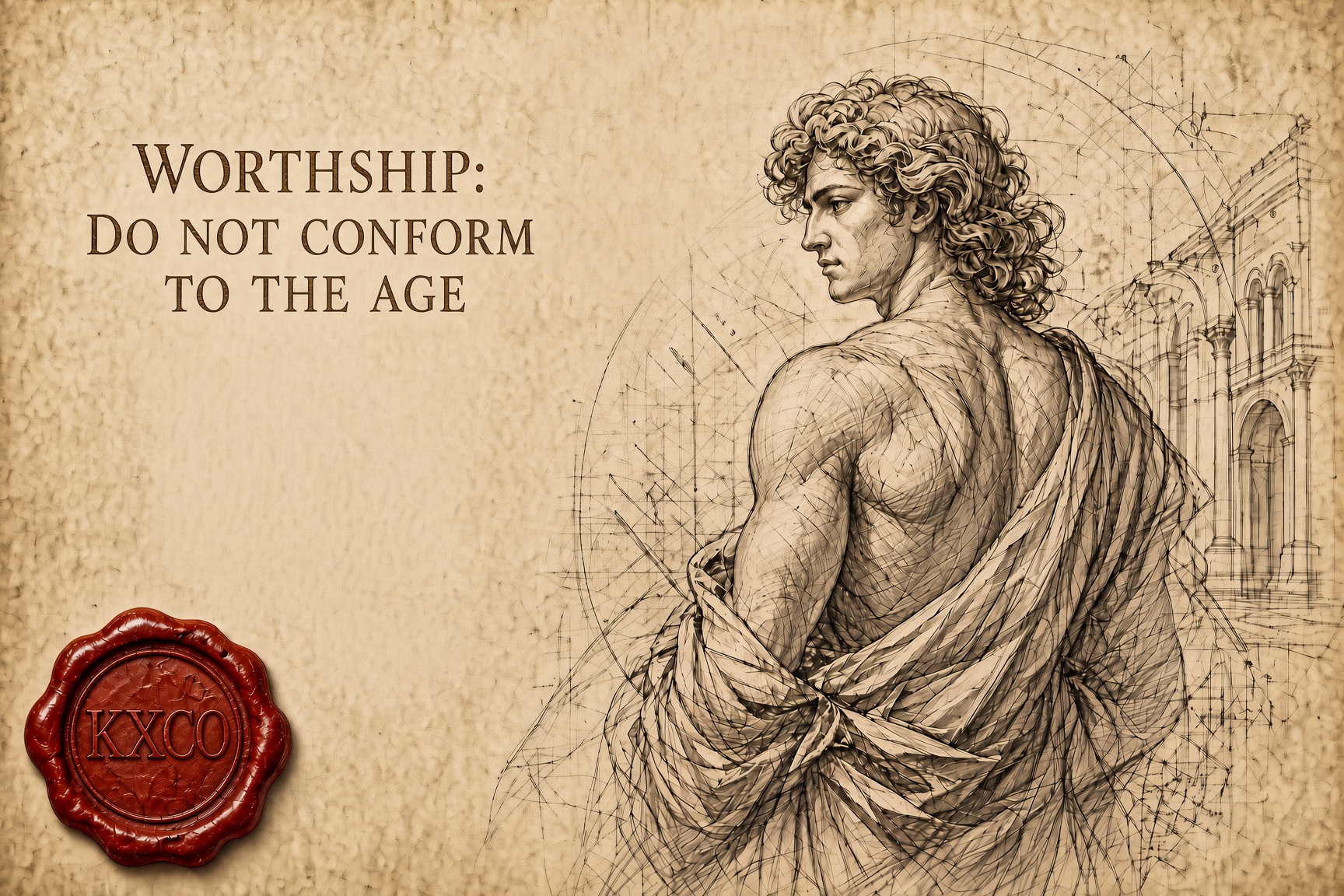
Worthship: Do Not Conform to the Age
Worthship is the older English word for worship, and it means to ascribe worth. Bishop Robert Barron preached Romans 12 on 30 August. This essay follows the text into the prison letters, and puts two questions to a graph: do the four readings of that Sunday agree, and was Paul free or in chains when he wrote about despair?
The Truth in All Its Ugliness Must Survive
A majority vote does not determine the truth. Consensus is a mood, gossip is a sport, and a model will write the pretty version for free. Why the ugly number has to survive, why a record beats a dashboard, and what KXCO was built to keep standing when the room changes its mind.
Every story, signed and delivered.
Subscribe to the kxco channel and get the headline, the AI-written key takeaways, and the chain-anchor link the moment we publish. Audio versions and per-ticker subscriptions arrive in the next iteration.